Commercial Septic Contracts Terms Explained: A Plain-English Glossary
If you own a home or run a business in the Miami area, septic paperwork can feel like a different language. This commercial septic contracts glossary breaks down the terms you will see in quotes, service agreements, and inspection reports. Use it to understand what a provider is offering, ask sharper questions, and spot gaps before you sign. Each entry starts with a plain definition you can read in seconds.
- Service Agreement: the contract itself
- Scope of Work: what the provider will actually do
- Pump Out: emptying the tank
- Septic Tank Cleaning: pumping plus scrubbing the tank
- Scum and Sludge Layers: the stuff that builds up inside
- Effluent Filter: the screen that protects your leach field
- Leach Field: where treated water soaks into the ground
- Grease Trap Clean Out: emptying the grease box at restaurants
- Baffle: the tank part that keeps solids in place
- Service Frequency: how often the work happens
- Preventive Maintenance: scheduled care before problems start
- Emergency Response Clause: what happens when something fails
- Flat Rate vs. Time and Materials: two ways providers charge
- Add-Ons: extra services outside the base contract
- Manifest / Disposal Record: proof the waste went to the right place
- Septic System Inspection: a checkup on the whole system
The Paperwork: Commercial Septic Contracts Glossary and Pricing
The words in this section show up on the quote itself. If you only read one part of a commercial septic contracts glossary before signing anything, make it this one.
Terms in Commercial Septic Contracts and Agreements
A service agreement is the written contract between you and a septic company that spells out what work gets done, how often, and for how much. It should name the services (like septic tank pumping or grease trap cleaning), the schedule, and how either side can cancel. If a provider works from a handshake instead of a written agreement, you have nothing to point to when a visit gets skipped. For a walkthrough of what a solid agreement covers, see what your service agreement should cover.
Scope of Work
A scope of work is the section of a contract that lists exactly which tasks the provider will perform. For septic service, that might mean a pump out, septic tank filter cleaning, and a visual check of the leach field. A vague scope like "septic maintenance" leaves room for arguments later. Ask for specific line items so you know what is included and what costs extra. This guide to what's included versus optional add-ons shows how providers split the two.
Flat Rate vs. Time and Materials
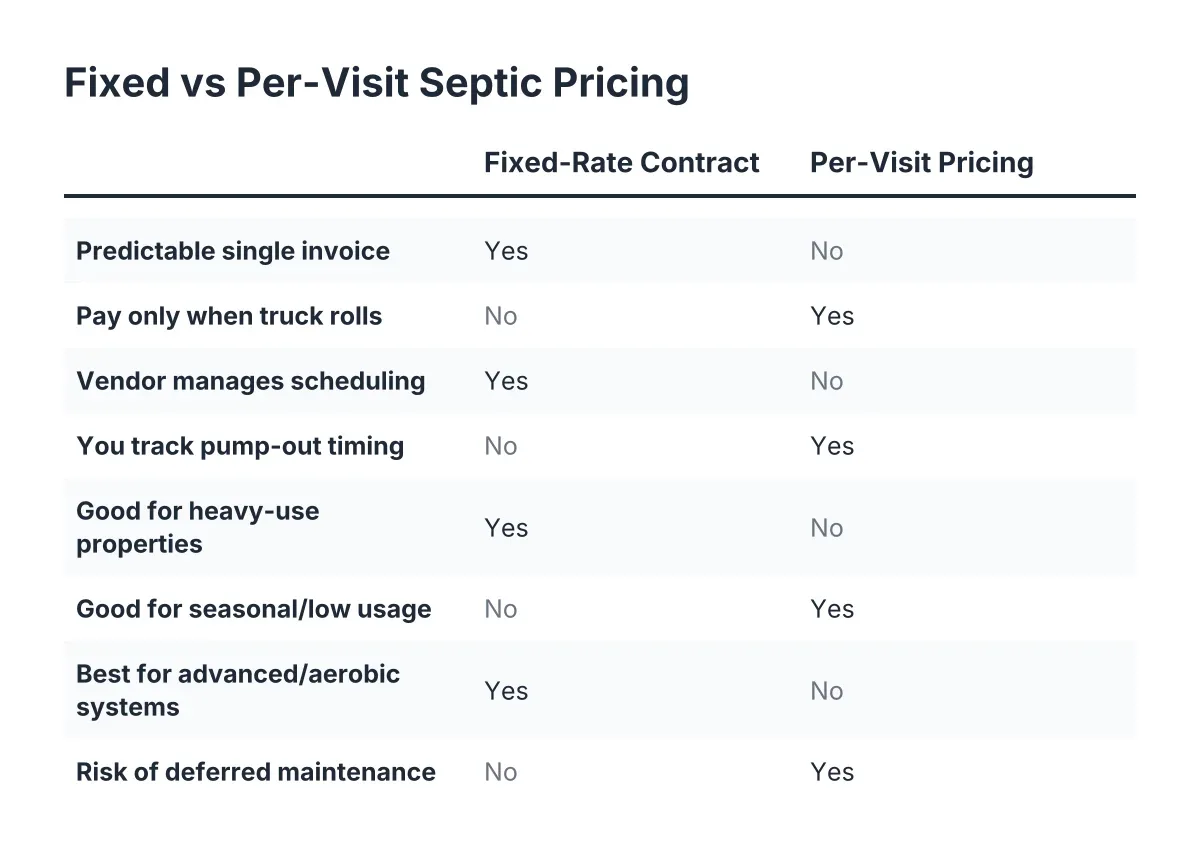
Flat rate means you pay one set price for a defined job, while time and materials means you pay for the hours worked plus any parts used. Flat rate is easier to budget, but the price assumes a normal job. Time and materials can be fair for repairs where nobody knows the problem until the tank is open. Either way, ask what happens if the crew finds something unexpected. Cost drivers are covered in more detail in this commercial septic contracts cost guide.
Add-Ons
Add-ons are services priced outside the base contract, billed only when you need them. Common examples include leach field repair, extra pump outs after heavy use, or locating a buried tank lid. Add-ons are not a trick; they keep the base price honest for work you may never need. Just make sure the contract says how add-on pricing gets approved before the work starts.
Manifest / Disposal Record
A manifest, or disposal record, is the paperwork showing where your pumped septic waste was hauled and dumped. Legitimate septic pump out companies dispose of waste at approved facilities and can show a record of it. If a provider cannot tell you where the waste goes, that is a red flag. For businesses, keeping these records can matter if questions ever come up about your property.
The Work Itself: Pumping, Cleaning, and Traps
Pump Out
A pump out is the process of removing the liquid and solid waste from your septic tank with a vacuum truck. It is the core service in almost every septic contract, for homes and businesses alike. Skipping pump outs lets solids build up until they flow into the leach field, which is a far more expensive fix. When a quote says "septic pump out," ask whether it includes both liquids and solids, because a partial pump leaves sludge behind.
Septic Tank Cleaning
Septic tank cleaning means pumping the tank and then removing the stuck-on sludge and scum from the walls and bottom. It goes a step beyond a basic pump out. A tank that has gone years without service often needs cleaning, not just pumping, to work right again. If your quote says "cleaning," confirm it includes scraping down the buildup, not just emptying the liquid.
Grease Trap Clean Out
A grease trap clean out is the removal of fats, oils, and grease from the trap that sits between a commercial kitchen and the septic or sewer line. Restaurants and food businesses in the Miami area usually need this on a regular schedule, since grease hardens and blocks pipes. Many commercial septic contracts bundle grease trap cleaning with tank pumping so one visit covers both. If you run a kitchen, ask whether the trap is included or billed as an add-on.
Septic System Inspection
A septic system inspection is a checkup where a technician examines the tank, baffles, filter, and leach field to catch problems early. Buyers often order one before closing on a property, and businesses use them to plan repairs before something fails. An inspection is not the same as a pump out; it is a look, not a cleaning. Some providers discount inspections when combined with scheduled sewer tank service.
Inside the System: Parts and What They Do
Scum and Sludge Layers
Scum and sludge are the two waste layers that build up inside a septic tank: scum floats on top, and sludge settles on the bottom. The clear-ish liquid in between, called effluent, flows out to the leach field. When either layer gets too thick, solids escape and clog the field. Technicians measure these layers to decide when your tank needs a pump out.
Effluent Filter
An effluent filter is a screen at the tank's outlet that stops solids from reaching the leach field. It is cheap protection for the most expensive part of your system. Filters clog over time, so septic tank filter cleaning should appear in any maintenance contract for a system that has one. If your contract never mentions the filter, ask whether your tank has one and who cleans it.
Leach Field
A leach field, also called a drain field, is the network of buried pipes where liquid from the septic tank soaks safely into the soil. It does the final cleaning of your wastewater. Soggy grass, foul smells, or slow drains often point to a failing field. Leach field repair is a major job, which is why regular pumping and filter cleaning exist: they protect the field from solids.
Baffle
A baffle is a fitting inside the septic tank that directs flow and keeps floating scum from escaping through the inlet or outlet. Baffles crack or rust out over time, especially in older tanks. A broken outlet baffle lets solids pour into the leach field unchecked. A good inspection always includes a look at the baffles, so ask if yours does.
Scheduling and Service Terms in Commercial Septic Contracts Glossary
Service Frequency
Service frequency is how often your contract schedules visits, such as pumping once a year or grease trap cleaning every quarter. The right frequency depends on tank size, how many people use the system, and what goes down the drains. Too infrequent and solids build up; too frequent and you pay for visits you do not need. A provider should explain the reasoning behind the schedule, not just quote a number. Scheduling details are covered in this article on frequency and scheduling in septic contracts.
Preventive Maintenance
Preventive maintenance means scheduled service, like routine pump outs and filter cleaning, done before anything breaks. It is the opposite of calling a septic cleaner near me only after the toilets back up. Contracts built around preventive maintenance cost less over time than crisis calls, because backups and leach field damage are the expensive part. Ask what the maintenance visits include beyond pumping.
Emergency Response Clause
An emergency response clause is the part of a contract that explains how the provider handles urgent problems, like a backup or overflow, outside scheduled visits. It should say how to reach the company after hours and whether emergency calls cost more than routine ones. Read this clause closely, since the details vary from one provider to the next. Knowing the answer before a Saturday backup beats finding out during one.
Using These Terms
You now have the vocabulary to read a septic quote line by line and notice what is missing, whether that is filter cleaning, a disposal record, or a clear emergency clause. That is what this commercial septic contracts glossary is for: fewer surprises and better questions. When you talk to a local Miami-area provider, use these terms and expect straight answers back.
If you need septic tank pumping, Miami Septic Tanks can help.
Prefer to talk it through? Call (786) 756-8032 — a quick call is usually the fastest way to get a straight answer for your situation.