How Much Do Commercial Septic Contracts Cost?
The honest answer: there is no single price, and any page that hands you one is guessing. For a commercial property in the Miami area, the price hinges on three things above all: the size and number of tanks on the property, how often the system needs a pump out, and what shape the system is in when service starts. Understanding commercial septic contracts cost is essential because it depends on factors like tank size, pumping frequency, and system condition. Septic system repair cost works the same way; a cracked lid is one job, and a failing leach field is another job entirely. By the end of this page, you will know exactly what drives the number up or down and how to get an accurate quote for your property. Understanding what affects your specific situation is the fastest way to move from a rough estimate to a real septic system repair cost.
What Drives the Cost of Commercial Septic Contracts
A commercial contract is really a bundle of services: scheduled septic tank pumping, tank cleaning, filter cleaning, and often grease trap clean out. Each piece has its own drivers. Here are the ones that matter most.
Tank Size and Tank Count
A restaurant with one grease trap and one septic tank is a different job than a strip mall with several tanks across the property. Bigger tanks hold more waste, take longer to pump, and fill the truck faster. More tanks mean more stops, more lids to open, and more time on site. If you do not know how many tanks your property has or how big they are, your county property records or a septic system inspection can tell you. Knowing this number before you call is the single fastest way to get a real quote.
Pumping Frequency
How often the tank needs a pump out drives the yearly total more than any other factor. A busy commercial kitchen might need grease trap cleaning every month or two. A small office building might only need septic tank pumping once a year or less. Frequency depends on how much water and waste your business sends into the system daily. A provider can look at your tank size and your usage and recommend a schedule. If your last pump out was years ago and nobody remembers when, plan on catching up before a routine schedule can start.
System Condition and Repair Expenses
A well-maintained system costs less to service. Period. If the tank has been pumped on schedule and the filter gets cleaned, each visit is routine. If the system has been neglected, the first visit often uncovers extra work: a compacted sludge layer that takes longer to remove, a clogged filter, or a leach field that is starting to fail. Leach field repair is where septic budgets get painful, because it involves the ground around the tank, not just the tank itself. Warning signs you may be on the expensive side: slow drains, wet or smelly patches over the drain field, or backups after heavy rain.
Access and Site Conditions
The truck has to reach the tank. If your tank lids sit under a landscaped bed, a parking lot, or a locked utility area, the crew spends time digging, locating, or coordinating access before pumping even starts. Buried lids that need to be found and dug up on every visit add labor to every visit. Installing risers, which bring the lid access up to ground level, is a one-time expense that lowers the cost of every service after it.
Scope of the Contract
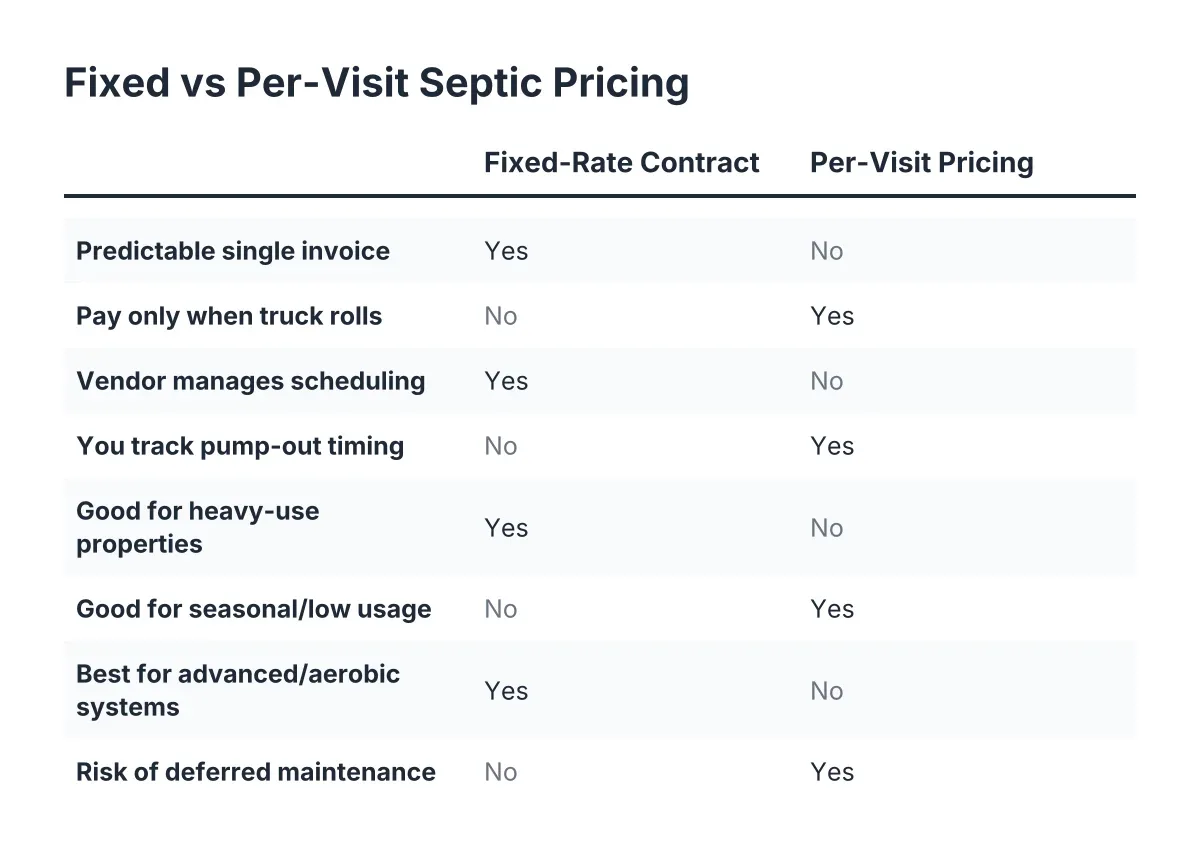
What is actually in the agreement? Some commercial septic contracts cover pumping only. Others bundle septic tank filter cleaning, grease trap clean out, sewer tank service, and an annual septic system inspection into one package. A broader scope costs more per year but often less per service, and it means fewer surprises. A narrow contract looks cheap until the first "that's not included" invoice arrives. Ask for a line-item list of what each visit covers.
Local Disposal and Compliance
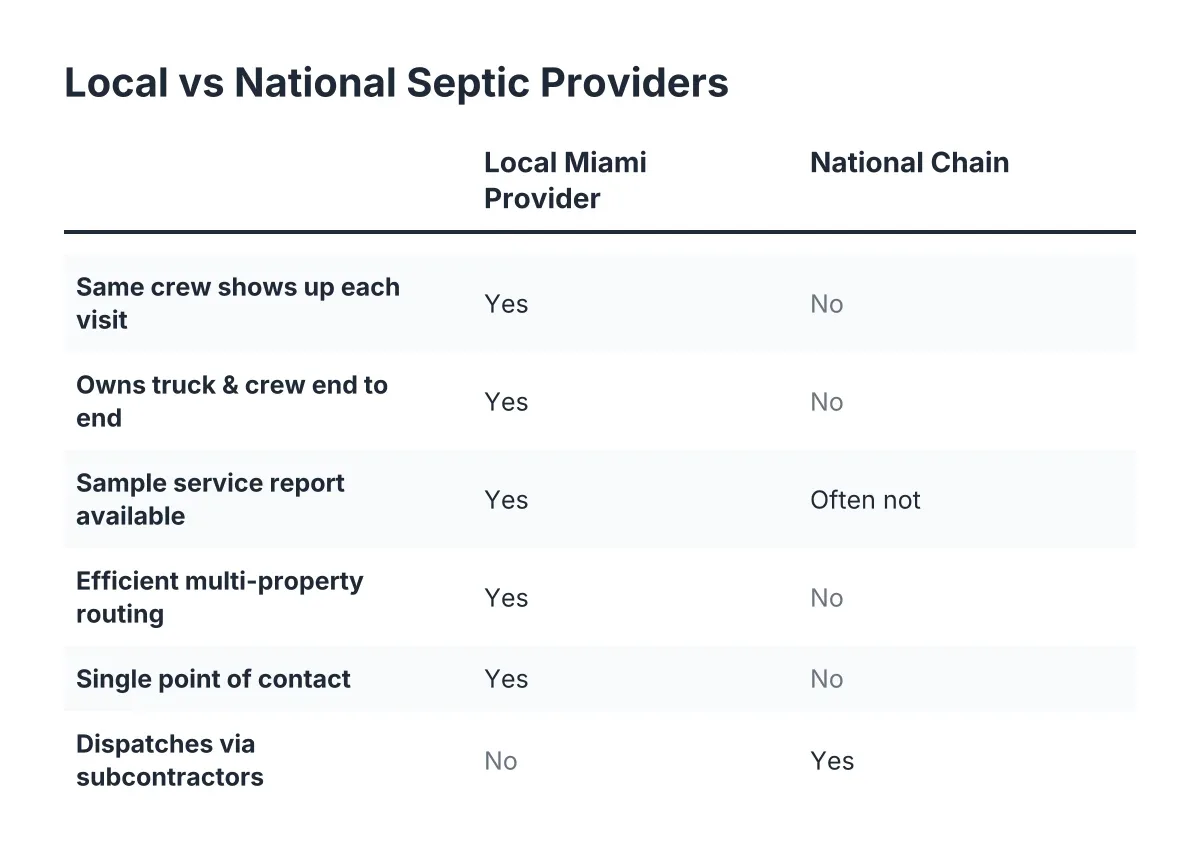
Everything pumped out of your tank has to go somewhere legal. Disposal fees at treatment facilities vary, and they get passed through to you. Commercial properties, especially food service businesses with grease traps, may also have local record-keeping requirements. A local Miami-area provider already knows the disposal sites and the paperwork. An out-of-area operator has to figure that out on your dime.
Cost Factor Table
| Factor | Pushes the price down when… | Pushes it up when… |
|---|---|---|
| Tank size and count | One standard tank, easy to pump in a single visit | Multiple tanks or oversized tanks across the property |
| Pumping frequency | Light usage, tank fills slowly, longer service intervals | Heavy daily use, grease trap needs frequent clean outs |
| System condition | Regular pumping history, filter cleaned on schedule | Years of neglect, heavy sludge, leach field showing trouble |
| Access | Lids at ground level with risers, truck can park close | Buried lids, tight access, digging required every visit |
| Contract scope | Simple pump out schedule only | Full package with inspections, filter cleaning, and grease trap service |
| Disposal and compliance | Standard septic waste, simple records | Grease waste, extra documentation, special handling |
How to Get an Accurate Estimate for Commercial Septic Contracts
Skip the guessing and get a number that applies to your actual property. Here is how.
Have this information ready before you call:
- The property address and type of business on site
- Number of tanks and grease traps, if you know it
- Tank size, if you have records from a past pump out or inspection
- Date of the last septic tank pumping or grease trap cleaning
- Any current problems: slow drains, odors, backups, or standing water
- Where the tank lids are and whether the truck can reach them
A good quote should include the pumping schedule, what each visit covers, disposal, and what counts as extra work billed separately. If a quote is one number with no breakdown, ask for the breakdown. If they will not give it, that tells you something.
Estimates differ between providers for real reasons, not just markup. One company may assume your tank is easy to reach; another may price in digging. One may quote pumping only; another may include filter cleaning and an inspection. That is why comparing quotes line by line matters more than comparing the totals. The cost of septic tank pumping itself is often close between local companies; the differences hide in scope and frequency.
The fastest path to a real number is a site visit. Any serious local provider will look at your tanks, check the access, and quote from what they see rather than from a phone guess.
Ways to Keep the Cost Down
You cannot change your tank size, but you can control plenty of other levers.
Stay on a schedule. Regular pump outs are the cheapest thing on this whole page. Letting a tank overfill pushes solids into the leach field, and leach field repair costs far more than years of routine pumping. Prevention is not a slogan here; it is the math.
Keep the filter clean. Septic tank filter cleaning is a small, quick service that protects the drain field. A clogged filter backs up the system and turns a routine visit into a problem call.
Install risers if your lids are buried. Paying for digging on every visit adds up. Ground-level access pays for itself over the life of a contract.
Watch what goes down the drain. For food businesses, grease is the enemy. Scrape plates, keep the grease trap on its cleaning schedule, and never pour fryer oil into a sink. For everyone, no wipes, no chemicals, no problem loads.
Get two or three quotes and compare the scope, not just the total. The lowest number is only the best deal if it covers the same work. Ask each of the septic pump out companies you call to list exactly what each visit includes.
Cost Questions People Ask
How much does septic tank pumping cost?
It depends on your tank size, how full it is, and how easy the tank is to reach. A standard tank with clear access is the low end of the scale; a large or buried tank is the high end. Septic tank pumping prices also shift with local disposal fees, so quotes from local Miami-area providers reflect real local numbers. Two or three quotes will show you the range for your specific property.
What does septic system replacement cost compared to repair?
Replacement is the most expensive outcome in septic work because it can involve a new tank, new leach field, permits, and excavation. Most systems never get there if they are pumped and inspected on schedule. Repair costs sit on a wide scale, from a simple lid or filter fix at the low end to leach field work at the high end. An inspection tells you which situation you are in before you spend anything big.
Is a service contract cheaper than calling when there is a problem?
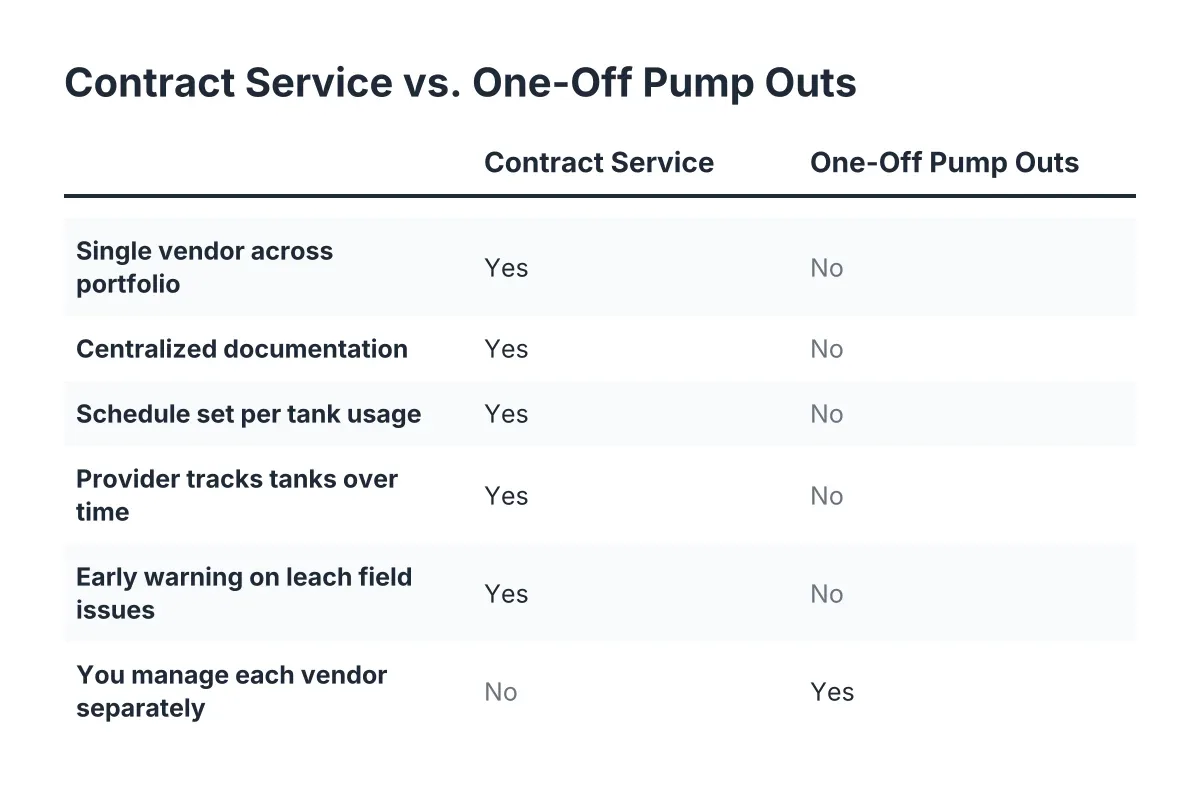
Usually, yes, over time. A contract keeps the system on a pumping schedule, which prevents the failures that generate emergency calls in the first place. Problem calls tend to happen at the worst moments and often involve extra work that scheduled visits would have caught early. The contract also gives you a predictable line item to budget instead of surprise invoices.
Why do quotes for the same property differ so much?
Because providers make different assumptions about scope, frequency, and access. One quote might cover pumping only; another might include grease trap cleaning, filter service, and an annual inspection. Ask each provider to break the quote into line items, then compare the lines. The gap usually explains itself.
The Bottom Line
Septic system pumping cost for a commercial property comes down to tank size, service frequency, system condition, and what the contract actually covers. No honest page can hand you a number without seeing your property, and the dishonest ones are guessing. Gather two or three line-item quotes from local providers, compare the scope side by side, and let a site visit turn the estimate into a real price.
If you need septic tank pumping, Miami Septic Tanks can help.
Prefer to talk it through? Call (786) 756-8032 — a quick call is usually the fastest way to get a straight answer for your situation.