Septic Maintenance Schedule Terms Explained: A Plain-English Glossary
If you own a home with a septic system, sooner or later a quote or inspection report will hit you with words nobody explained. This septic maintenance schedule glossary breaks down the terms Miami-area homeowners and buyers run into most, in plain English. Use it to read a quote line by line, ask a provider sharper questions, and spot small problems before they turn into big ones. No sales talk, just the words and what they mean for you.
- Septic Tank
- Leach Field
- Effluent Filter
- Baffle
- Riser
- Grease Trap
- Septic Tank Pumping
- Pump Out
- Septic Tank Cleaning
- Septic System Inspection
- Sludge and Scum Layers
- Hydro Jetting
- Sewer Tank Service
- Understanding Your Septic Maintenance Schedule
- Service Interval
- Locating Fee
- Scum and Sludge Measurement
- Maintenance Record
The Parts of Your System
Septic Tank
A septic tank is a buried, watertight container that catches everything that goes down your drains and holds it while solids settle out. Heavy solids sink to the bottom, grease and light material float to the top, and the liquid in the middle flows out to the leach field. Knowing your tank exists, and roughly where it sits, is step one of ownership. When a provider asks about tank size or location, they are figuring out how long a pump out will take and what access they need.
Leach Field
A leach field is the network of buried, perforated pipes that spreads treated liquid from your septic tank into the soil, where it filters naturally. It is also called a drain field. This is the most expensive part of your system to replace, which is why regular pumping matters so much. Soggy grass, odors, or unusually green patches over the field are signs it may be struggling, and a provider who mentions leach field repair is talking about a bigger job than a routine pump out.
Effluent Filter
An effluent filter is a screen inside your septic tank that stops solids from escaping into the leach field. It sits in the outlet pipe and catches the small stuff before it can clog those buried lines. A dirty filter can slow drains through the whole house, so septic tank filter cleaning is a normal part of routine service. If your quote lists filter cleaning as a line item, that is a good sign the provider is protecting your leach field, not padding the bill.
Baffle
A baffle is a barrier inside the septic tank that directs flow and keeps floating scum away from the inlet and outlet pipes. Most tanks have one at the inlet and one at the outlet. Baffles crack or rot over time, and a broken outlet baffle lets solids reach the leach field. If an inspection report flags a damaged baffle, ask whether it can be repaired during the same visit.
Riser
A riser is a pipe that extends the septic tank lid up to ground level so a technician can reach it without digging. If your tank lids are buried, expect extra time and labor for digging at every service visit. Installing risers once often pays for itself in easier, faster pump outs later. Ask about them if your quote includes a digging or locating charge.
Grease Trap
A grease trap is a container that catches fats, oils, and grease from kitchen drains before they reach the septic system or sewer. Restaurants and commercial kitchens rely on them, but some homes have them too. Grease is one of the fastest ways to clog a system, so a grease trap clean out on a regular schedule keeps everything downstream flowing. If a provider offers grease trap cleaning alongside septic work, they can handle both in one visit.
The Work Itself
Septic Tank Pumping
Septic tank pumping is the removal of accumulated solids and liquid from your tank using a vacuum truck. It is the single most important piece of routine septic care. How often you need it depends on tank size and how many people live in the home; this guide on how often to pump by household size walks through the typical intervals. Skipping pump outs lets solids overflow into the leach field, which is how small maintenance bills become major repairs.
Pump Out
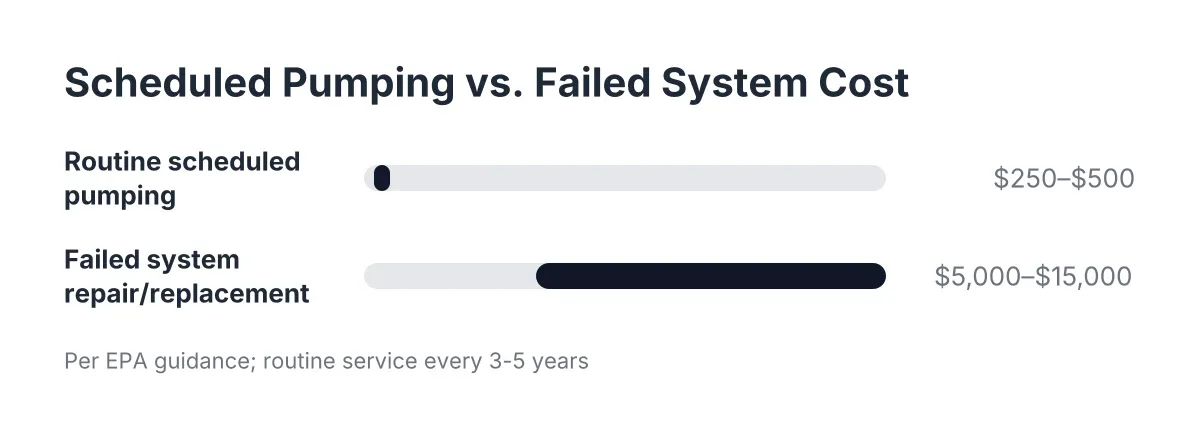
A pump out is another name for the service visit where a truck empties your septic tank. You will see "septic pump out" and "septic tank pumping" used interchangeably on quotes. Sticking to a septic maintenance schedule for pump outs is the cheapest insurance your system can get, because it keeps solids out of the parts that are expensive to fix. When comparing septic pump out companies, ask exactly what the visit includes, since some quotes cover only the vacuum work.
Septic Tank Cleaning
Septic tank cleaning is a more thorough service than pumping, removing the compacted sludge layer and buildup from the tank walls and bottom, not just the liquid contents. Some providers use "pumping" and "cleaning" loosely, so ask which one a quote covers. A full septic tank cleaning takes longer and may cost more, but it resets the tank properly. If your tank has gone years without service, cleaning is often what it actually needs.
Septic System Inspection
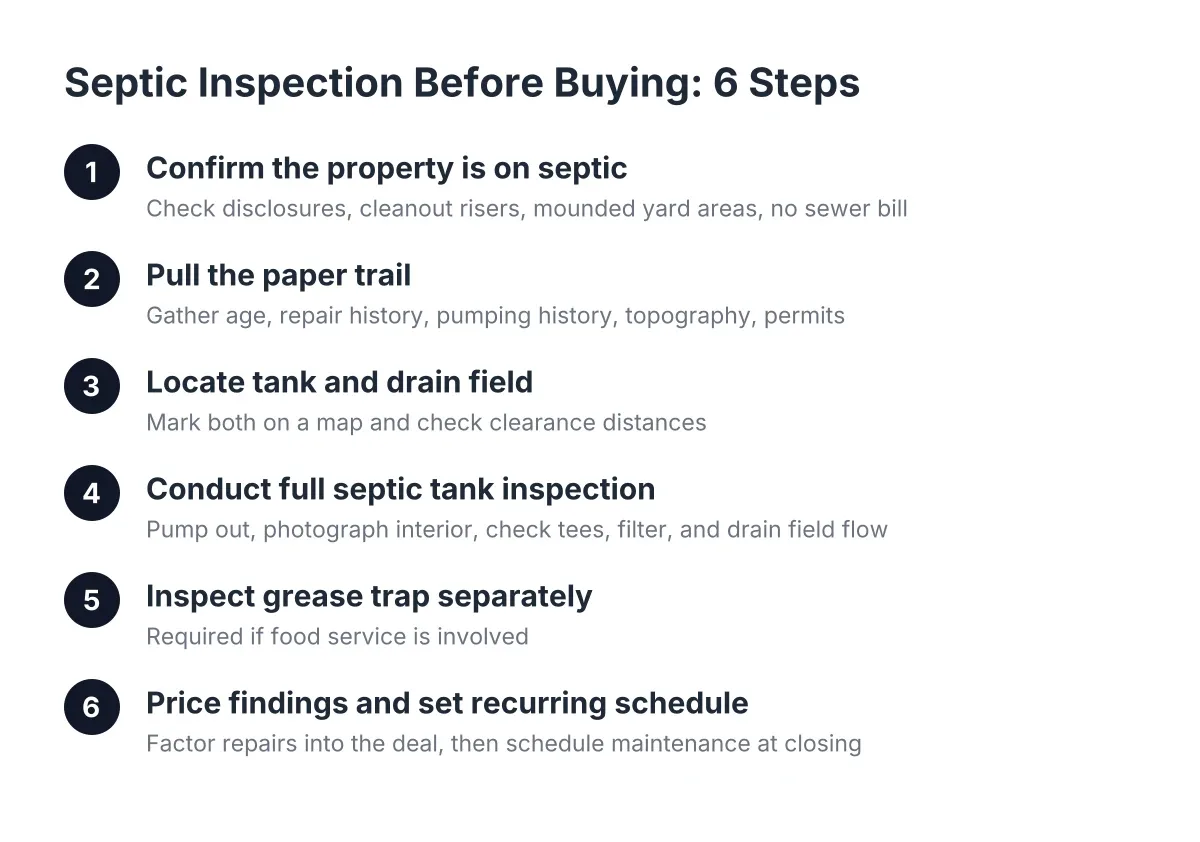
A septic system inspection is a check of the tank, baffles, filter, and leach field to confirm everything works and to catch early problems. Buyers order inspections before closing on a home, and owners use them to plan ahead. An inspection tells you the tank's condition, the sludge level, and whether repairs are coming. If you are buying a Miami-area home with a septic system, an inspection before closing beats a surprise after it.
Sludge and Scum Layers
Sludge is the layer of heavy solids on the bottom of a septic tank, and scum is the layer of grease and light material floating on top. The clear liquid between them is what should flow to the leach field. Providers measure these layers to decide when pumping is due; once sludge and scum take up too much of the tank, solids start escaping. If a technician mentions your sludge level, they are telling you how close you are to trouble, not making small talk.
Hydro Jetting
Hydro jetting is the use of high-pressure water to scour buildup out of pipes and drain lines. Providers turn to it when a line is clogged with grease or sludge that a snake cannot clear. It shows up on quotes as an add-on when a routine pump out reveals a blocked line. If a provider recommends jetting, ask which line is blocked and whether a camera check confirmed it.
Sewer Tank Service
Sewer tank service is a general term for pumping, cleaning, and maintaining holding tanks and sewer-connected tanks, not just traditional septic tanks. Some Miami-area properties have holding tanks or hybrid setups that still need regular emptying. If your property does not have a leach field, this is likely the service category you need. The work is similar to a septic pump out, and many local providers handle both.
Quotes, Schedules, and Paperwork
Understanding Your Septic Maintenance Schedule
Pumping frequency is how often your septic tank needs to be emptied, usually stated in years. It depends on tank size, household size, and habits like garbage disposal use. A provider who asks about your household before quoting a frequency is doing it right; a one-size answer is a shortcut. Frequency is also the biggest lever on your long-term cost, as this breakdown of what really sets your price in Miami explains.
Service Interval
A service interval is the planned gap between maintenance visits, covering pump outs, filter cleaning, and inspections. Think of it as your system's calendar. A written interval turns septic care from a guessing game into a routine, and it gives you a paper trail if you ever sell the home. Ask any provider to put a recommended interval in writing after a visit.
Locating Fee
A locating fee is a charge for finding a buried septic tank when its position is unknown. It covers probing the yard, checking records, or using detection tools before any digging starts. First-time owners of older homes see this fee most often. Once the tank is found, mark it or add a riser so you never pay to find it twice.
Scum and Sludge Measurement
A scum and sludge measurement is the reading a technician takes to see how full your tank is with solids. It is done with a measuring tool lowered into the tank and takes only minutes. The reading tells you whether you can wait on pumping or need it now. A provider who measures before recommending service is giving you evidence, not a sales pitch.
Maintenance Record
A maintenance record is the written history of every pump out, cleaning, filter service, and inspection your system has had. It matters at sale time, because buyers and inspectors ask for it, and it helps any new provider understand your system fast. Keep receipts and reports in one folder. A thin or missing record on a home you are buying is a reason to order an inspection before closing.
Using These Terms
You can now read a septic quote line by line and know what each item means, whether it is a pump out, a filter cleaning, or a locating fee. When a Miami-area provider mentions your leach field, sludge level, or service interval, you will know exactly what they are looking at and why. A solid understanding of septic maintenance schedule basics helps you make better decisions about your system's care. Keep this septic maintenance schedule glossary handy for the next quote or inspection report that lands in your inbox.
If you need septic tank pumping, Miami Septic Tanks can help.
Prefer to talk it through? Call (786) 756-8032 — a quick call is usually the fastest way to get a straight answer for your situation.