What Drives Septic Tank Pumping Prices in Miami, FL: Frequency, Tank Size, and More
If you own a home on septic in the Miami area, or you are trying to buy or sell one, septic tank pumping prices are probably on your mind right now. Maybe an inspection just flagged the tank. Maybe you cannot remember the last time it was pumped. Either way, here is the good news: pumping costs follow a predictable pattern. The homeowners who pay the least are the ones on a regular schedule, not the ones calling in a panic. This guide breaks down what actually moves the price, how often your tank needs service, and how to set up a maintenance plan so pumping becomes a small, boring expense instead of a big scary one.
Why Septic Tank Pumping Prices Vary So Much in Miami, FL
Septic tank pumping prices in Miami, FL vary because no two jobs involve the same tank, the same access, or the same amount of waste. Tank size, how full the tank is, how easy the lid is to reach, and how long it has been since the last pump out all change the final number on the invoice.
That is why you will see wide ranges when you search for septic tank pumping prices near me. One neighbor pays at the low end because their tank is small, the lid is exposed, and they pump on schedule. Another pays hundreds more because the crew had to dig through two feet of soil to find the lid, then deal with a tank so full that solids had pushed into the outlet.
Here are the main factors that move the price up or down:
- Tank size. A larger tank holds more waste, takes longer to empty, and costs more to haul away.
- Time since the last pump out. A tank that has gone eight years without service has a thick sludge layer that takes more work to remove.
- Lid access. If the lid is buried under soil, sod, or a deck, expect a digging or access charge.
- Condition of the tank. Heavy grease, compacted solids, or a clogged outlet filter add labor.
- Extra services. Septic tank filter cleaning, a full septic system inspection, or a grease trap clean out are usually billed on top of the basic pump out.
- Location and disposal. Haulers pay to dispose of septage legally, and that cost is baked into local pricing.
Notice what is not on that list: luck. Every one of these factors is something you can influence. That is the core idea behind this whole guide. Your septic maintenance schedule is the single biggest lever you control over what you pay across the life of the system.
How Often Should You Pump a Septic Tank in the Miami Area?
Most septic tanks in the Miami area should be pumped every three to five years, which matches the guidance from University of Florida IFAS. The U.S. Environmental Protection Agency gives the same window, recommending an inspection of the entire septic system every 1 to 3 years and a pump out every 3 to 5 years.
However, that range is a starting point, not a rule for every house. Your real interval depends on three things: tank size, household size, and water habits. A retired couple in a Coconut Grove house with a properly sized tank might stretch to five years without trouble. A family of six in the same house, running laundry daily and hosting guests, might need service every two to three years.
South Florida adds its own wrinkle. Our high water table and heavy rainy season put extra stress on tanks and leach fields. When the ground around the tank is saturated, the system has less room for error. A tank that is already overdue for a pump out is far more likely to back up during a wet summer than in the dry months. Pumping on schedule gives your system breathing room when the rains come.
There is real scale to this issue locally. According to Miami Waterkeeper, there are about 120,000 septic systems in Miami-Dade County, and about 2,600,000 septic tanks across Florida. Every one of them fills up on its own timeline, whether the owner is watching or not.
How to Know When Your Septic Tank Was Last Pumped
You can find out when your septic tank was last pumped by checking receipts from prior owners, asking the seller or their agent for service records, contacting local septic pump out companies who may have the address on file, or checking with the county health department for permit and service history.
If none of that turns up a date, treat the tank as overdue and schedule a pump out with an inspection. A technician can open the tank, measure the sludge and scum layers, and tell you where you actually stand. That single visit resets the clock and gives you a baseline for your own records going forward.
This question matters most during a home sale. Buyers ask it. Inspectors ask it. Lenders sometimes ask it. A seller who can hand over a dated pump out receipt and inspection report removes a whole category of doubt from the deal. A seller who shrugs invites the buyer to assume the worst and negotiate accordingly.
Septic Tank Pumping Prices vs. Repair Costs: The Math That Matters
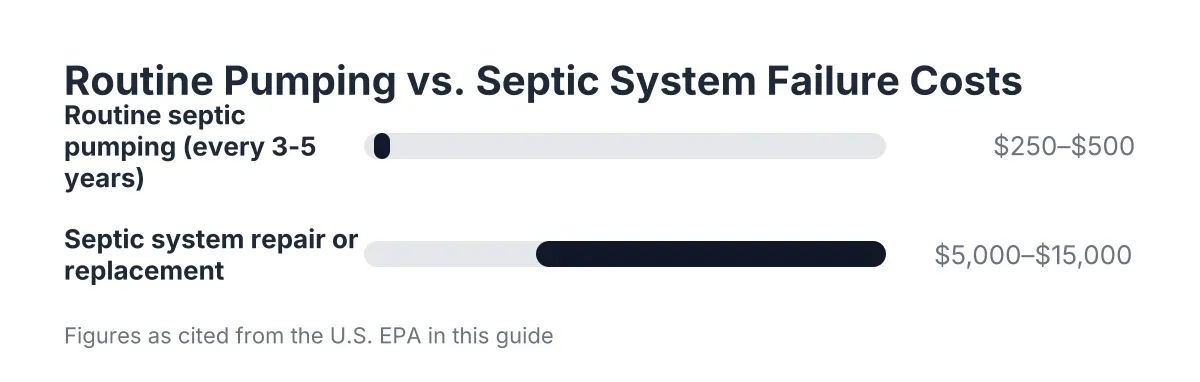
Routine septic tank pumping prices are small compared to the cost of fixing a failed system. According to the U.S. Environmental Protection Agency, regular septic maintenance fees of $250 to $500 every three to five years are a bargain next to repairing or replacing a malfunctioning system, which can run $5,000 to $15,000.
Sit with that comparison for a second. Spread over five years, routine pumping works out to less than the cost of a monthly streaming bundle. A failed leach field, on the other hand, can cost as much as a used car, and it often fails at the worst possible moment, like two weeks before a closing date.
Here is a scenario Miami-area buyers and sellers will recognize. A couple lists a 1970s home on a Coral Gables estate lot. The buyer's inspector flags standing water near the drain field and slow drains inside. Now the sellers face a leach field repair estimate in the thousands, a nervous buyer, and a closing date that will not move. Compare that to the neighbor who pumped on schedule, kept the receipts, and sailed through inspection. Same street, same era of house, wildly different outcomes.
The math extends beyond pumping. Septic system repair cost climbs fast once solids escape the tank and clog the drain field. Solids belong in the tank, where a pump out can remove them. Once they migrate into the leach field lines, no pump truck can pull them back out. At that point you are paying for excavation, not maintenance. Regular pumping is what keeps that line from being crossed.
There is also a lifespan argument. University of Florida IFAS notes that with proper maintenance, septic tanks can last up to 30 years. Skipping pump outs does not just risk a backup this year; it shortens the working life of a system that costs serious money to replace.
What a Septic Pump Out Visit Looks Like, Step by Step
Knowing the process removes most of the anxiety, especially if this is your first septic home. A standard septic tank pump out in the Miami area follows the same basic steps:
- Locate the tank. The technician finds the tank and its access lid. If you have a site drawing or septic tank design records from the county, this step goes faster.
- Open and assess. The crew opens the lid and checks the sludge layer, the scum layer, and the liquid level. High liquid can point to a drain field problem; low liquid can point to a leak.
- Pump the tank. A vacuum hose removes liquids and solids. A thorough job removes the sludge at the bottom, not just the easy liquid on top.
- Check components. The technician looks at the baffles and the outlet filter. Septic tank filter cleaning at this stage prevents the most common cause of slow drains between pump outs.
- Note any concerns. You should hear about cracks, root intrusion, a sagging baffle, or signs the leach field is struggling, before they become emergencies.
- Close up and document. You get a record of the service. Keep it. It is the first entry in your maintenance file, and it matters at resale.
The whole visit usually takes about an hour for a straightforward residential job. If the lid needs digging or the tank is badly overdue, plan for longer. One honest caveat: a pump out is maintenance, not a cure. If your drain field has already failed, pumping the tank buys you days, not years, and you should have a professional evaluate the leach field before spending more money on pumping alone.
Building a Septic Maintenance Schedule You Can Set and Forget
The best way to control septic tank pumping prices over time is to stop treating pumping as a one-off emergency purchase and start treating it as a recurring service, like an annual AC tune-up. A simple septic maintenance schedule does that for you. Here is a practical version for a typical Miami-area home:
- Every 3 to 5 years: Full septic tank pumping, with the interval set by your household size and tank size. Larger families should lean toward year three.
- Every 1 to 3 years: A septic system inspection, per EPA guidance, even in years you do not pump. This catches baffle damage, filter clogs, and early drain field trouble.
- Once a year: Septic tank filter cleaning if your system has an outlet filter. A clogged filter is the cheapest problem to fix and the most common one to ignore.
- Ongoing: Watch water use. Fix running toilets, spread laundry across the week, and keep grease, wipes, and harsh chemicals out of the drains.
- For homes with a grease trap: Schedule a grease trap clean out on its own recurring interval; restaurants and commercial kitchens in the Miami area need this far more often than homes.
The trick is to make the schedule automatic. When you get your tank pumped, ask the company to put you on their reminder list for the next service. Good local septic pump out companies do this as a matter of course. You should never have to remember the date yourself. That is what "set it and forget it" actually means here: the reminder comes to you, the truck shows up on a planned day, and the price stays in the routine-maintenance range instead of the emergency range.
In addition, keep a simple folder, paper or digital, with every receipt, inspection report, and any septic tank design or permit records you have. When you eventually sell the house, that folder answers the buyer's inspector before the questions get asked.
Pumping Before a Home Sale: What Buyers and Sellers in Miami, FL Should Know
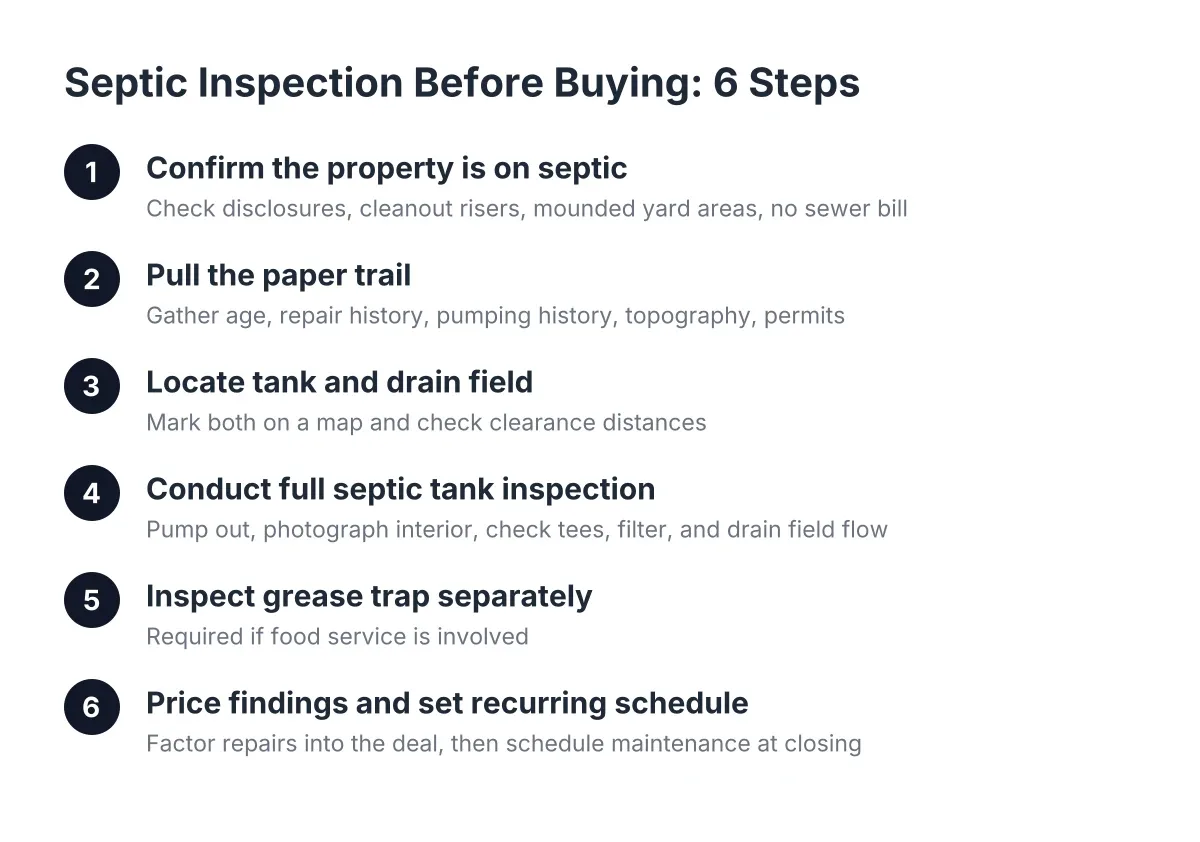
Pumping the tank before listing a septic home in Miami, FL is usually worth doing, for two reasons. First, an inspector cannot fully evaluate a tank that is full; pumping it allows a real look at the baffles, walls, and outlet. Second, a fresh pump out receipt is a trust signal that calms nervous buyers.
For buyers, the advice flips. Do not accept "the tank was just pumped" as proof the system is healthy. A pump out empties the tank; it does not certify the drain field. Ask for an actual septic system inspection, and ask what the technician saw when the tank was open. If the seller pumped the tank the week before your inspection, ask why. Sometimes it is good housekeeping. Sometimes it is hiding a backup.
If the inspection turns up a problem, get specifics before you panic. A clogged outlet filter is a minor fix. A cracked lid is a modest one. Additionally, a saturated leach field is a major negotiation item. Leach field repair sits in a different budget category than pumping, and knowing which problem you have determines whether the deal needs a small credit or a serious conversation. A local septic professional who works Miami-area soil and water tables every week can tell you which situation you are in. That is a judgment call worth getting in person, not from an article.
Timeline pressure is real in a sale, and it tempts people to skip steps. Resist that. A pump out plus inspection is a single scheduled visit. Skipping it to save a few days can cost you the deal, or leave the buyer owning a five-figure problem.
Getting Fair Pricing Without the Runaround
When you search for a septic cleaner near me or septic tank service near me, you will hit two frustrating extremes: national aggregator sites that route your call out of state, and thin local pages with no useful information. Neither tells you what your job will cost. A straightforward local operator can, because pricing comes down to the factors covered above.
Before you book, ask a few direct questions. Clear answers are the trust signal you are looking for:
- What does the base pump out price include, and what triggers extra charges?
- Is digging to reach the lid included, or billed separately?
- Does the visit include a look at the baffles and filter, or is inspection a separate service?
- Will you get written documentation of the service and any problems found?
- Can they put you on a recurring reminder schedule for the next pump out?
A company that answers those questions plainly, before the truck arrives, is a company you can build a maintenance routine with. That relationship is worth more than shaving a few dollars off a single visit, because the real savings come from years of on-time service, not from one cheap pump out.
The Bottom Line for Miami-Area Septic Owners
Septic tank pumping prices in the Miami area come down to tank size, access, condition, and above all, time. The longer a tank goes between pump outs, the more the next visit costs, and the closer the system creeps toward a repair bill ten to thirty times larger. As of 2026, the guidance has not changed: inspect every one to three years, pump every three to five, and keep the records.
Set the schedule once, hand the reminders to a local company you trust, and septic care becomes one of the least stressful parts of owning a Miami home. Whether you are settling into a septic house for the long haul or trying to get one sold without surprises, the plan is the same. Pump on time, keep the paperwork, and let routine maintenance do what it does best: make emergencies rare.
If you need septic tank pumping, Miami Septic Tanks can help.
Prefer to talk it through? Call (786) 756-8032 — a quick call is usually the fastest way to get a straight answer for your situation.