How Often to Pump Your Septic Tank by Household Size (and What It Costs)
If you just found out your home, or the home you are about to buy, runs on a septic system, two questions probably hit you at once. How often does this thing need to be pumped, and what is a fair septic system pumping cost? The honest answer to the first question depends mostly on one thing: how many people live in the house. The answer to the second question depends on whether you service the tank on a schedule or wait for it to fail. This guide walks through both, from a one-person condo to a 12-unit building on a shared system, so you can plan instead of panic.
You are in good company either way. According to the U.S. Environmental Protection Agency, more than one in five households in the United States depend on individual septic systems or small community cluster systems to treat their wastewater. Septic tanks are normal. They are not scary. They just need a schedule.
Why Household Size Sets Your Pumping Schedule
A septic tank is a holding and settling tank. Everything that goes down your drains flows into it. Solids sink to the bottom and form sludge. Grease and lighter waste float to the top as scum. The liquid in the middle flows out to the leach field, where the soil finishes the job.
The tank never empties itself. Sludge builds up, layer by layer, until someone pumps it out. Therefore, the real question behind "how often to pump septic tank" is this: how fast are you filling it? A tank does not know what year it is. It only knows how many gallons and how many flushes it handles per day.
That is why household size matters more than any other factor. Two houses with the same tank can need service on wildly different schedules. A retired couple might go five years between pump outs. A family of six with teenagers doing laundry daily might need service every two years. Same tank, same street, different clock.
Three things set your schedule:
- How many people use the system every day. More people means more water and more solids.
- The size of your tank. A larger tank buys you more time between pump outs.
- What goes down the drains. Garbage disposals, grease, wipes, and heavy laundry loads fill a tank faster.
A Pumping Schedule by Household Size
For a typical home with an average-sized tank, plan on pumping every three to five years, and adjust based on how many people live there. The University of Florida IFAS recommends pumping every three to five years to keep the system in working order, and notes that with proper maintenance septic tanks can last up to 30 years.
Here is a practical starting point. Treat these as planning ranges, not promises, since tank size and habits shift the numbers:
- 1 to 2 people: every 4 to 5 years. Low water use means slow sludge buildup.
- 3 to 4 people: every 3 to 4 years. This is the most common household and the reason "every three to five years" became the standard advice.
- 5 to 6 people: every 2 to 3 years. More laundry, more showers, more solids.
- 7 or more people, or a home with a garbage disposal and heavy use: every 1 to 2 years. High-use homes fill a tank fast, and a disposal can cut your interval sharply.
In addition, the EPA recommends having the whole system inspected every 1 to 3 years, even if the tank does not need pumping yet. An inspection catches problems in the leach field or the baffles before they turn into repairs. Pumping and inspection are related but not the same job, and a good septic maintenance schedule includes both.
One honest caveat: these ranges assume a properly sized, healthy system. If your tank is undersized for the house, if the leach field is aging, or if you notice slow drains between services, have a professional measure the sludge layer and set your interval based on what is actually in the tank. That measurement beats any chart.
What Septic System Pumping Cost Looks Like on a Schedule
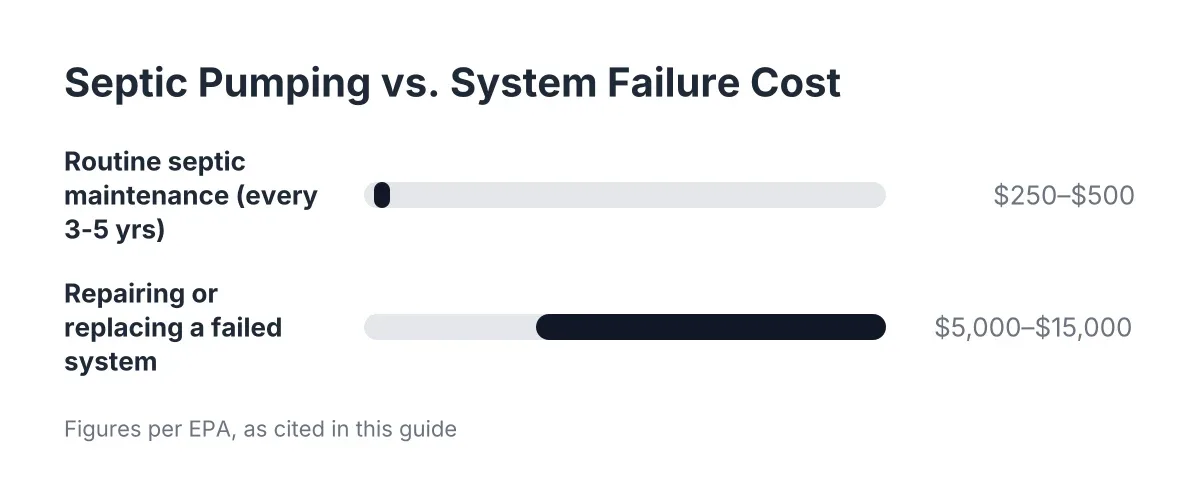
Scheduled septic tank pumping is one of the cheapest jobs in home ownership relative to what it prevents. According to the U.S. Environmental Protection Agency, regular septic system maintenance fees of $250 to $500 every three to five years are a bargain compared to repairing or replacing a malfunctioning system, which can cost between $5,000 and $15,000.
Read that spread again. The gap between routine service and system failure is not double. It is ten to thirty times the money. Spread a routine pump out over the years it covers and you are paying less per month than most streaming subscriptions. Skip it, and you are gambling with a five-figure leach field repair.
Your actual septic system pumping cost near you will move based on a few factors:
- Tank size. Bigger tanks hold more, so they cost more to pump out.
- Access. A tank with an exposed riser costs less to service than one buried under two feet of Miami lawn that has to be located and dug up.
- Condition. A tank pumped on schedule is a straightforward job. A tank that has not been touched in a decade may have compacted sludge that takes longer to remove, and may need septic tank cleaning, not just a pump out.
- Extras. Septic tank filter cleaning, inspection reports, or minor baffle work add to the visit but usually save money over booking them separately.
Notice the pattern. Every factor that raises the price is a factor you control by staying on schedule. The cheapest pump out you will ever buy is the one you booked on time.
Pumping Versus Cleaning: Why the Price Differs
Septic tank pumping removes the liquid and the loose solids from the tank; septic tank cleaning goes further and removes the compacted sludge stuck to the bottom and walls. Pumping is the routine service. Cleaning is what a neglected tank needs, and it costs more because it takes more time and effort.
If your tank has been serviced on schedule, a standard pump out usually covers it. However, if you just bought a home and have no idea when the tank was last touched, ask for a cleaning on the first visit. Starting from a truly empty, clean tank resets the clock and gives your first inspection an accurate picture.
How to Tell When the Tank Was Last Pumped
You can often find a septic tank's last pumping date through county health department records, a sticker or tag near the tank lid, or paperwork from the previous owner. If none of those exist, the only reliable answer comes from opening the tank and measuring the sludge and scum layers.
This question comes up constantly in real estate deals, and for good reason. Picture a common Miami-area scenario. You are three weeks from closing on a 1970s ranch house in unincorporated Miami-Dade. The general home inspector notes "septic system present, condition unknown," and your agent asks if the tank needs to be pumped before the sale. Nobody, including the seller, knows when it was last serviced.
Here is what to do, in order:
- Ask the seller for service records. Any reputable local company leaves an invoice showing the date, the work done, and the tank's condition.
- Check with the county. Miami-Dade keeps permit and inspection records for many septic systems. These records can show the tank's location and size even when service history is missing.
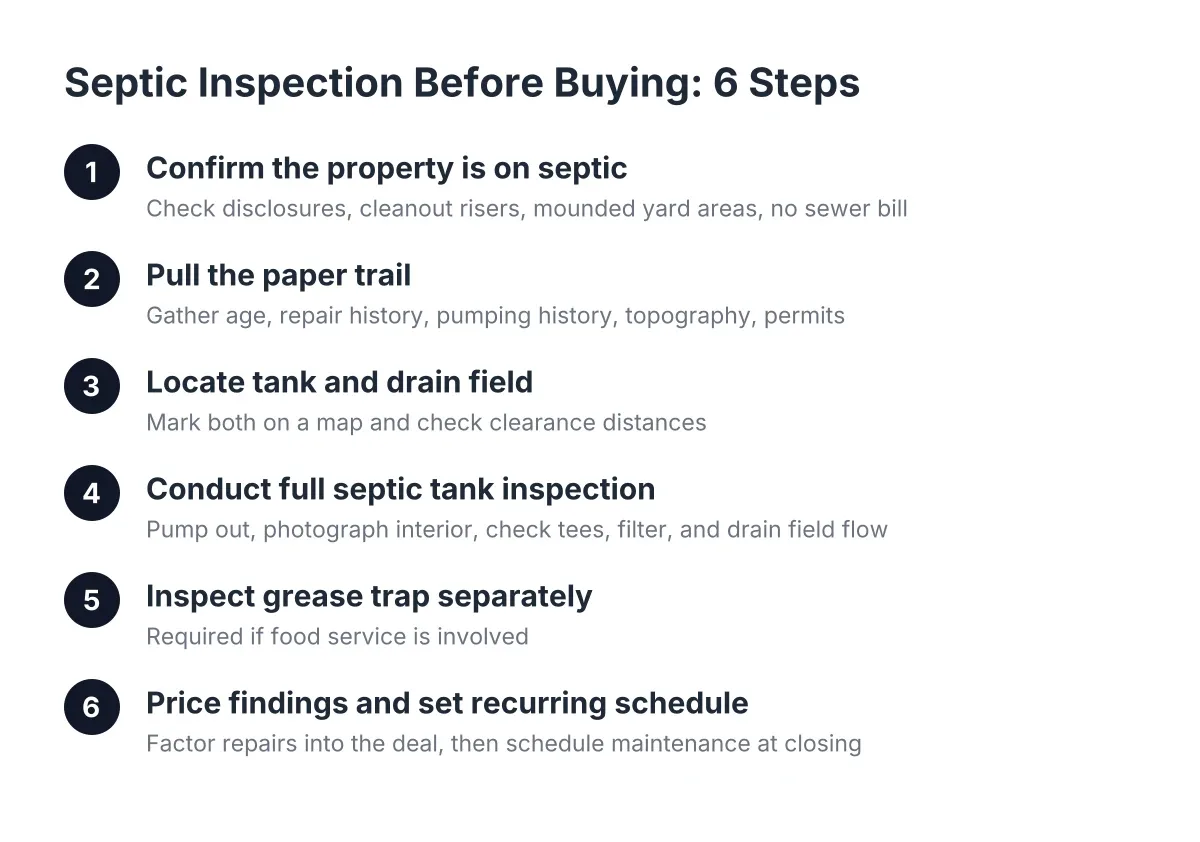
- Book a septic system inspection with a pump out. An inspector can only see the tank's walls, baffles, and inlet and outlet once the tank is empty. Combining the two visits saves money and answers every open question at once.
For a nervous buyer or seller, that third step is the one that protects the deal. A documented pump out and inspection gives the lender, the buyer, and the agent something concrete. It also means the new owner starts their septic tank maintenance clock at zero instead of guessing.
Sellers, take note: pumping the tank before listing often works in your favor. It removes the unknown that makes buyers hesitate, and the paperwork becomes part of your disclosure package.
Building a Septic Maintenance Checklist That Runs Itself
The goal of all this is simple. You want septic service to work like an oil change: scheduled, predictable, and boring. A one-time emergency pump out solves today's backup. A recurring plan makes sure you never meet that backup at all.
Here is a septic maintenance checklist worth keeping:
- Set your pumping interval by household size using the ranges above, then put the next date on your calendar the day the truck leaves.
- Inspect every 1 to 3 years, per EPA guidance, even in years you skip pumping.
- Clean the effluent filter at each service, or between services for high-use homes. Septic tank filter cleaning is quick, and a clogged filter is one of the most common causes of slow drains and backups.
- Watch what goes down the drain. No wipes, no grease, no coffee grounds, no "flushable" anything. Grease is the quiet killer of both septic tanks and drain lines.
- Spread out water use. Run laundry across the week instead of eight loads on Saturday. Your tank needs settling time to work.
- Protect the leach field. No parking, no paving, and no heavy landscaping over it. A crushed drain line turns a routine schedule into a leach field repair.
- Keep every service record. Dates, sludge levels, and notes on tank condition. This file is gold when you sell the house.
For example, a family of five that pumps every three years, cleans the filter yearly, and keeps grease out of the sink will likely never experience a septic emergency. Their neighbors who wait for the smell will. The difference is not luck. It is a calendar entry.
The phrase to remember when comparing septic pump out companies is "recurring." Ask whether they will track your interval and remind you when service is due. A company that wants to see your tank every three years, on schedule, is planning for your system's health. A company that only wants to hear from you during an emergency is planning for something else.
Why Property Managers Should Put Septic System Pumping Cost on a Contract
For a property manager or HOA board, septic system pumping cost stops being a per-visit question and becomes a portfolio question. If you manage 5 to 50 septic-served units across the Miami area, the math changes in your favor when you consolidate service under one recurring plan instead of dispatching one-off calls.
Multifamily and commercial systems fill faster than single-family tanks for the same reason big households do: more people, more gallons, more solids. A fourplex on a single tank can hit a two-year interval or shorter. A restaurant tenant adds a grease trap clean out to the schedule, since a neglected grease trap backs up into the building long before the septic tank does.
Consider a realistic case. An HOA manages twelve townhomes on three shared septic tanks. For years, the board handled septic reactively, calling whoever answered first when a unit backed up. Each emergency meant an after-hours call, an angry resident, and a scramble for records nobody kept. Then the board moved all three tanks onto a staggered pumping and inspection schedule with one local provider. The result: predictable line items in the annual budget, a documented service history for every tank, and no more weekend backups.
That documentation matters beyond convenience. As a result of keeping dated service records, a portfolio manager has answers ready when an insurer asks about maintenance, when a unit goes up for sale and the buyer's agent wants septic history, or when a tenant dispute turns on whether the system was maintained. A folder of invoices settles those questions in minutes.
A recurring plan for a portfolio should cover:
- Scheduled septic tank pumping for each tank, staggered so the budget hit spreads across the year
- Septic system inspection on the EPA's 1-to-3-year cycle
- Septic tank filter cleaning at every visit
- Grease trap cleaning for any food-service tenants
- A shared service log per property, with sludge levels and condition notes
One trade-off to weigh honestly: a service agreement means paying for pump outs before a tank is screaming for one. Some tanks will get serviced with room to spare. That is the cost of never finding out what a Saturday-night backup in Unit 7 costs in plumber fees, cleanup, and resident goodwill.
The Set-It-and-Forget-It Bottom Line
Nearly 25 percent of U.S. households, more than 26 million homes, run on septic systems, according to U.S. Census Bureau data cited by the EPA. The homes that never have a septic story to tell are not the lucky ones. They are the ones on a schedule.
So here is the whole guide in four lines. Count the people in the house and set your interval: five years for one or two people, down to every year or two for a full house. Add an inspection every 1 to 3 years. Keep the records. Put the next date on the calendar before the truck pulls away.
Whether you are an anxious buyer staring at a septic contingency, a seller who wants zero surprises before closing, or a property manager tired of emergency calls, the answer is the same. Stop treating septic service as a crisis response and start treating it as a subscription. Find a local Miami-area septic cleaner near you who will put your tank on a recurring plan, and then forget about it until the reminder shows up. That is what a healthy septic system feels like: nothing at all.
If you need septic tank pumping, Miami Septic Tanks can help.
Prefer to talk it through? Call (786) 756-8032 — a quick call is usually the fastest way to get a straight answer for your situation.