Average Price to Pump a Septic Tank Near Miami and How a Schedule Lowers It
If you just paid for an emergency pump out, or you are about to, you have probably searched for the average price septic tank owners pay near Miami. Here is the short version: the number matters less than when you pay it. A planned pump out on a regular schedule costs a fraction of what an emergency septic pumping cost can reach. This guide walks you through typical rate ranges, what changes them, and how to set up a recurring plan so you never have to make that panicked call again.
That last part is the real point. Whether you own one home in Westchester or manage 20 septic-served units across Miami-Dade, the cheapest septic service is the one you scheduled months ago.
What Is the Average Price Septic Tank Owners Pay for Pumping?
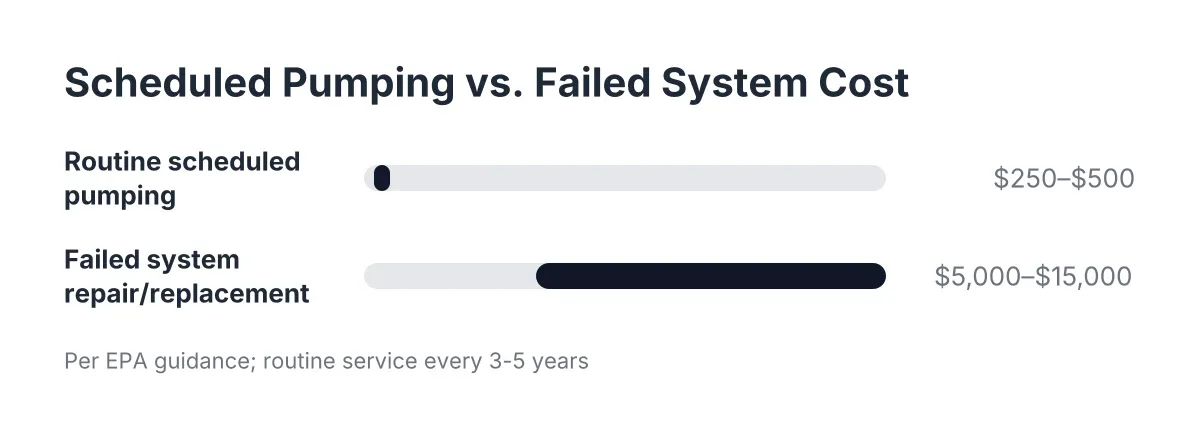
The average price septic tank owners pay for a routine pump out generally falls in the low hundreds of dollars, and according to U.S. Environmental Protection Agency, regular septic system maintenance fees of $250 to $500 every three to five years are a bargain compared to repairing or replacing a failed system, which can run $5,000 to $15,000.
Read that spread again. A few hundred dollars every few years, or five figures once. That is the whole argument for a septic maintenance schedule in one sentence.
Now, your actual quote near Miami will move around inside and sometimes outside that range. Tank size, how long since the last pump out, access to the lid, and whether the crew finds a clogged filter or a struggling leach field all shift the number. As of 2026, most Miami-area homeowners with a standard residential tank and a normal service interval land somewhere in that everyday range, not the scary one.
One more caution. If a quote sounds far below every other number you have heard, ask what it includes. Some low quotes cover pumping the liquid only, leaving the solid sludge behind. That sludge is the reason you called. A real pump out removes liquids and solids and includes a look at the tank's condition.
Why Emergency Septic Service Costs More Than Scheduled Pumping
Emergency septic service costs more than scheduled service because you are paying for urgency, not just the work. After-hours calls, weekend visits, and same-week squeezes carry premiums with almost every operator. You also lose your leverage; when sewage is coming up through the shower drain, you are not comparing three bids.
Here is a scenario Miami homeowners will recognize. It is Saturday morning, family is arriving at noon, and the toilet backs up with that unmistakable smell. You start calling every septic tank cleaning near me result on your phone. Half go to voicemail. One national line answers from another state and takes your info for a callback. By the time a local truck arrives, you have paid a weekend rate, possibly a locate fee to find the buried lid, and an extra charge for a tank so full the crew needed more time on site.
The same tank, pumped six months earlier on a planned visit, would have cost the base rate. No premium, no digging around the yard hunting for a lid, no ruined weekend. The work is identical. The timing is everything.
For property managers, the math gets worse. An emergency at one unit often means a tenant complaint escalation, a possible habitability issue, and cleanup costs on top of the pump out itself. Multiply that across a portfolio and unplanned septic failures become one of your most expensive line items. These emergency situations drive up the overall cost burden, which is why preventive scheduling saves money.
How Often to Pump a Septic Tank in the Miami Area
Most septic tanks need pumping every three to five years. University of Florida IFAS recommends pumping on that interval to keep the system in proper working order, and notes that a well-maintained septic tank can last up to 30 years. The EPA adds that the whole system should be inspected every 1 to 3 years, with pumping every 3 to 5.
However, those are starting points, not rules. Your real interval depends on:
- Household size. More people means more wastewater and faster sludge buildup. A family of six may need a pump out every two to three years; a retired couple might stretch to five.
- Tank size. A smaller tank fills faster. Many older Miami homes have tanks sized for the original build, not the added bathroom or the in-law suite.
- Garbage disposal use. Heavy disposal use sends food solids into the tank and can cut your interval by a year or more.
- Water habits. Long showers, back-to-back laundry days, and leaky toilets all push more water through the system than the leach field can comfortably absorb.
- Commercial or multifamily load. A duplex, small apartment building, or restaurant with a grease trap needs service far more often than a single-family home.
South Florida adds its own pressure. A high water table and heavy rainy-season storms mean saturated ground around the leach field for weeks at a time. A tank that is already near capacity has nowhere to send water during those stretches, which is why so many Miami backups happen right after a big rain. That is a strong argument for landing on the earlier end of the pumping range here.
The scale of the issue locally is bigger than most people think. According to Miami Waterkeeper, there are about 120,000 septic systems in Miami-Dade County, and about 2.6 million septic tanks across Florida. You are not the only one on a tank, and the local septic pump out companies stay booked. Planned visits get on the calendar; panicked calls wait in line.
How to Know When Your Septic Tank Was Last Pumped
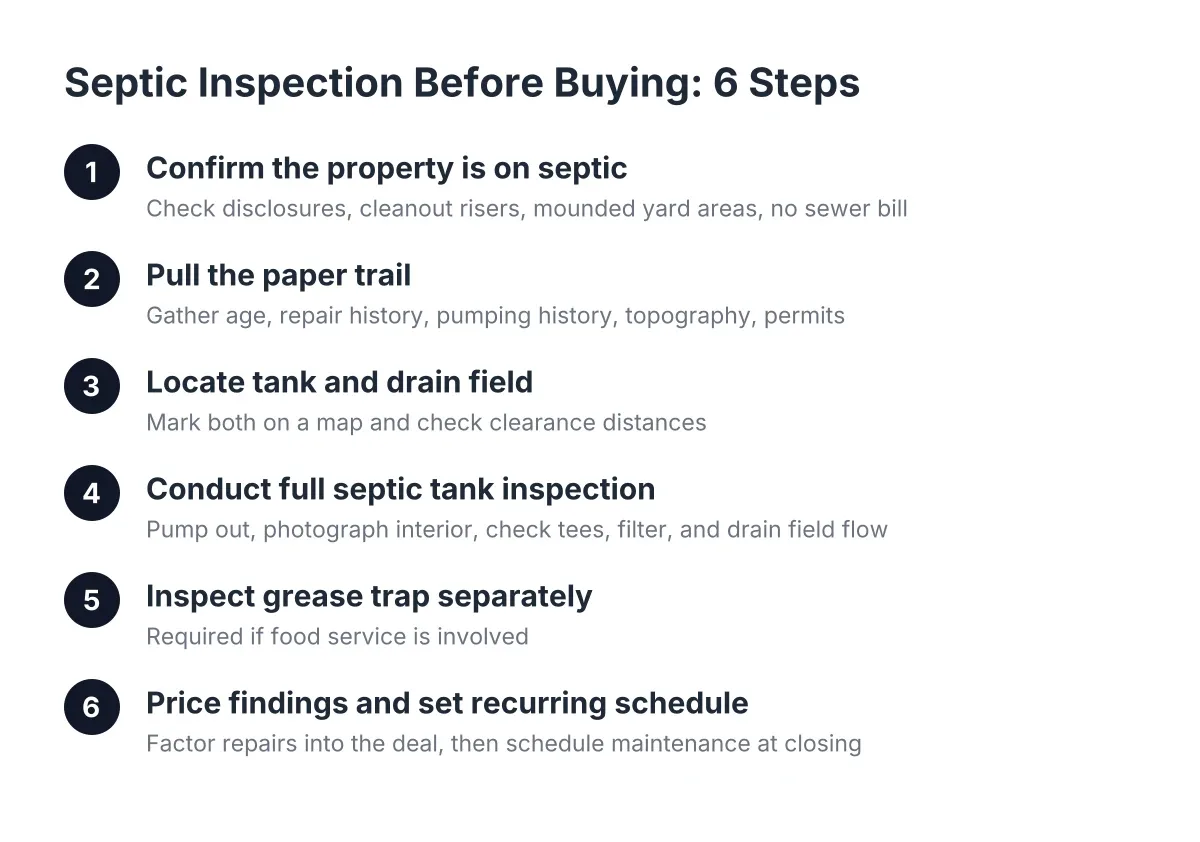
You can find your last pump out date by checking service records, county permits, or physical evidence at the tank itself. If you just bought the home, or inherited a portfolio of properties with thin files, this is step one before you can build any schedule.
Work through these in order:
- Ask the previous owner or seller's agent. Pump out receipts often sit in the closing paperwork folder nobody reads.
- Check with the county health department. Septic permits and some service records are filed locally, and they can also tell you where the tank sits on the property.
- Look for lid access points. A yard with visible risers or recently disturbed sod near the tank suggests service within the last few years. A lid buried under a decade of grass suggests the opposite.
- Have the tank inspected. A septic system inspection with a sludge depth measurement tells you exactly how full the tank is right now, which matters more than any date on paper.
If none of those turn up an answer, assume the tank is due and schedule a pump out. Starting your records with a known-good date is worth the cost of one service visit. From that day forward, you have a baseline.
The Average Price of Septic Tank Service Drops When You Bundle and Plan
The average price of septic tank service goes down, per visit and per year, when you move from one-off emergency calls to a recurring plan. Planned work is cheaper to deliver. The crew knows where your tank is, the lid is accessible, and nothing has failed yet. Those savings show up in your quote.
A recurring plan also catches the small, cheap problems before they become the big, expensive ones. During a routine visit, a tech can spot a cracked lid, a clogged outlet filter, early leach field trouble, or roots working toward the tank. Septic tank filter cleaning during a scheduled visit is a minor add-on. The same filter, ignored until it clogs completely, is the reason your drains back up on a holiday weekend.
For homeowners, a plan usually looks like this:
- A pump out every three to five years, set on the calendar so you never have to remember it
- A quick inspection at each visit, with sludge levels noted in writing
- Filter cleaning as needed between pump outs
- A written record you can hand to a buyer when you sell the house
For property managers and HOA boards, the case is stronger. Rotating a portfolio of septic-served properties through a planned schedule with one local vendor gives you predictable budgeting instead of surprise invoices, a documented service history for every unit, and one number to call instead of a new vendor search every time a tenant reports a slow drain. That service history matters for liability and insurance too. When a board member asks when Building C was last pumped, the answer should be a dated record, not a guess.
One honest trade-off: a maintenance plan means paying for service before anything is visibly wrong, and a few of those visits will find a tank that could have waited another year. That is the cost of never finding one that could not.
Building Your Septic Maintenance Schedule Step by Step
You have decided to get ahead of this. Here is how to set it up so it runs itself.
Step 1: Get a baseline pump out and inspection
Book a full pump out with an inspection, even if you think the tank might be fine. The crew measures sludge, checks the baffles and filter, and confirms the tank's condition. Now you know exactly where you stand. Ask for everything in writing, including tank location and lid access notes.
Step 2: Set your interval
Use the visit findings, your household size, and your water habits to pick an interval. Most Miami-area homes land at three to four years. Heavy-use homes, small tanks, and multifamily buildings often need two to three. Put the next service date on your calendar the day the truck leaves, and set a reminder 60 days ahead so scheduling is easy.
Step 3: Add the in-between tasks
Pumping is the big event, but small habits stretch the time between visits:
- Spread laundry loads across the week instead of one marathon day
- Fix running toilets and dripping faucets promptly; constant water flow overloads the leach field
- Keep grease, wipes, coffee grounds, and food scraps out of the drains
- Keep cars, sheds, and heavy landscaping off the tank and leach field
- Note where your lid is so no future visit starts with a search party
Skip the additive aisle while you are at it. People searching for the best septic tank treatment usually want a shortcut around pumping, and there is not one. A healthy tank already has the bacteria it needs. No additive removes the solid sludge that builds at the bottom; only a pump out does that.
Step 4: Keep a simple service log
One page or one spreadsheet row per property: date of service, what was done, sludge level, filter condition, and any notes. Homeowners will want this at resale, since buyers and inspectors ask. Property managers need it for budgeting, vendor comparisons, and any dispute about whether maintenance was performed.
Step 5: Put the whole thing on autopilot
Ask your septic company to hold the recurring date and call you when it comes due. A local Miami-area operator can do this; a national aggregator that routes your call out of state cannot, because nobody there knows your tank exists. This is the difference between having a septic vendor and having a septic partner.
When to Call a Professional Instead of Waiting for Your Scheduled Date
Call for service now, regardless of your schedule, if you notice sewage odors inside or near the tank, slow drains throughout the house, gurgling pipes, standing water or unusually green grass over the leach field, or any backup into tubs or toilets. Those are signs the tank is at or past capacity, and waiting turns a pump out into a cleanup.
Likewise, some problems go beyond routine pumping. A leach field that stays soggy after dry weather, repeated backups shortly after a pump out, or visible cracks in the tank need a professional assessment, and possibly leach field repair, before you commit to any fix. Diagnosing that from a blog post is not possible; get eyes on it.
Searching septic tank pumping near me in a panic is how most people meet their septic company. It does not have to be how you keep one. Set the baseline, pick the interval, log the visits, and let the schedule do the worrying. The tank gets pumped before it fails, the price stays in the routine range instead of the emergency range, and the next time a neighbor is bailing out a bathroom on a Saturday, it will not be you.