Septic System Inspection Checklist Before Buying a Miami Home or Property
Buying a home or commercial property on septic in the Miami area? A septic system inspection checklist should sit right next to your home inspection report before you sign anything. When you're planning a septic inspection before buying, there are about 120,000 septic systems in Miami-Dade County across residential and commercial areas, according to Miami Waterkeeper, so odds are decent the property you want is one of them. Skip the inspection and you might inherit a failing tank or a dying leach field within months of moving in. Follow the checklist below and you buy with your eyes open, then roll straight into a recurring maintenance plan so the system never surprises you again.
This guide works whether you are buying one house, adding a restaurant space with a grease trap, or a property manager adding a septic-served building to a portfolio of 5 to 50 units. The steps are the same. The stakes just scale up.
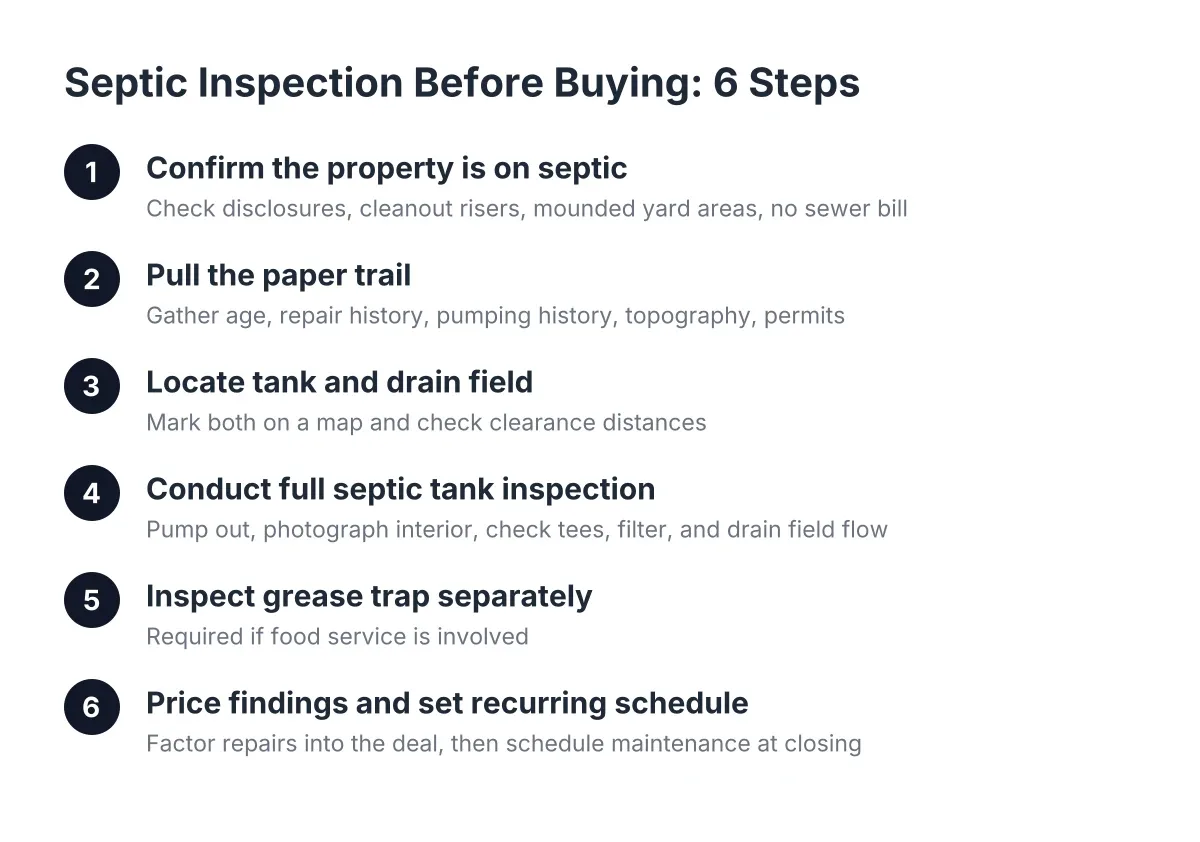
Step 1: Confirm the Property Is Actually on Septic
First, verify what you are dealing with. Plenty of Miami-area buyers assume a property is on city sewer because the neighbors are, then discover a tank in the side yard after closing. Ask the seller directly, check the property disclosure, and look for clues like a cleanout riser, a mounded area in the yard, or the absence of a sewer bill.
A typical residential septic system has two main components: a tank that clarifies wastewater and a drain field that disperses the clarified liquid into the ground, according to US EPA. Both need to check out. A tank in good shape sitting on a failed leach field is still a failed system, and leach field repair is one of the bigger tickets in this trade.
For property managers, do this check for every building in the deal, not just the main one. Mixed portfolios often have a few septic-served properties tucked in with sewer-connected ones, and those are the ones that generate the 2 a.m. tenant calls.
Step 2: Pull the Paper Trail Before Anyone Opens a Lid
Next, gather the records. A good inspection starts on paper, and any experienced local septic pump out company will ask for the same things:
- Age of the house or building, and the age of the tank if known
- Repair history, including any past leach field work or tank patches
- Pumping history, meaning how often the tank was pumped and when it was last done
- The property's topography, since a low-lying lot near water behaves differently than higher ground
- Any permits on file for the original installation or later repairs
If the seller cannot tell you how to know when the septic tank was last pumped, that silence is an answer. A tank with no service history is a tank you should assume is overdue. Before installation, a percolation test must be performed to confirm the soil drains well enough, according to University of Nebraska-Lincoln Extension, so older permit files sometimes include soil information that hints at how the drain field will age.
Step 3: Locate the Tank and Drain Field on a Map
Before you close, know exactly where the tank and leach field sit. This sounds basic, but buyers who skip it have paid for it later by driving equipment over the drain field or excavating for a pool addition right on top of the tank. Have the inspector mark both components, then keep that sketch with your closing documents.
In addition, check clearances. Most local regulations require a minimum distance of 10 feet between a septic system and the building it serves, according to Minnesota Pollution Control Agency. If the tank sits closer than that, or under a paved area or planned addition, flag it now while you still have negotiating power.
Step 4: Conduct a Full Septic Tank Inspection Before Buying
This is the core visit, and it is not a walk-by with a flashlight. A proper pre-purchase inspection follows a defined sequence, and the order matters. When conducting a detailed septic inspection before buying, here is what a thorough septic tank inspection checklist covers:
- Check the liquid level before any pumping happens, so the system is observed in its natural, undisturbed state
- Look for signs of past overfilling, backups, or effluent surfacing over the drain field
- Pump the tank out completely so the interior is visible
- Photograph the tank interior and check structural integrity, including cracks, root intrusion, and the condition of the baffles and tees
- Check for clogged inlet and outlet tees
- Inspect and clean the septic tank filter if the system has one
- Run a function and flow test on the drain field to confirm it accepts water at a normal rate
- Note the tank material, such as concrete, and its overall condition
However, be careful with any inspection that skips the pump out. You cannot judge tank integrity through three feet of sludge. An inspection that includes septic tank pumping costs more up front, but it is the only version that tells you what you are actually buying, and the tank leaves the transaction empty and clean.
The deliverable should be a written septic system inspection form, not a verbal thumbs up. A standard report documents the property address, date of service, work performed, tank material, whether problems were found, whether the tank has ever been full, and overall tank integrity. Property managers should keep these on file for every building; that documented service history matters for liability, insurance, and future sale negotiations.
Step 5: Inspect the Grease Trap Separately If Food Service Is Involved
Buying or leasing a restaurant space on septic is its own category. Suppose you are taking over a Miami cafe and the kitchen drains run slow during a walkthrough. That is often a grease trap that has not seen a clean out in a year, and it becomes your health inspection problem the day you open.
Therefore, add these items for any commercial kitchen:
- Have the grease trap opened, measured, and pumped as part of the inspection
- Ask for grease trap clean out records and the cleaning interval the previous operator followed
- Confirm the trap is sized for the kitchen's actual volume, not the volume from two tenants ago
- Check whether kitchen waste ties into the septic tank, since heavy grease loads shorten the life of the whole system
A neglected grease trap fails quietly until it fails during a dinner rush. Build its cleaning interval into the same recurring plan as the tank from day one, and you never have to chase a vendor the week before an inspection.
Step 6: Price the Findings Into the Deal
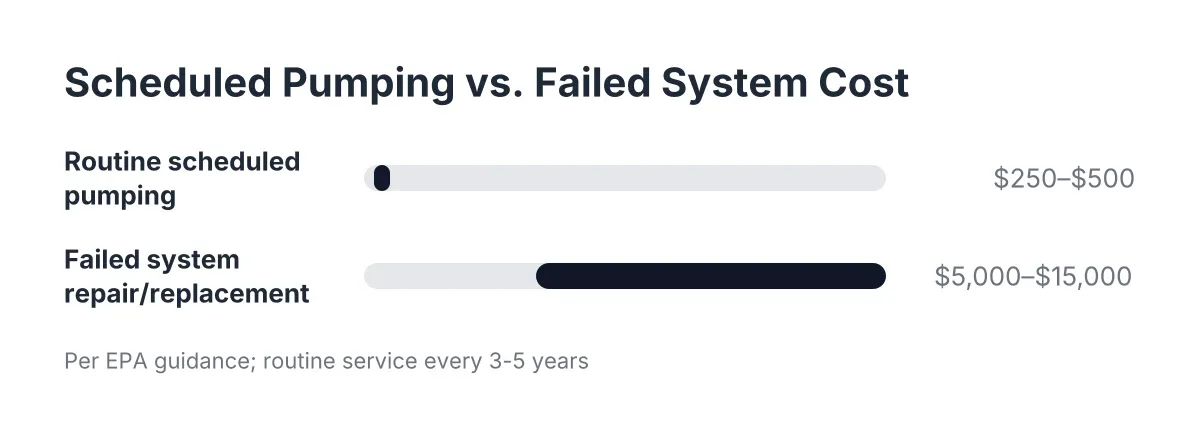
Now use what you learned. A clean report is peace of mind. A rough report is leverage at the closing table, because the cost gap between maintenance and failure is wide. According to the U.S. Environmental Protection Agency, regular maintenance runs about $250 to $500 every three to five years, while repairing or replacing a failed system can cost $5,000 to $15,000.
For example, say a property manager in the Miami area is evaluating a fourplex and the inspection finds a saturated leach field. In that hypothetical, the manager can ask the seller to fund the leach field repair, cut the offer to cover it, or walk away. All three beat discovering the problem through a tenant backup six weeks after closing.
One honest limitation: an inspection is a snapshot, not a warranty. A system that passes today can still fail if a drought breaks, usage doubles, or a flood hits. In South Florida that last one is real; flooded systems must be professionally cleaned, according to University of Florida IFAS. For any structural repair, replacement, or new drain field, bring in a licensed installer, since that work sits beyond what a pumping and cleaning service handles.
Step 7: Set the Recurring Schedule the Day You Close
Finally, do not file the report and forget it. The inspection tells you where the system stands today; a septic maintenance schedule keeps it there. The EPA recommends inspecting the entire septic system every 1 to 3 years and pumping the tank every 3 to 5 years, and Penn State Extension notes an active family of four should generally pump every two to three years.
Set your intervals based on the inspection findings and actual use:
- Single-family home, light use: pump every 3 to 5 years, inspect every 1 to 3
- Busy household or small multifamily: pump every 2 to 3 years
- Restaurant or food service: grease trap clean out on a fixed monthly or quarterly cycle, tank pumping on its own track
- Portfolio properties: one calendar, one local vendor, one file of service records per building
The recurring model is the whole point. A local Miami-area septic service that already knows your tank location, filter type, and pumping history can show up on schedule without you managing it. That is a different relationship than calling septic pump out companies cold during an emergency and taking whoever answers. It also protects more than your property; proper septic maintenance helps protect Florida's groundwater, which supplies 90% of the state's drinking water, according to the Florida Department of Environmental Protection.
Quick Reference: Septic Inspection Before Buying Checklist
Use this condensed version of the septic system inspection checklist when you are moving fast on a 2026 purchase:
- Confirm septic versus sewer for every building in the deal
- Collect age, repair, and pumping records before the site visit
- Map the tank and leach field locations and check setbacks
- Observe liquid level first, then pump, photograph, and assess the tank
- Test drain field function and flow
- Clean and check the septic tank filter
- Pump and evaluate the grease trap for any food service space
- Get a written inspection report and keep it on file
- Negotiate repairs or price based on findings
- Put the pumping, filter cleaning, and grease trap intervals on a recurring calendar at closing
Follow those ten items and the septic system stops being an unknown. It becomes a line on a maintenance calendar, which is exactly where you want it.
If you need septic tank pumping, Miami Septic Tanks can help.
Prefer to talk it through? Call (786) 756-8032 — a quick call is usually the fastest way to get a straight answer for your situation.