7 Warning Signs Your Septic Tank Is Overdue for Pumping (Miami Guide)
Most people search "septic pumping near me" only after something goes wrong: a slow drain, a smell in the yard, or a home inspector flagging the tank two weeks before closing. By then, you are reacting instead of planning. The good news is that septic tanks almost always give you warnings before they fail. If you learn to spot them, you can put your system on a simple recurring plan and stop treating pump outs like emergencies.
This guide walks through seven warning signs that your tank is overdue for a pump out or cleaning, plus how to turn that knowledge into a schedule you set once and stop worrying about. It applies to Miami-area homes and to businesses like restaurants that also run grease traps.
First, How Often Should a Septic Tank Be Pumped?
A septic tank should be pumped every three to five years for a typical household, with a full system inspection every one to three years. That baseline comes from the U.S. Environmental Protection Agency, which recommends inspecting the entire septic system every 1 to 3 years and pumping the tank every 3 to 5 years as part of regular maintenance.
Your actual interval depends on tank size, household size, and how much water you send down the drain. A family of five will fill a tank faster than a retired couple. University of Florida IFAS backs up the same range: tanks should be pumped every three to five years, and with proper maintenance a septic tank can last up to 30 years.
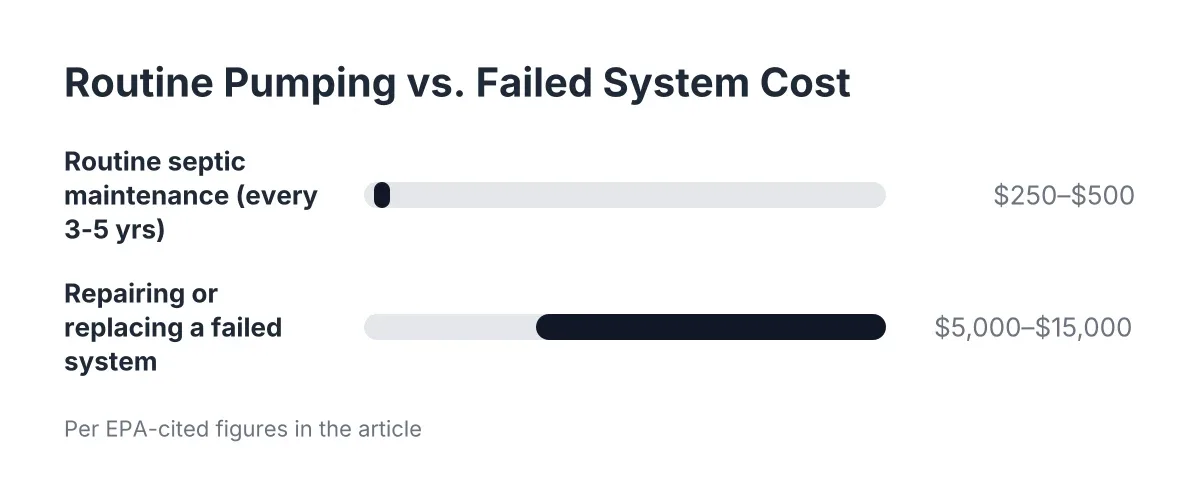
The math strongly favors staying on schedule. According to the U.S. Environmental Protection Agency, regular maintenance fees of $250 to $500 every three to five years are a bargain compared to repairing or replacing a failed system, which can run $5,000 to $15,000. That gap between routine septic tank pumping cost and septic tank repair cost is the whole argument for a recurring plan.
Now for the warning signs that you have already waited too long.
1. Drains Are Slow in Every Room, Not Just One
One slow drain usually means a clog in that fixture. Slow drains everywhere in the house point to the septic tank. When solids build up past a safe level, wastewater has nowhere to go, and every sink, tub, and toilet starts draining like it is tired.
If plunging one drain fixes nothing and the problem shows up in multiple rooms, stop pouring chemical cleaners down the pipes. Those products do not fix a full tank, and they can kill the bacteria your system needs. This is the point where a septic pump out solves the problem and a bottle of drain cleaner does not.
2. Sewage Odors Inside or Near the Tank and Leach Field
A working septic system should be invisible to your nose. Rotten egg smells near drains, over the tank lid, or around the leach field mean gases and waste are escaping instead of staying contained. In Miami heat, those odors get strong fast.
Occasional faint smells after heavy rain can happen. However, a persistent sewage odor is one of the most reliable signs the tank needs pumping or the outlet filter needs septic tank filter cleaning. Do not mask it; schedule service.
3. Wet, Spongy, or Suspiciously Green Grass Over the Drainfield
A soggy patch of yard on a dry week is not good luck for your lawn. When a tank is too full, liquid pushes into the leach field faster than the soil can absorb it. The result is standing water, spongy ground, or a stripe of grass that is greener and taller than everything around it.
This matters beyond your property line. Proper maintenance of septic systems helps protect Florida's groundwater, which supplies 90% of the state's drinking water, according to the Florida Department of Environmental Protection. In addition, University of Florida IFAS notes a conventional tank removes only about 30 percent of the nitrogen flowing into it, so an overloaded system sends even more into the surrounding soil. If the drainfield stays wet after pumping, you may be looking at leach field repair, which is a job for a professional, not a weekend project.
4. Gurgling Pipes and Toilets That Flush Weakly
Gurgling sounds from drains or toilets mean air is trapped in the plumbing because wastewater is backing up somewhere in the line. Toilets that need two or three flushes, or that bubble after you flush, tell the same story.
Therefore, treat gurgling as an early warning, not a quirk of an older house. It often shows up weeks before a full backup. Catch it here and a routine pump out usually fixes it. Ignore it and you may be searching "septic pumping near me open now" on a Sunday with sewage in the shower drain.
5. Sewage Backing Up Into Tubs, Showers, or Floor Drains
This is the last warning the system gives you, and it is the one nobody forgets. When the tank is completely full, wastewater takes the path of least resistance, which is usually the lowest drain in the house. Backups are a health hazard and a cleanup expense on top of the service call.
If you get to this stage, stop running water immediately and call a local septic cleaner. A pump out will relieve the pressure, but a backup this severe is also a sign to have the whole system inspected, since repeated overflows can damage the tank and drainfield.
6. You Cannot Say When the Tank Was Last Pumped
If you do not know the answer, the honest answer is probably "too long ago." This one hits home buyers and sellers hardest. Say you are selling a house in Westchester and the buyer's contract requires a septic inspection. The inspector opens the lid, finds a tank that has not been pumped in eight or nine years, and now you are negotiating repairs on a deadline with a closing date three weeks out.
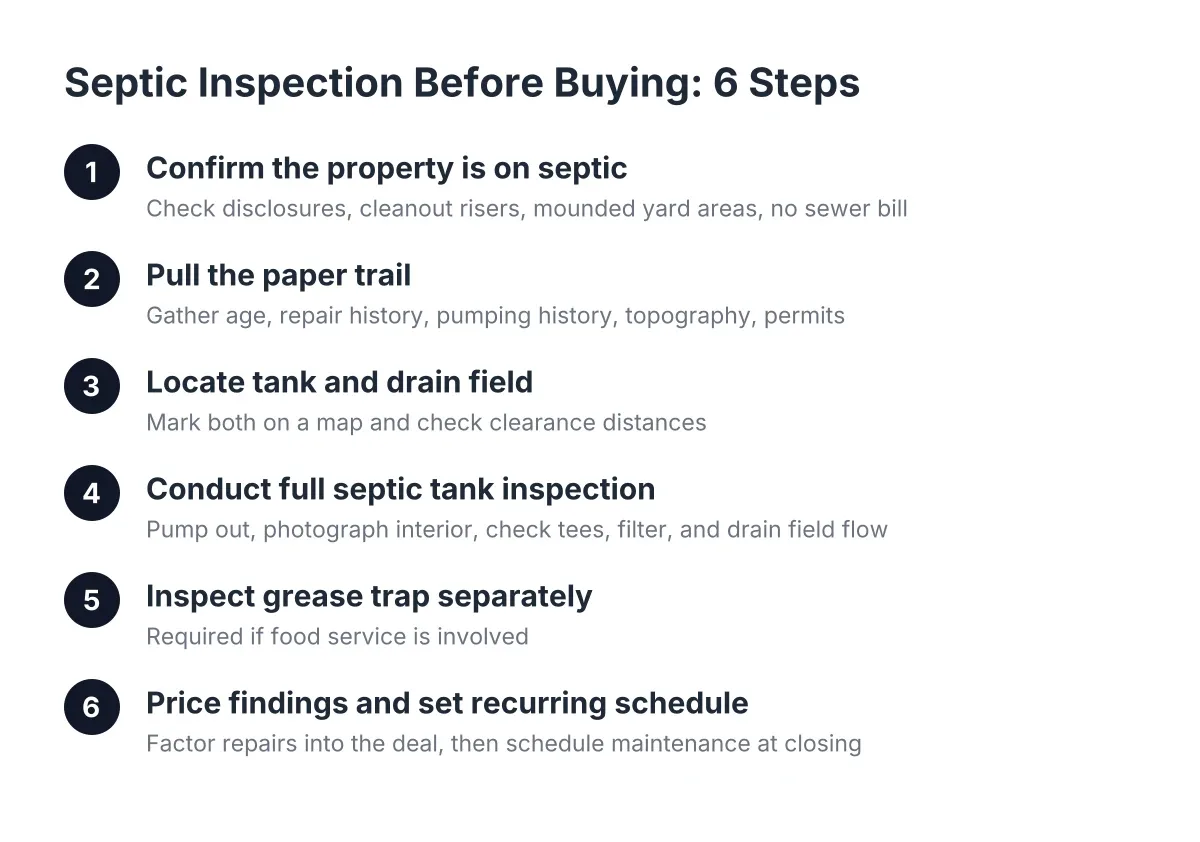
Sellers can get ahead of this by scheduling a pump out and septic system inspection before listing. Buyers should ask for pumping records the same way they ask for roof and AC history. No records plus no visible service history means budget for a pump out at minimum. A documented septic maintenance schedule is one of the cheapest forms of peace of mind in a real estate deal with a septic system attached.
For restaurant and food service operators, the same logic applies to grease traps. If your last grease trap clean out is not on a calendar somewhere, you are one health inspection away from a compliance problem. Most Miami-area kitchens with fryers and grills need trap service on a monthly or quarterly cycle, far more often than a residential tank.
7. Grease Traps or Filters That Overflow Between Cleanings
For commercial kitchens, an overflowing or smelly grease trap between scheduled cleanings means your service interval is too long for your grease volume. A busy Little Havana or Miami Beach kitchen running fryers all day fills a trap far faster than a low-volume cafe. Adjust the interval instead of scrubbing symptoms.
The residential version of this sign is the effluent filter. If your tank has one and it clogs repeatedly, the tank likely carries too many solids and needs pumping, not just septic tank filter cleaning. Either way, recurring overflow is the system telling you the schedule is wrong, not that the equipment is broken.
Why Searching "Septic Pumping Near Me" in a Panic Costs More
Searching septic pumping near me during a backup puts you in the worst buying position: no time to compare septic pump out companies, no leverage on scheduling, and cleanup costs stacked on top of service costs. Planned pump outs on a set interval avoid all three problems.
Compare the two paths side by side:
- Reactive service: you call whoever answers first, you pay for urgency, and you may face water damage, a failed inspection, or a delayed closing on top of the pump out itself.
- Recurring maintenance: you pick a local Miami-area provider once, service happens on a predictable cycle, you build a paper trail, and problems like a cracked baffle or a struggling leach field get caught small.
For a restaurant owner, the recurring path also means predictable line-item costs and clean records when the county asks for them. For a home seller, it means the septic question in your contract is a checkbox instead of a crisis.
Turn "Septic Pumping Near Me" Into a Schedule You Set Once
The fix for all seven warning signs is the same: stop treating pumping as an event and start treating it as a cycle. Here is a simple septic maintenance checklist you can set up in 2026 and mostly forget:
- Find your baseline interval. Start with every three to five years for a home tank; adjust down for large households or garbage disposal use.
- Book a septic system inspection first. It tells you current sludge levels, filter condition, and drainfield health, so your interval is based on your system, not a guess.
- Put the next pump out on the calendar before the truck leaves. The best time to schedule service is right after the last one.
- Keep records in one folder. Dates, what was pumped, and any notes. This is what buyers, inspectors, and county officials ask for.
- Add filter cleaning to the cycle. Septic tank filter cleaning between pump outs keeps solids out of the leach field.
- For kitchens, set grease trap clean outs on their own faster cycle, typically monthly or quarterly based on volume.
One honest caveat: a schedule prevents most emergencies, but it cannot fix a system that is already failing. If you see standing sewage, repeated backups after a recent pump out, or a drainfield that never dries, get a professional inspection before spending more on pumping. Sometimes the real issue is septic tank repair or leach field work, and pumping alone only buys time.
Whether you are a homeowner trying to close on time, or a restaurant manager trying to stay ahead of the next inspection, the goal is the same. Find dependable septic maintenance near me once, put the dates on a calendar, and let the schedule do the worrying for you. In Miami, FL and surrounding areas, that is the difference between a routine service visit and a Saturday you would rather not remember.
If you need septic tank pumping, Miami Septic Tanks can help.
Prefer to talk it through? Call (786) 756-8032 — a quick call is usually the fastest way to get a straight answer for your situation.