What Happens During Professional Septic Tank Cleaning: A Step-by-Step Guide
If you have never watched a septic truck work, the whole thing can feel like a mystery. This guide walks through exactly what happens during professional septic tank cleaning steps, so you know what the crew is doing, why they are doing it, and what you are paying for. That matters because "pumping" and "cleaning" get used interchangeably, and they are not the same job.
Here is the short version. Pumping usually means removing the liquid and some solids from the tank. Cleaning means removing everything: the liquid, the sludge layer settled at the bottom, and the scum layer floating on top. If a home inspector flagged your tank before a closing, or a county compliance deadline has your restaurant's grease trap on the clock, you want the full cleaning, and you want to know it was done right.
One note before the steps. A tank never gets scrubbed, bleached, or scraped by hand. The vacuum and water process removes the buildup. Anyone promising to sanitize the inside of your tank is describing something septic systems do not need and beneficial bacteria would not survive.
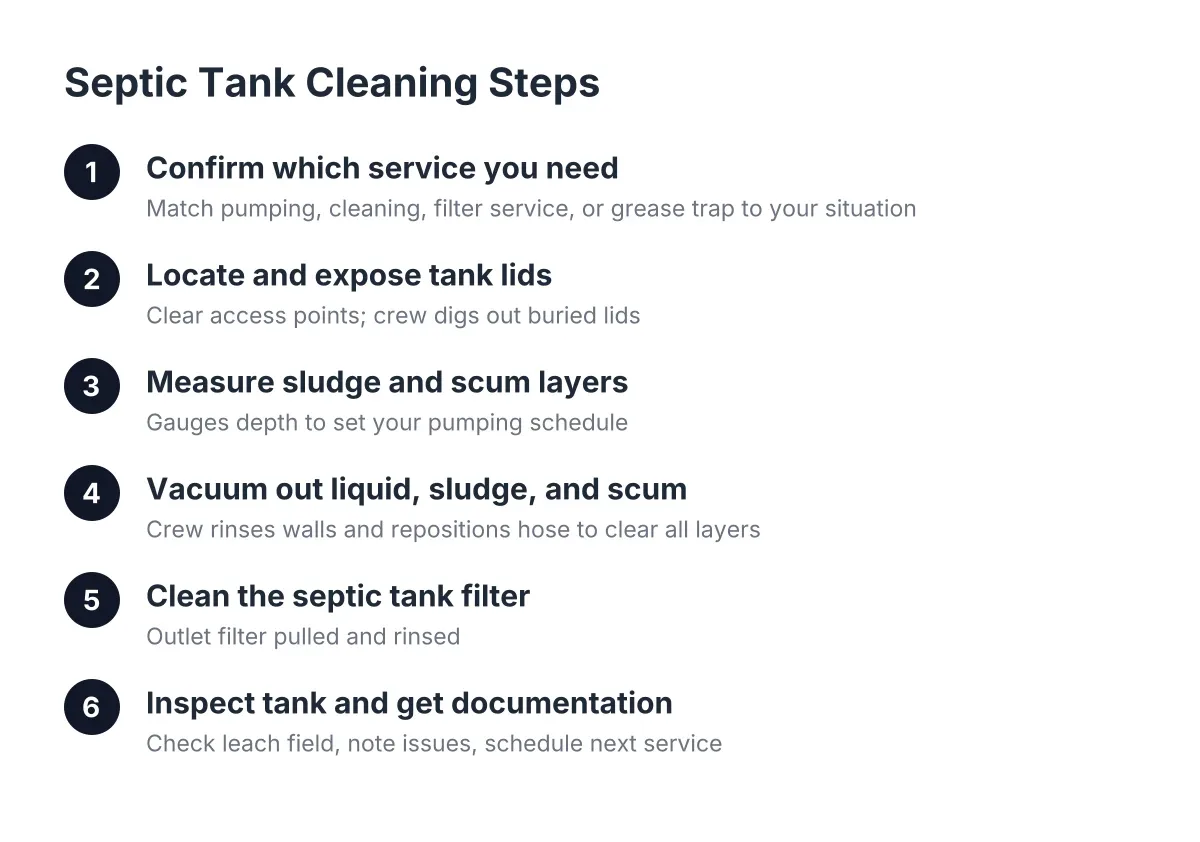
Step 1: Confirm Which Service You Actually Need
Start by matching the service to your situation, because septic pump out companies quote based on what you ask for. Ask for the wrong thing and you either overpay or get a job that does not solve your problem.
Use this quick guide:
- Septic tank pumping or a pump out: routine maintenance when the tank is filling on schedule. The U.S. Environmental Protection Agency recommends inspecting the entire septic system every 1 to 3 years and pumping the tank every 3 to 5 years.
- Septic tank cleaning: the deeper job. The crew removes liquid, sludge, and scum, and may rinse the tank walls with water to break up stubborn buildup. Ask for this if the tank has gone years without service, if a sale requires documentation, or if you have had backups.
- Septic tank filter cleaning: the outlet filter gets pulled and rinsed so solids stop escaping toward the leach field. This is often bundled with a cleaning.
- Grease trap clean out: for restaurants and commercial kitchens, a separate service on its own compliance schedule.
Suppose you are selling a home in the Miami area and the buyer's inspector wants proof the septic system is sound. In that scenario, a pump out alone may not satisfy anyone, because the inspector needs to see the empty tank's condition. A full cleaning plus an inspection gives you the documentation and gives the buyer confidence. Say so when you call; it changes how the crew prepares.
Step 2: Locate and Expose the Tank Lids
Next, the tank has to be found and opened. If you know where your lids are, clear the area before the truck arrives. Move planters, patio furniture, and anything parked over the access points. If the lids are buried under a few inches of soil or grass, the crew will dig them out, though some companies charge extra for deep digging.
For home buyers and sellers, this step is where surprises show up. A technician typically looks at the ground around the tank first. Soggy soil, unusually green grass, or sewage odor near the tank area can point to a leak or a struggling leach field before the lid ever comes off. Finding this now is better than finding it after closing.
Restaurant operators have it easier. Indoor grease traps sit under the floor or near the kitchen line, and outdoor interceptors have marked access covers. Just make sure the crew can reach them during your service window without blocking deliveries.
Step 3: Measure the Sludge and Scum Layers
Before removing anything, a careful technician checks how full the tank is. A measuring tool goes into the tank to gauge the depth of the sludge on the bottom and the scum on top. This tells you two things: whether you waited too long, and how long you can likely wait next time.
Why does this matter? Solids build up in every tank no matter how careful you are, and biology alone cannot eliminate them. According to University of Florida IFAS, tanks should be pumped every three to five years to stay in working order, and with proper maintenance septic tanks can last up to 30 years. The measurement turns that general rule into a schedule for your specific household or kitchen.
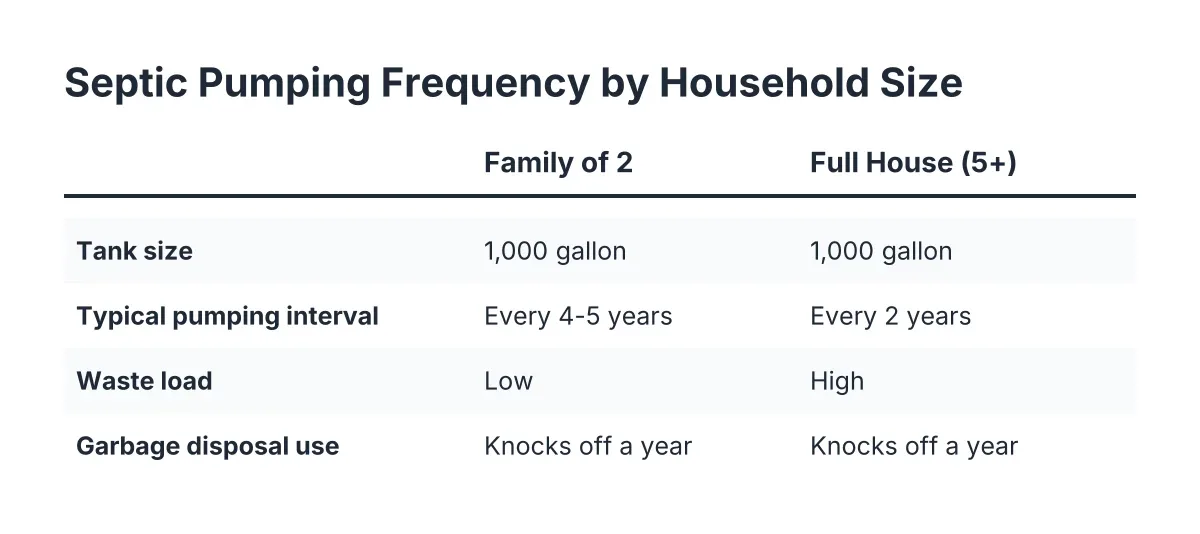
For example, a family of four fills a tank faster than a retired couple. Penn State Extension notes that an active family of four generally needs pumping every two to three years because of higher solids and liquid output. A busy Little Havana kitchen running fryers all day fills a grease trap faster still.
Step 4: Follow the Process During Professional Septic Tank Cleaning
Now the main event. The technician lowers a heavy vacuum hose from the truck into the tank and starts removing the contents. Here is the part that separates a real cleaning from a quick pump and run: the liquid comes out easily, but the sludge and scum are the layers that actually cause backups. A thorough job targets all three.
To break up the compacted sludge at the bottom, the crew typically does one or more of these:
- Alternates between vacuuming liquid and using it to stir and thin the sludge.
- Uses water to rinse down the tank walls and loosen stuck buildup.
- Repositions the hose to reach corners and the far end of the tank.
You should be able to see into the emptied tank when they finish. Do not be shy about looking. An honest crew will show you the empty tank and point out anything worth knowing, like a cracked baffle or a root intrusion. If your closing depends on this tank, take photos.
The waste does not vanish, either. Pumped septic waste is trucked to a sewage treatment plant for disposal, according to the New Hampshire Department of Environmental Services. That disposal cost is built into your bill, which is one reason searching for cheap septic tank pumping near me and picking the lowest number can backfire. A price far below every other quote often means a partial pump out that leaves the sludge behind.
Step 5: Clean the Septic Tank Filter
In addition to the tank itself, many systems have an outlet filter that catches solids before they reach the leach field. During a full septic system cleaning, the technician pulls this filter, rinses it over the open tank, and reseats it. Skipping this step lets trapped solids wash into the drain field, where repairs get expensive.
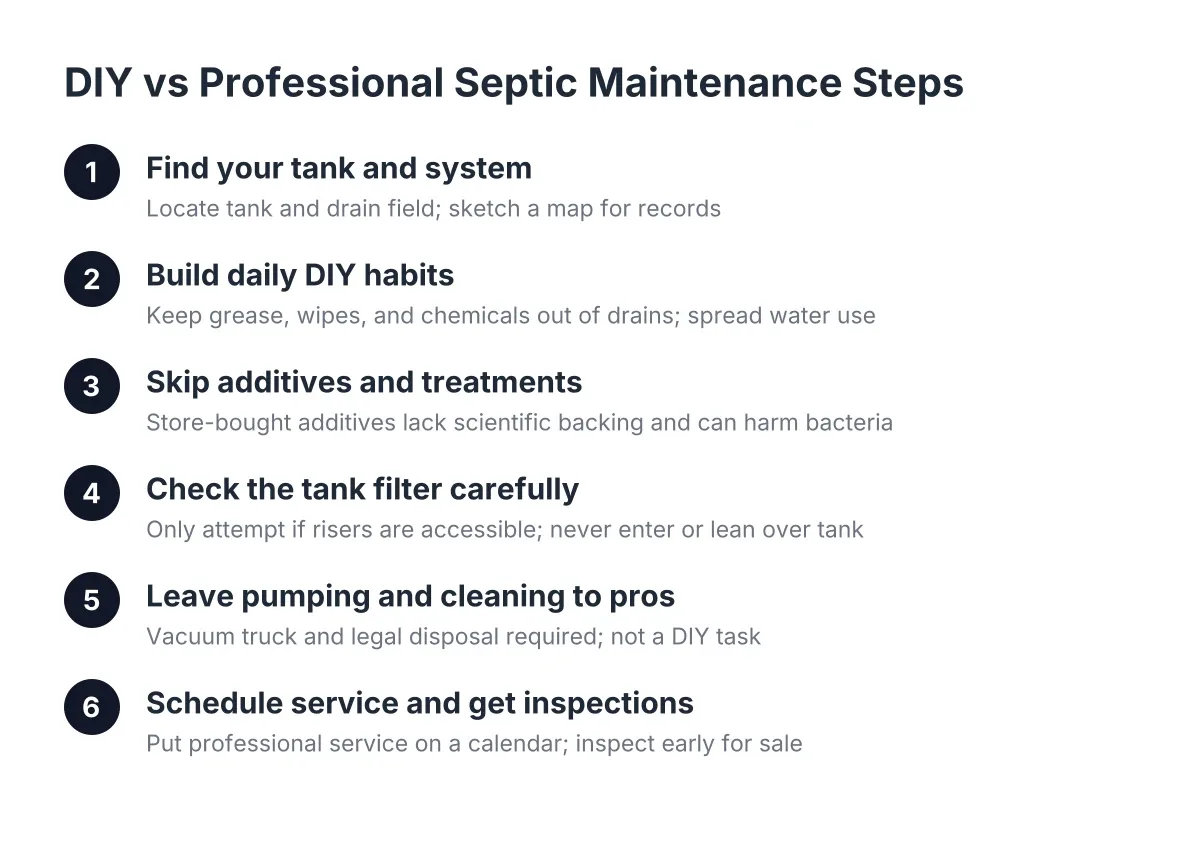
Filters sit underground and can be awkward to reach, which is why this is a job for the crew, not a weekend project. If you have an aerobic system, expect a longer visit; those systems can also need pump checks, line inspections, and other upkeep beyond a standard pump out.
Step 6: Inspect the Tank and Ask About the Leach Field
With the tank empty, the technician can see what a full tank hides: cracks, corrosion, damaged baffles, and signs of past overflows. This is the moment to ask questions, especially if you are mid-transaction on a home sale.
Remember how the system works. A conventional septic system has two main parts, the tank and the drain field, according to the U.S. Environmental Protection Agency. After separation in the tank, liquid flows out through perforated pipes into the leach field, where gravel, sand, and soil filter it. A clean tank cannot save a failed leach field, so ask directly: does the drain field look like it is accepting water normally?
However, be realistic about limits. A pump-out visit is not a full engineering evaluation. If the technician spots standing water over the leach field or backflow from the outlet pipe, get a dedicated septic system inspection before you sign anything or plan leach field repair. That trade-off is worth stating plainly: cleaning tells you a lot, but it does not tell you everything.
Step 7: Get Documentation and Set Your Next Service Date
Finally, before the truck leaves, get paperwork. At minimum, the record should show the date, the volume removed, the tank's condition, and any problems observed. Home sellers need this for the buyer's file. Restaurant operators need it for county grease trap compliance; keep every clean out record where a health inspector can see it.
Then put the next service on the calendar while the measurement from Step 3 is fresh. Regular maintenance is the cheap option here. The U.S. Environmental Protection Agency puts routine maintenance at $250 to $500 every three to five years, compared with $5,000 to $15,000 to repair or replace a failed system. When you search septic tank pumping cost near me and wince at a quote, that comparison is the context.
Questions People Ask About What Happens During Professional Septic Cleaning
Does the crew scrub the inside of the tank?
No, professional septic tank cleaning does not involve scrubbing, bleaching, or scraping the tank walls by hand. The vacuum process, sometimes helped by water rinsing, removes the liquid, sludge, and scum together. Harsh chemical treatments can kill the beneficial bacteria your tank needs and can corrode components, so a good crew avoids them.
Should I use additives between cleanings?
Additives are not a substitute for pumping, and most do not work as advertised. According to Washington State University Extension, commercial septic additives marketed to dissolve sludge lack strong scientific backing. Your tank is a biological system that mostly maintains itself; the one thing it cannot do is remove accumulated solids, and only a pump out does that.
Do I need my tank pumped before selling my house?
Often yes, and usually cleaned rather than just pumped. Many buyers, lenders, and inspectors want to see the empty tank's condition documented before closing. In 2026, plenty of Miami-area contracts include a septic contingency, so scheduling the cleaning early in your closing timeline protects the deal. About 2 million Florida homes, about 30% of the state's residents, rely on septic systems according to University of Florida IFAS, so local buyers and their agents know to ask.
How do I pick a septic tank pumping service near me?
Choose a local operator who serves Miami, FL and surrounding areas, asks about your specific situation, and explains what the visit includes before quoting. When you search for a septic cleaner near me service, ask each company one question: do you remove the sludge and scum, or only the liquid? The answer tells you whether you are buying a cleaning or just a pump out, and now you know the difference.
If you need septic tank pumping, Miami Septic Tanks can help.
Prefer to talk it through? Call (786) 756-8032 — a quick call is usually the fastest way to get a straight answer for your situation.