Septic System Cleaning Terms Explained: A Plain-English Glossary
If you are getting quotes for septic work in the Miami area, the jargon piles up fast. This septic system cleaning glossary breaks down the terms you will see on quotes, invoices, and service pages into plain English. Use it to understand what a provider is actually offering, ask sharper questions, and spot problems before they turn into backups. Every entry here is short enough to read while you are on hold.
- Septic Tank
- Leach Field
- Baffle
- Effluent Filter
- Grease Trap
- Riser
- Septic Tank Pumping
- Septic Tank Cleaning
- Pump Out
- Sludge
- Scum Layer
- Hydro Jetting
- Understanding Septic System Inspection Terms
- Sewer Tank Service
- Septic Cleaner Near Me
- Septic Pump Out Companies
- What Drives the Cost: Gallons Pumped
- Disposal Fee
- Access Fee
Parts of Your Septic System
Septic Tank
A septic tank is a buried, watertight container that holds all the wastewater leaving your home so solids can settle out before the liquid moves on. Everything from your toilets, sinks, and drains flows here first. Over time, solids build up on the bottom and need to be removed. That removal is what pumping and cleaning are all about, and it is the core of most service calls.
Leach Field
A leach field is the network of buried pipes and gravel that spreads treated liquid from your septic tank into the soil. You may also hear it called a drain field. If your leach field fails, you can see soggy grass, foul smells, or sewage backing up indoors. Leach field repair is a bigger job than tank pumping, so a provider mentioning it means the problem has moved past the tank itself.
Baffle
A baffle is a fitting inside your septic tank that keeps floating grease and solids from escaping into your leach field. Most tanks have one at the inlet and one at the outlet. A broken baffle lets solids flow where they should not, which can clog the field. A good pump out includes a quick look at the baffles, and a provider flagging a damaged one is doing you a favor, not padding the bill.
Effluent Filter
An effluent filter is a screen on the outlet of your septic tank that catches small solids before they reach the leach field. Not every tank has one, but they are common in newer systems. A clogged filter causes slow drains even when the tank is not full. Septic tank filter cleaning is a routine task, and it is far cheaper than repairing a clogged leach field, so it is worth asking about at every service.
Grease Trap
A grease trap is a container that catches fats, oils, and grease from kitchen drains before they reach the septic system or sewer. Restaurants and commercial kitchens rely on them, but some homes have them too. Grease hardens as it cools and can choke a septic tank fast. A grease trap clean out removes that buildup, and businesses often schedule it on a regular cycle to stay ahead of clogs.
Riser
A riser is a vertical pipe that extends your septic tank's access lid up to ground level. Without one, a technician has to dig down to the tank lid before any work can start. Digging adds time and labor to every visit. If a provider suggests installing a riser, it usually pays for itself by making every future pump out faster and simpler.
The Service Itself
Septic Tank Pumping
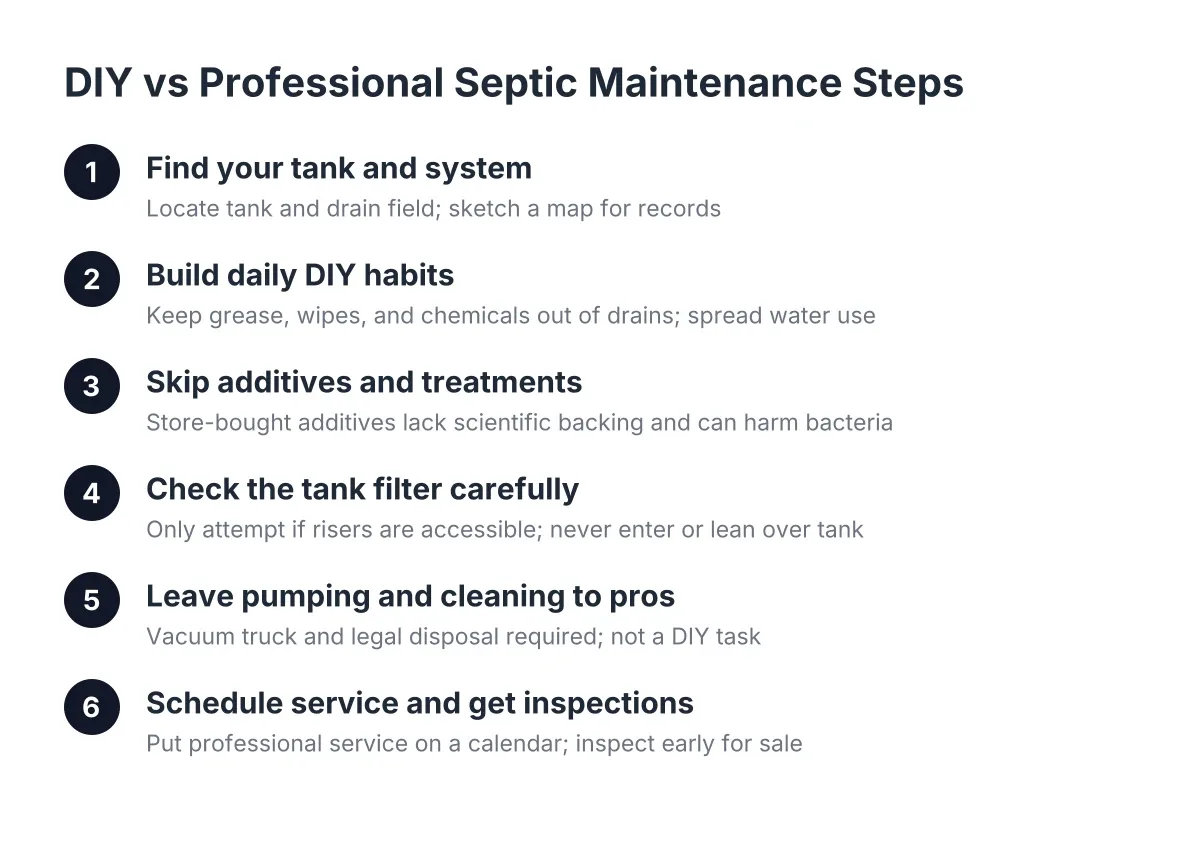
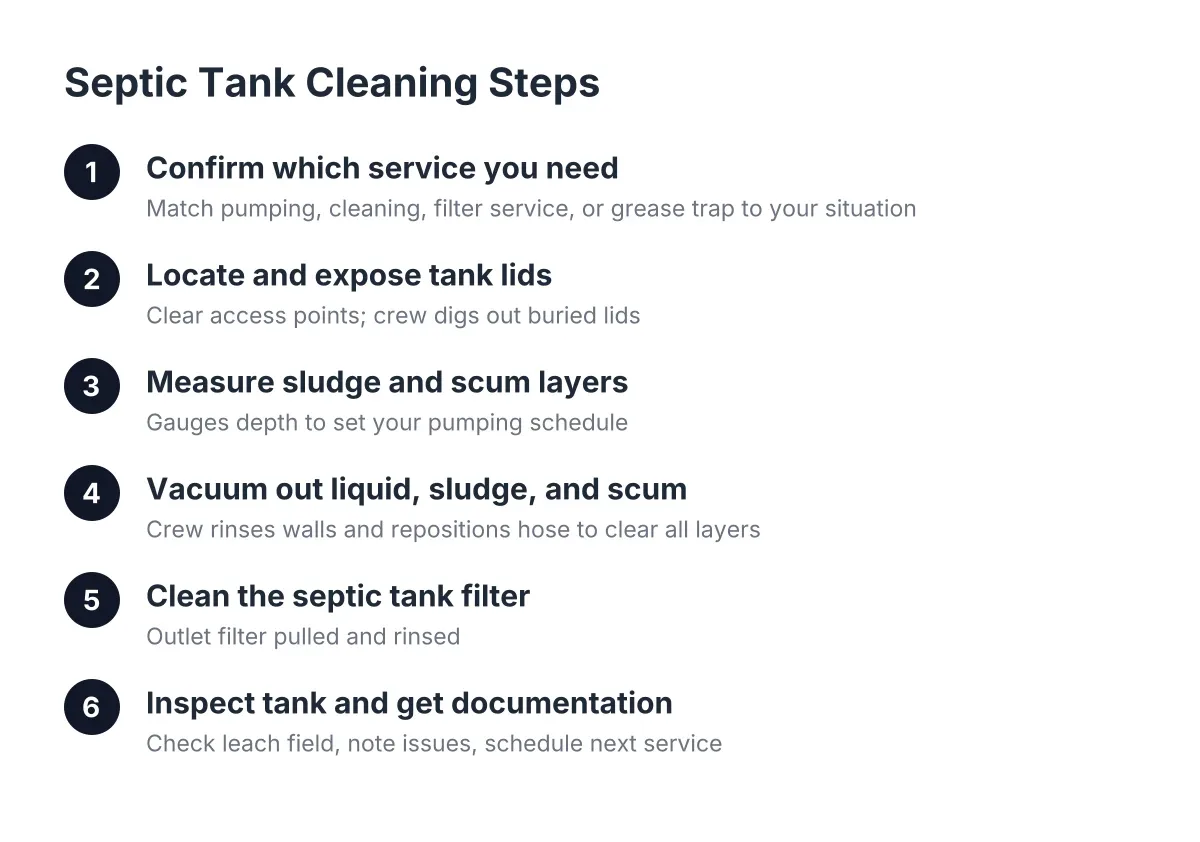
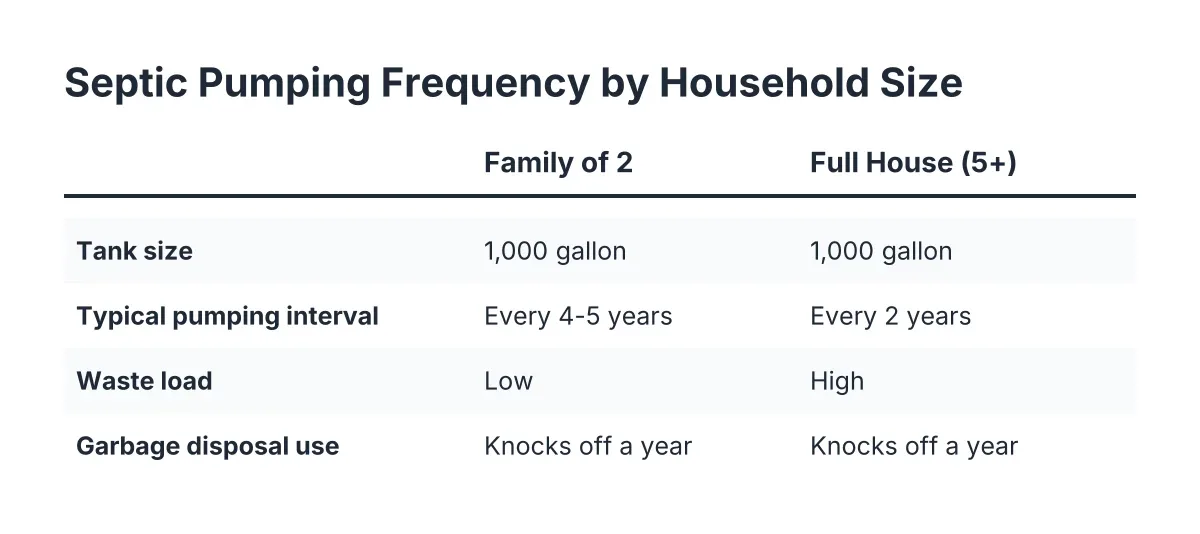
Septic tank pumping means using a vacuum truck to remove the liquids and floating solids from your tank. It is the most common septic service and the one most homes need on a regular schedule. Pumping keeps solids from overflowing into your leach field. How often you need it depends on tank size and household size, and this guide to septic tank pumping frequency walks through the details for Miami homes and businesses.
Septic Tank Cleaning
Septic tank cleaning means removing everything from the tank, including the compacted sludge layer stuck to the bottom and walls, not just the liquid on top. It goes a step beyond pumping. Cleaning matters when a tank has gone years without service and the sludge has hardened. If you are not sure which service to ask for, these warning signs your tank needs pumping or cleaning can help you tell the difference before you call.
Pump Out
A pump out is the everyday name for a full septic tank pumping visit, where a truck empties the tank's contents. Providers use "pump out" and "pumping" to mean the same thing on most quotes. A septic system pump out for a home is a routine job. If a quote lists a pump out plus extra line items, the extras are what you should ask about, since the pump out itself is the standard service.
Sludge
Sludge is the layer of settled solids that collects on the bottom of a septic tank over time. It is what pumping exists to remove. When sludge gets too deep, solids escape into the leach field and cause the damage that leads to expensive repairs. If a technician measures your sludge level, that is a sign of a careful job, because sludge depth is the honest way to tell whether a tank truly needed service.
Scum Layer
A scum layer is the floating mat of grease, oils, and light solids that sits on top of the liquid inside a septic tank. It forms in every working tank. Together with the sludge on the bottom, it tells a technician how full your tank really is. A thick scum layer often points to heavy grease going down the drains, which is worth changing before it clogs your outlet baffle or filter.
Hydro Jetting
Hydro jetting means clearing a clogged pipe with a high-pressure stream of water. Providers use it on blocked lines running to or from the septic tank, not on the tank itself. It shows up on quotes when a clog will not clear with pumping alone. If a provider recommends jetting, ask which line is blocked and why, so you know whether the clog is a one-time problem or a symptom of something bigger.
Understanding Septic System Inspection Terms
A septic system inspection is a check of your tank, baffles, filter, and leach field to confirm everything works as it should. Buyers often order one before closing on a home with a septic system. An inspection can catch a failing baffle or a saturated field before it becomes an emergency. It is a smart add-on during a pump out, since the tank is already open and easy to examine.
Sewer Tank Service
Sewer tank service is a catchall term for pumping, cleaning, and maintaining any tank that holds household wastewater. Some people say "sewer tank" when they mean their septic tank, and providers understand both. If you see sewer tank cleaning on a service list, it covers the same core work as septic tank cleaning. The name changes; the vacuum truck does not.
Quotes, Paperwork, and Finding Help
Septic Cleaner Near Me
"Septic cleaner near me" is the search phrase people type when they want a local company to pump or clean their septic tank. The results mix genuinely local operators with national directories that route your call out of state. A local Miami-area provider knows the soil, the water table, and the permitting habits of the county. When you call, ask where the crew is actually based; the answer tells you who you are really hiring.
Septic Pump Out Companies
Septic pump out companies are the businesses that own vacuum trucks and do the physical work of emptying septic tanks. Some also handle filter cleaning, grease trap clean out, and leach field repair, while others only pump. Knowing the difference helps you match the company to the job. If your problem might go beyond the tank, choose a company whose service list covers repairs, so you are not paying for two visits.
What Drives the Cost: Gallons Pumped
Gallons pumped is the amount of material a company removes from your tank, and it often drives the price on a quote. A larger tank costs more to empty because the truck hauls away more waste. If a quote lists a flat rate, ask whether it covers your full tank size or charges extra past a limit. For a fuller picture of what goes into pricing, this septic system cleaning cost guide breaks down the common line items.
Disposal Fee
A disposal fee is a charge that covers hauling your tank's waste to an approved treatment facility. Companies cannot dump septic waste anywhere; it goes to a permitted site, and that site charges them. Some quotes fold this fee into the total, and others list it separately. Neither approach is wrong, but a separate line makes it easier to compare quotes side by side.
Access Fee
An access fee is a charge for extra work needed to reach your septic tank, such as digging to an unmarked lid or moving obstacles. Tanks with risers rarely trigger this fee. If you do not know where your tank is, say so when booking, because surprise digging is the most common reason a final bill runs higher than the quote. Marking your lid after the first visit keeps future septic system cleaning visits cheaper and faster.
Using These Terms
You can now read a septic quote line by line and know what each charge covers, from the pump out itself to disposal and access fees. When a provider mentions baffles, sludge levels, or filter cleaning, you will know whether it points to routine care or a bigger repair. That is the whole point of this glossary of septic system cleaning terms: fewer surprises, better questions, and a clearer conversation with whoever opens your tank.
If you need septic tank pumping, Miami Septic Tanks can help.
Prefer to talk it through? Call (786) 756-8032 — a quick call is usually the fastest way to get a straight answer for your situation.