Septic System Inspection Terms Explained: A Plain-English Glossary
If you are buying a home in the Miami area or getting your own system checked, the paperwork can feel like it was written for plumbers, not people. This septic system inspection glossary breaks down the terms you will hear in quotes, inspection reports, and phone calls with local providers. Each entry gives you a plain definition first, then tells you why it matters and what it means for your wallet. Read it once and you will follow the conversation instead of nodding along.
- Septic Tank: the buried box that holds your wastewater
- Leach Field: where treated water soaks into the ground
- The 3 Types of Septic Systems: conventional, chamber, and aerobic
- Baffle: the guard that keeps solids in the tank
- Effluent Filter: a screen that protects the leach field
- Scum and Sludge Layers: the floating and sinking waste inside the tank
- Riser: an access tube that saves digging
- Distribution Box: the splitter that feeds the leach field
- Pump Out: emptying the tank with a vacuum truck
- Hydraulic Load Test: running water to see if the system keeps up
- Dye Test: colored water that reveals leaks
- Grease Trap: a catch box for kitchen fats
- Point of Sale Inspection: the check done before a home changes hands
- As-Built Diagram: the map of where your system sits
- Certificate of Inspection: the paper that says your system passed
Understanding Key Terms in a Septic System Inspection Glossary
Before you can follow an inspection report, you need to know what is buried in your yard. These are the pieces every septic system inspection looks at, and the ones most likely to show up on a quote.
Septic Tank
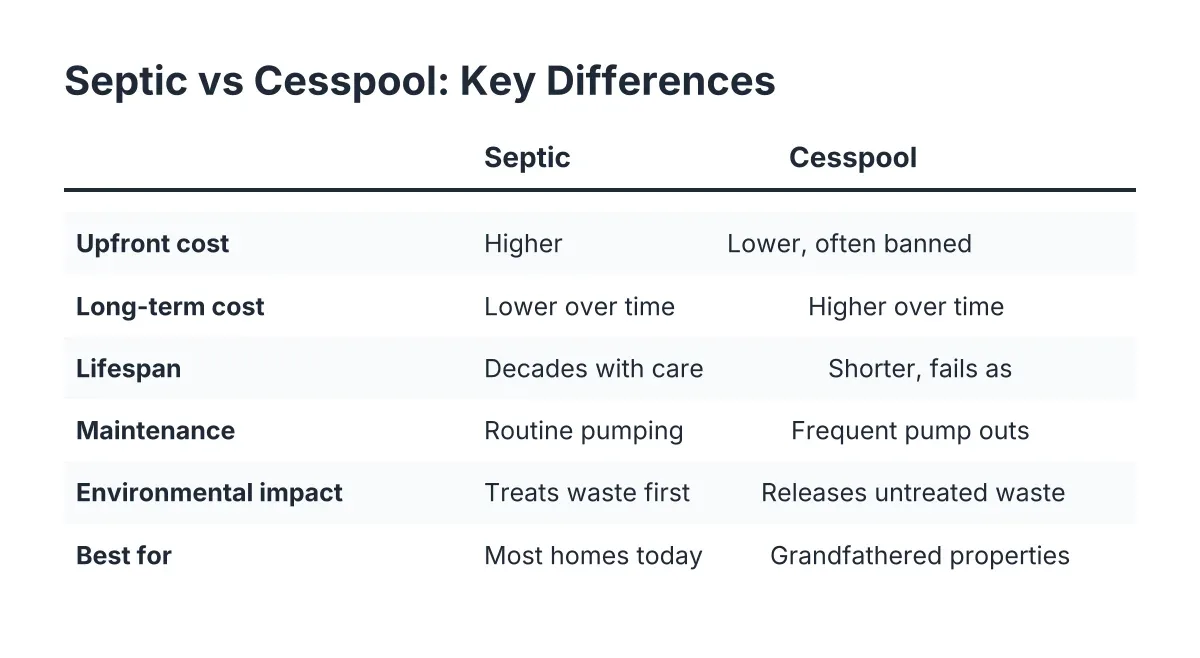
A septic tank is a buried, watertight container that collects all the wastewater from your home and separates solids from liquids. Heavy waste sinks, grease floats, and the liquid in the middle flows out to the leach field. Inspectors check the tank for cracks, leaks, and how full it is. If a provider says your tank needs septic tank pumping, they mean the solids have built up and need to be hauled away. If you are still deciding between system types, our comparison of septic tanks versus cesspools walks through the differences.
Leach Field
A leach field is the network of buried pipes or trenches where liquid from the septic tank soaks safely into the soil. It is also called a drain field. This is the most expensive part of the system to fix, so inspectors watch it closely. Soggy grass, bad smells, or standing water over the field are warning signs. If a report mentions leach field repair, ask exactly what failed before you agree to anything.
The 3 Types of Septic Systems
The three most common types of septic systems are conventional gravity systems, chamber systems, and aerobic treatment units. A conventional system uses gravity to move wastewater from the tank to a gravel-lined leach field. A chamber system swaps the gravel for open plastic chambers, which works well where gravel is scarce. An aerobic unit adds air to the tank so bacteria break down waste faster, and it needs more maintenance than the other two. Knowing which type you have helps you understand your quote, because service needs differ between them.
Baffle
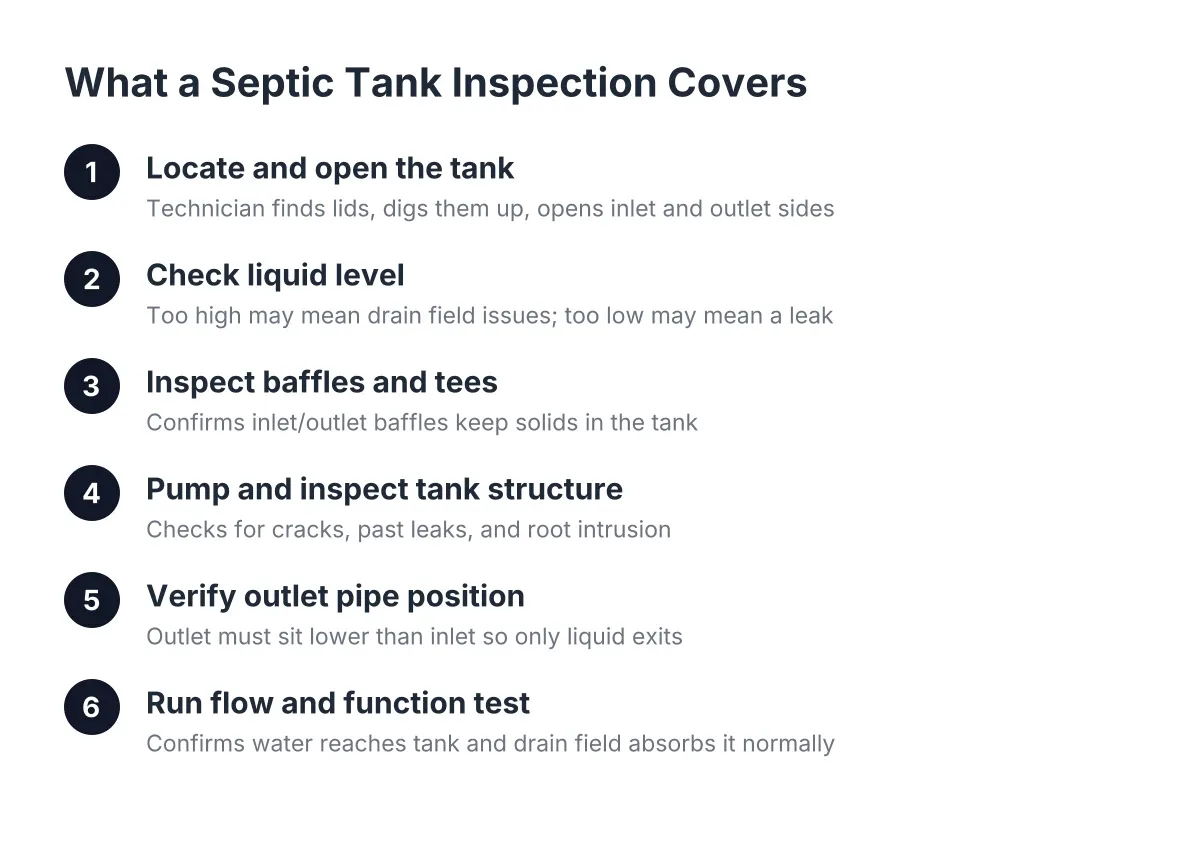
A baffle is a barrier inside the septic tank that stops solids from flowing out with the liquid. Most tanks have one at the inlet and one at the outlet. A broken outlet baffle lets solids escape into the leach field, which can clog it over time. Inspectors check baffles on every visit, and replacing one is a small job compared to fixing a ruined leach field.
Effluent Filter
An effluent filter is a screen on the tank's outlet that catches small solids before they reach the leach field. It is cheap insurance for the most expensive part of your system. Filters clog over time and need regular cleaning, which is why septic tank filter cleaning is often bundled with a pump out. If your inspector finds no filter at all, adding one is worth asking about.
Scum and Sludge Layers
Scum and sludge are the two waste layers inside a septic tank; scum is the greasy layer that floats on top, and sludge is the solid layer that settles on the bottom. Inspectors measure both to decide if the tank needs pumping. When the layers get too thick, solids can wash into the leach field. This measurement is one of the most useful numbers in your report, so ask for it if it is missing.
Riser
A riser is a vertical tube that extends the septic tank's access lid up to ground level. Without one, a crew has to dig down to the tank every time they service it, and you pay for that digging. Many Miami-area homes have tanks buried under lawns or pavers, so a riser saves time on every future pump out. If your quote includes installing a riser, it usually pays for itself in avoided digging.
Distribution Box
A distribution box is a small container that splits the flow from the septic tank evenly across the leach field lines. If it tilts or clogs, one section of the field gets overloaded while the rest sits dry. That uneven load can kill part of the field early. Inspectors open the box to check for settling, cracks, and blockages.
What Happens During Septic System Inspection Service and Testing
These terms describe the work itself, from routine septic tank cleaning to the tests an inspector runs.
Pump Out
A pump out is the process of removing all the liquid and solid waste from a septic tank with a vacuum truck. It is the core of septic tank pumping and the most common service a homeowner books. A full pump out lets the inspector see the empty tank walls and check for cracks. Most homes need one every few years, though heavy water use fills a tank faster.
Hydraulic Load Test
A hydraulic load test means running a set amount of water into the system to see if it drains at a normal speed. It mimics a busy day in your home, like laundry plus showers plus dishes. If water backs up or surfaces over the leach field during the test, the system is struggling. Buyers often request this test because it catches problems a visual check can miss.
Dye Test
A dye test means flushing colored, traceable dye into the system to see where the water actually goes. If dye shows up in a ditch, a yard, or a nearby waterway, the system is leaking or failing. It is a simple, low-cost check that inspectors pair with other tests. A dye test alone does not prove a system is healthy, so treat it as one piece of the picture.
Grease Trap
A grease trap is a container that catches fats, oils, and grease from kitchen drains before they reach the septic system or sewer line. Restaurants rely on them, and some homes with heavy kitchen use have them too. Grease that gets past the trap hardens in pipes and tanks, so a grease trap clean out is routine maintenance for Miami-area businesses. If a provider offers grease trap cleaning alongside sewer tank service, that is normal bundling, not upselling.
Paperwork and Buying a Home
Deals can stall over septic paperwork, so it helps to know these terms before closing day. Understanding the vocabulary in a septic system inspection glossary ensures you can review documents and ask informed questions with your inspector or lender.
Point of Sale Inspection
A point of sale inspection is a septic system check performed when a property is being sold. Some areas require it; in others, the buyer's lender or the buyer asks for it. It typically covers the tank, baffles, distribution box, and leach field. If you want a sense of what the full check involves and what drives the price, see our guide to septic system inspection costs.
As-Built Diagram
An as-built diagram is a drawing that shows where the septic tank, pipes, and leach field sit on the property. It is usually filed with the county health department when the system is installed. Having it saves the crew from probing your yard to find the tank, which saves you time and money. Ask the seller or your county records office for a copy before any service visit.
Certificate of Inspection
A certificate of inspection is the document stating that a septic system passed its check on a given date. Lenders, buyers, and some local agencies ask for it during a sale. It reflects the system's condition on that day only, not a promise about the future. Keep yours with your home records, because the next buyer or the next service crew will want to see it.
Using These Terms
What this septic system inspection glossary gives you is the vocabulary to read a quote line by line and push back on anything vague. When a provider mentions a baffle, a load test, or a pump out, you now know what the work involves and why it costs what it does. Ask sharper questions, compare answers from local septic pump out companies, and you will get better service for it.
If you need septic tank pumping, Miami Septic Tanks can help.
Prefer to talk it through? Call (786) 756-8032 — a quick call is usually the fastest way to get a straight answer for your situation.