Septic Tank Basics Terms Explained: A Plain-English Glossary
If you own or are buying a home with a septic system in the Miami area, the jargon shows up fast: baffles, effluent, leach fields, pump outs. This septic tank basics glossary explains the terms you will meet in quotes, inspection reports, and phone calls, all in plain English. Use it to read an estimate line by line, ask better questions, and spot warning signs before they become backups. No sales pitch, just the words and what they mean.
- Septic Tank: the buried tank that holds your wastewater
- Leach Field: where treated water soaks into the soil
- The 3 Types of Septic Systems: conventional, chamber, and alternative setups
- Effluent: the liquid that leaves the tank
- Scum and Sludge: the layers that build up inside
- Baffle: the guard that keeps solids in the tank
- Septic Tank Filter: a screen that protects your leach field
- Riser: the access lid that saves your yard from digging
- Septic Tank Pumping: emptying the tank with a vacuum truck
- Septic Tank Cleaning: pumping plus washing down the tank
- Grease Trap Clean Out: emptying the grease box at a business
- Septic System Inspection: a checkup of the whole system
- Leach Field Repair: fixing the soil-absorption area
- Pump Out Frequency: how often the tank needs emptying
- Drainfield Failure: when the soil stops absorbing water
The Parts of Your System
These are the pieces a technician will point to when they open your tank. Knowing them makes every conversation shorter and clearer.
Septic Tank Basics and Glossary Terms
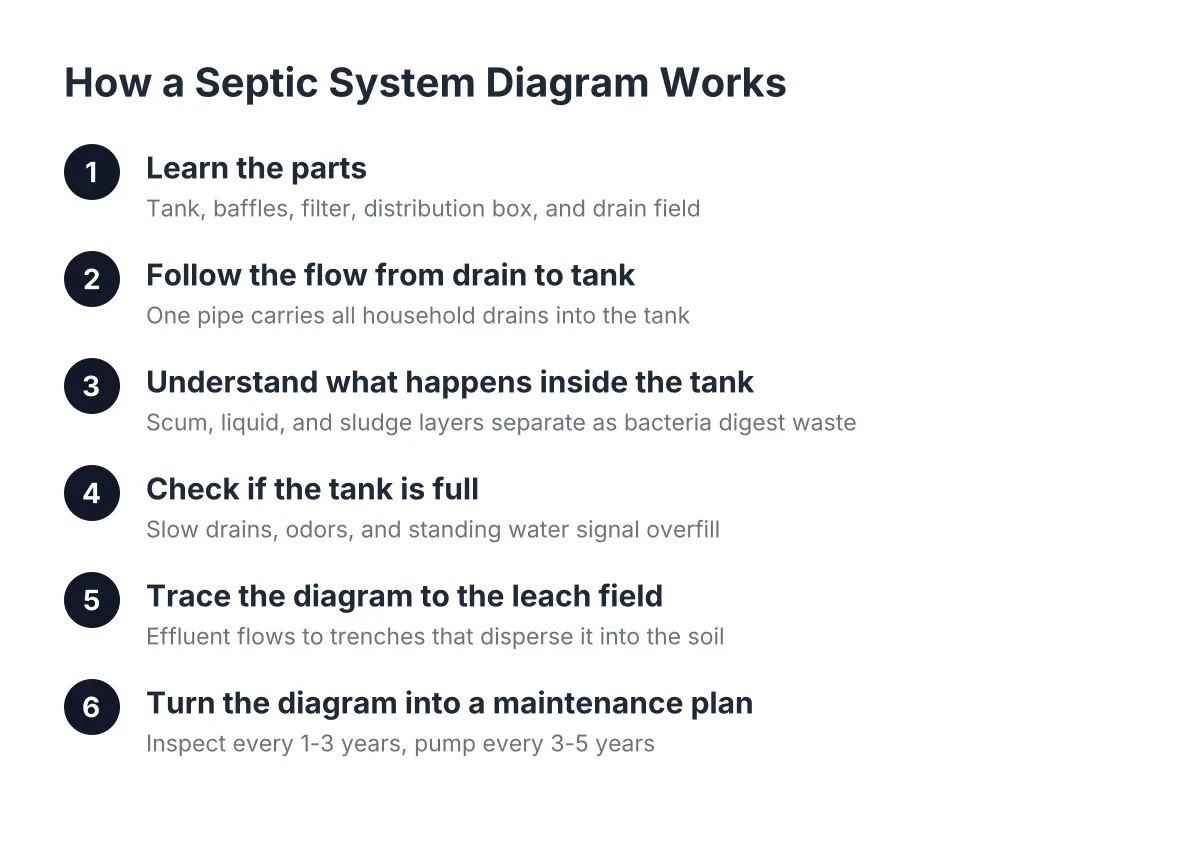
A septic tank is a buried, watertight container that collects all the wastewater from your home and lets solids settle out before the liquid moves on. Everything from your toilets, sinks, and showers flows into it. Heavy solids sink, grease floats, and the liquid in the middle exits to the leach field. When a provider talks about tank size or access, they are figuring out how long a pump out will take and how easy it is to reach the lid.
Leach Field
A leach field is the network of buried pipes or chambers that spreads liquid from your septic tank into the soil, where it gets filtered naturally. You may also hear it called a drainfield or absorption field. It is the most expensive part of the system to replace, which is why regular septic tank pumping matters so much. Soggy grass, odors, or unusually green patches over the field are signs to mention when you call.
The 3 Types of Septic Systems
The 3 types of septic systems most homeowners meet are conventional gravity systems, chamber systems, and alternative systems. A conventional system uses gravity to move liquid from the tank into a gravel-lined leach field. A chamber system swaps the gravel for open plastic chambers, which work well where gravel is costly or soil conditions call for it. Alternative systems add extra treatment steps, like aerobic units or mound systems, for lots with poor soil or a high water table, which is common near the coast. Knowing which type you have helps you understand a quote, since alternative systems have more parts to service.
Effluent
Effluent is the liquid wastewater that flows out of the septic tank after solids have settled. It is not clean water yet; the leach field and soil finish the job. If effluent leaves the tank carrying solids, it clogs the field. That is why the next two terms matter.
Scum and Sludge
Scum and sludge are the two layers that build up inside a septic tank: scum is the floating layer of grease and soap, and sludge is the heavy layer of solids on the bottom. The clear zone between them shrinks as the layers grow. Once the layers get too thick, solids escape into the leach field. Measuring these layers is how a provider decides whether your tank needs a pump out now or can wait.
Baffle
A baffle is a barrier inside the septic tank, at the inlet and outlet, that keeps floating scum from flowing into the leach field. Baffles crack or rust away over time, especially in older concrete tanks. A missing outlet baffle lets grease slip straight into the field. If an inspection notes a broken baffle, ask whether a filter can be added at the same time.
Septic Tank Filter
A septic tank filter is a removable screen at the tank's outlet that catches small solids before they reach the leach field. It is cheap insurance for the most expensive part of your system. Filters clog over time, so septic tank filter cleaning is a normal maintenance item, often done during a routine pump out. If your drains slow down all at once, a clogged filter is one of the first things to check.
Riser
A riser is a pipe extension that brings the septic tank lid up to ground level so a technician can open it without digging. Older tanks in the Miami area often sit under a foot or more of soil or grass. Without a riser, every service visit starts with a shovel, which adds time and labor. Adding one during a pump out makes every future visit faster.
Service and Maintenance Terms
These are the terms you will see on estimates and invoices when you search for a septic cleaner near me. This section of the septic tank basics glossary covers what each service includes, so you can compare quotes fairly.
Septic Tank Pumping
Septic tank pumping means removing the liquid, scum, and sludge from your tank with a vacuum truck. It is the core maintenance task for any septic system, for homes and businesses alike. A proper pump out empties the whole tank, not just the liquid layer. When comparing septic pump out companies, ask whether the price covers locating the tank, uncovering the lid, and hauling away the waste. Costs vary by tank size and access, and our Miami septic system cost guide walks through what drives the number.
Septic Tank Cleaning
Septic tank cleaning is a pump out plus washing down the inside of the tank to remove stuck-on sludge and buildup. Some companies use pumping and cleaning to mean the same thing, so ask what a quote includes. A full septic system cleaning may also cover the filter and a visual check of the baffles. If your tank went years between services, cleaning is worth the extra step.
Grease Trap Clean Out
A grease trap clean out is the removal of fats, oils, and grease from the trap that sits between a commercial kitchen and the sewer or septic line. Restaurants and food businesses need this on a regular schedule to avoid clogs, odors, and trouble with the health department. Many Miami-area septic companies handle grease trap cleaning alongside residential work. If you manage a property with a kitchen, put this on the same calendar as your septic pump out.
Septic System Inspection
A septic system inspection is a checkup where a technician opens the tank, measures the scum and sludge layers, and checks the baffles, filter, and leach field for problems. Buyers order inspections before closing on a home; owners order them when something seems off. A good inspection report tells you what needs attention now and what can wait. It is the cheapest way to learn about septic tank basics on your own property, because you see the system with your own eyes.
Leach Field Repair
Leach field repair means fixing the pipes, chambers, or soil in the absorption area so the system can drain again. Repairs range from clearing a clogged line to replacing sections of the field. Because the field is buried, diagnosis usually starts with an inspection and a pump out. If a provider mentions field repair, ask what they found and whether pumping alone was ruled out first.
Warning Signs and Timing
Pump Out Frequency
Pump out frequency is how often your septic tank needs to be emptied, which depends on tank size, household size, and water use. A common rule of thumb is every three to five years for a typical home, but a big family in a small tank needs service sooner. Garbage disposals and heavy laundry days speed up the buildup. Ask your provider to note the sludge level at each visit so your schedule fits your actual use, not a generic average.
Drainfield Failure
Drainfield failure means the soil in your leach field can no longer absorb the water your system sends it. Signs include sewage odors outside, standing water over the field, and slow drains throughout the house. Failure often traces back to skipped pump outs that let solids clog the soil. Catching it early can mean repair instead of replacement, which is a large difference in cost and disruption.
Using These Terms
You now have the vocabulary to read a septic quote line by line and ask exactly what a pump out, cleaning, or inspection includes. That is what this septic tank basics glossary is for: fewer surprises, sharper questions, and a system that lasts longer because you knew what to ask. Keep it handy the next time a technician opens your tank lid.
If you need septic tank pumping, Miami Septic Tanks can help.
Prefer to talk it through? Call (786) 756-8032 — a quick call is usually the fastest way to get a straight answer for your situation.