Septic vs. Cesspool: Which Is Right for You?
If you handle wastewater on your own property, your two main options are a septic system or a cesspool. The short answer in the septic vs cesspool debate: a septic system wins for almost every home today because it treats waste before releasing it, lasts longer, and passes inspections. A cesspool only makes sense if you already have one and local rules let you keep it running. Many Miami-area homes still sit on older cesspools, so knowing the difference matters before you spend money on repairs, a pump out, or a replacement. This guide walks you through both so you can decide with a clear head.
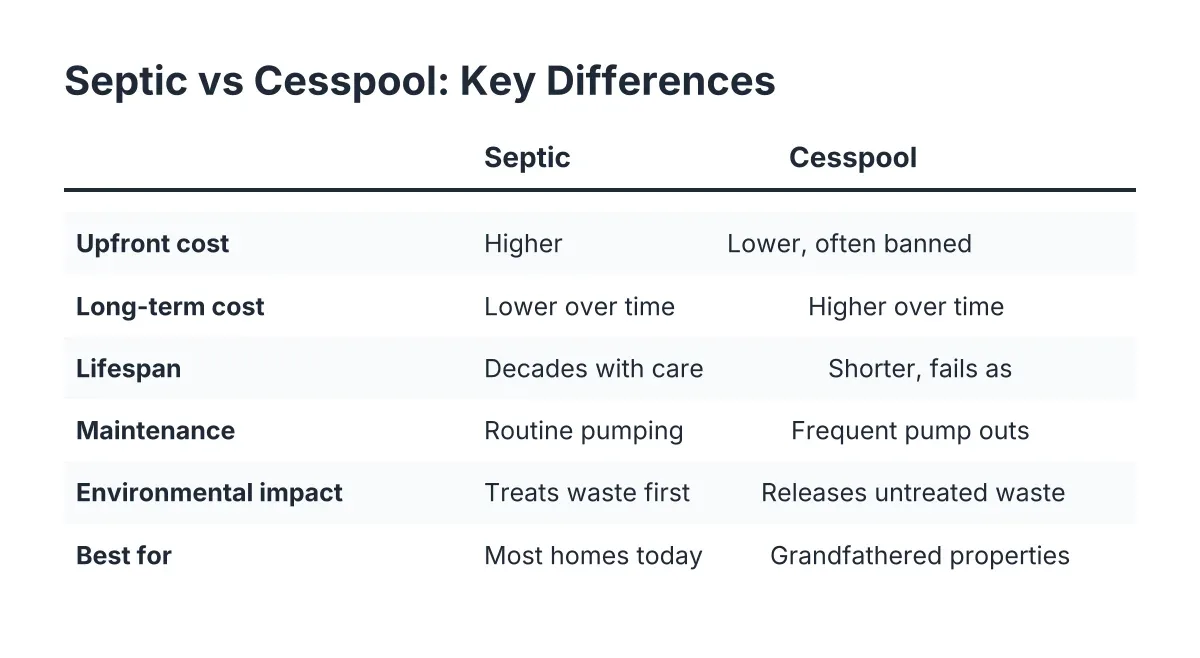
| Criteria | Septic | Cesspool |
|---|---|---|
| Upfront cost | Higher to install | Lower to install, but new ones are often not allowed |
| Long-term cost | Lower over time with regular pumping | Higher over time due to frequent pump outs and repairs |
| Lifespan | Long, typically decades with care | Shorter, tends to fail as the ground clogs |
| Maintenance | Routine septic tank pumping and filter cleaning | Frequent pump outs, harder to keep healthy |
| Environmental impact | Treats waste before it reaches the soil | Releases untreated waste into the ground |
| Best for | Most homes and businesses today | Older properties grandfathered in under local rules |
Septic: Strengths and Trade-offs
A septic system has two main parts: a buried tank and a leach field. Wastewater flows into the tank first. Solids sink to the bottom, grease floats to the top, and the liquid in the middle flows out to the leach field. The soil then filters that liquid before it rejoins the groundwater. That treatment step is the whole point. It protects your yard, your well, and the water around your property.
Septic systems shine on longevity and predictability. With regular septic tank pumping, most systems run for decades without drama. Maintenance is simple: schedule a pump out every few years, keep grease and wipes out of the drains, and have septic tank filter cleaning done when the filter starts to slow things down. When something does go wrong, it is usually fixable. Leach field repair, a cracked lid, or a clogged filter can often be handled without replacing the whole system.
The trade-off is upfront cost and space. Installing a septic system costs more than a cesspool ever did, and the leach field needs room in your yard. You also have to stay on top of the pumping schedule. Skip it for too long and solids push into the leach field, which is the most expensive part to fix. That is a maintenance problem, not a design flaw, and it is easy to avoid.
Cesspool: Strengths and Trade-offs
A cesspool is simpler and older. It is a pit, usually lined with brick, block, or concrete rings with open joints. Wastewater flows in, and the liquid seeps out through the walls and bottom into the surrounding soil. There is no separate treatment step and no leach field. Whatever goes down your drain goes into the ground with only the soil itself doing the filtering.
The strengths are honest but limited. A cesspool is cheap to build, takes up little space, and has no moving parts. If you own an older Miami-area property with a working cesspool, it may keep doing its job for years with regular pump outs. For a property you plan to sell or redevelop soon, keeping an existing cesspool alive can be the practical short-term move.
The trade-offs are serious. Because waste is untreated, cesspools can contaminate groundwater, which is why most areas no longer allow new ones and many require replacement at the point of sale. The soil around a cesspool also clogs over time, so it drains slower every year and needs pump outs more often. When a cesspool fails, there is no partial fix. The usual answer is a full conversion to a septic system.
Septic vs Cesspool: The Deciding Factors
Cost drivers in the septic vs cesspool comparison
Septic costs more upfront; a cesspool costs more over its life. A new septic system means excavation, a tank, and a leach field, so the first bill is bigger. After that, the costs are steady and low: routine septic tank pumping and the occasional filter cleaning. A cesspool starts cheap but drains your wallet slowly. As the ground around it clogs, pump outs come faster and closer together, and the end of the road is a full replacement anyway.
Lifespan
Septic wins on lifespan, and it is not close. A well-maintained septic system typically lasts for decades, with the tank often outliving the leach field. A cesspool ages in one direction: the soil around it seals up with solids and grease over the years, and drainage slows until it stops. You can buy time with frequent pump outs, but you cannot reverse the clogging.
Installation and local rules
If you are installing new, septic is usually your only legal option. Most jurisdictions, including South Florida, stopped permitting new cesspools long ago because of groundwater concerns. Existing cesspools are often grandfathered in, but rules can require replacement when the property sells or when the cesspool fails. Before you spend anything on an old cesspool, check what your local health department requires. It may change your math completely.
Maintenance and the septic vs cesspool difference
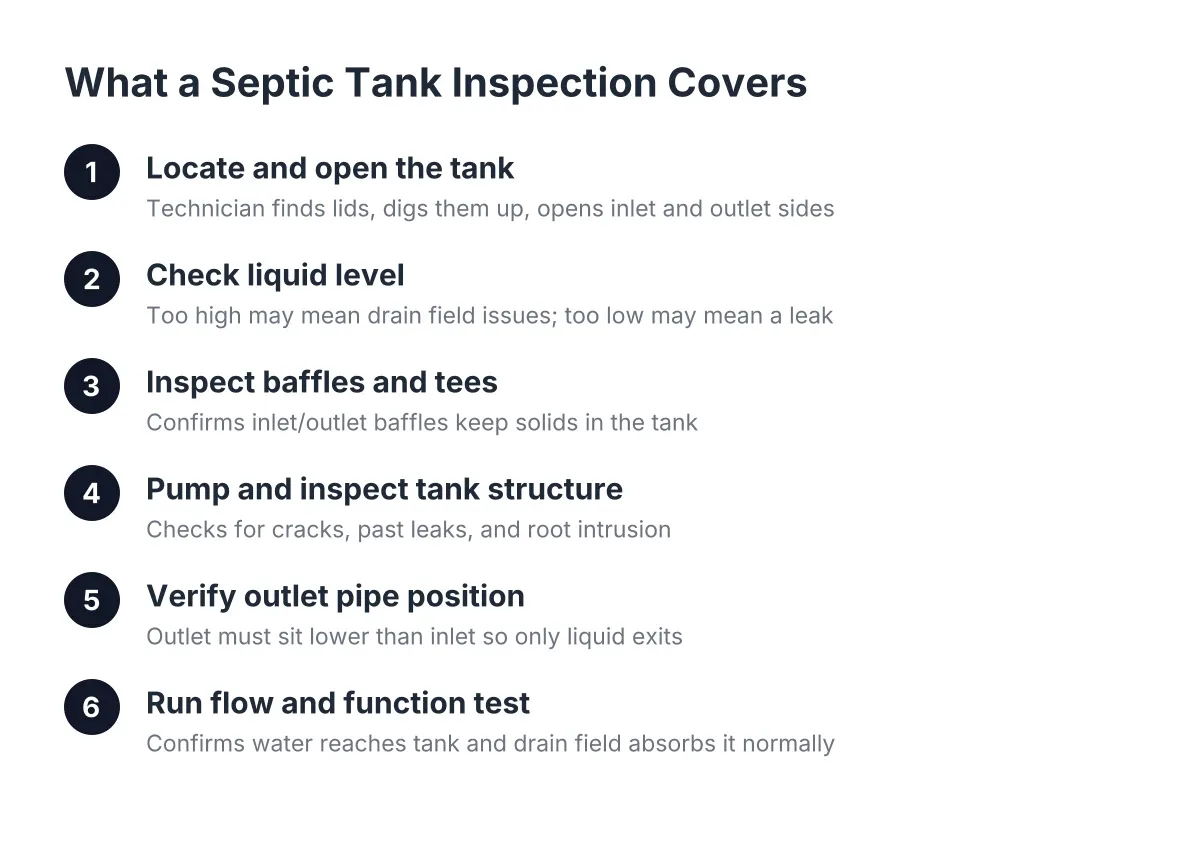
Both need pumping, but a septic system rewards maintenance while a cesspool only delays the inevitable. With septic, a regular pump out schedule plus septic tank filter cleaning keeps solids out of the leach field and the whole system healthy. A periodic septic system inspection catches small problems, like a worn baffle or a slow filter, before they turn into leach field repair. With a cesspool, pumping removes the buildup but does nothing about the clogged soil around the pit. You will pump more often each year for the same result.
Situational fit
Septic fits nearly every situation; a cesspool fits one. If you are building, replacing a failed system, or planning to stay in your home long term, septic is the answer. If you own an older property with a functioning cesspool, are not required to replace it, and want to stretch its remaining life, regular pump outs from a local service can keep it going for now. Just treat that as a bridge, not a destination.
Which Should You Choose?
Choose Septic if:
- You are building new or replacing a failed system, since new cesspools are rarely permitted.
- You plan to own the property for years and want predictable maintenance costs.
- You care about groundwater quality and want waste treated before it reaches the soil.
- You want a system where problems can be repaired in parts, like the filter or the leach field, instead of replaced whole.
Choose Cesspool if:
- You already have a working cesspool and local rules allow you to keep it.
- You plan to sell or redevelop soon and only need the system to hold on a little longer.
- You accept more frequent pump outs as the cost of delaying a full conversion.
For most Miami-area homeowners, the choice is already made: septic is the modern standard, and cesspools are on their way out. The real decision is usually when to convert, not whether.
Common Questions
How do I know if I have a septic system or a cesspool?
A septic system has a tank plus a leach field, while a cesspool is a single pit. If your home was built in recent decades, it almost surely has septic. For older properties, county records, a past inspection report, or a septic pump out companies' service visit can confirm what is in the ground. A technician can usually tell within minutes of opening the lid.
Can I convert a cesspool to a septic system?
Yes, and it is the standard path when a cesspool fails or local rules require an upgrade. The old pit is pumped, decommissioned, and often filled in, and a new tank and leach field are installed. It is a real project, so many owners start with a pump out and an assessment to see how much life the cesspool has left before committing.
How often should either system be pumped?
Most septic tanks need pumping every few years, depending on household size and tank size. Cesspools usually need pump outs more often, and the interval shrinks as the surrounding soil clogs. When weighing septic vs cesspool ownership costs, that pumping frequency is the biggest ongoing difference. A local septic cleaner near me search should turn up someone who can put you on a sensible schedule.
Does a cesspool hurt my property value?
It can. Many buyers and lenders flag cesspools during the sale process, and some areas require replacement before or shortly after closing. A documented, well-maintained septic system with recent pumping records is an easier sell. If you are listing an older Miami-area property, find out what is in the ground before the buyer's inspector does.
If you need septic tank pumping, Miami Septic Tanks can help.
Prefer to talk it through? Call (786) 756-8032 — a quick call is usually the fastest way to get a straight answer for your situation.