Signs Your Septic Tank Needs Pumping or Cleaning Soon (And Which One to Ask For)
If sewage is creeping up your shower drain or your yard smells like a problem, you are already past the "wait and see" stage. The signs your septic tank needs attention almost always show up before a full backup, but most people do not know how to read them. Worse, when they finally call for help, they hear two different words, and nobody explains the difference between pumping vs cleaning septic before quoting a price.
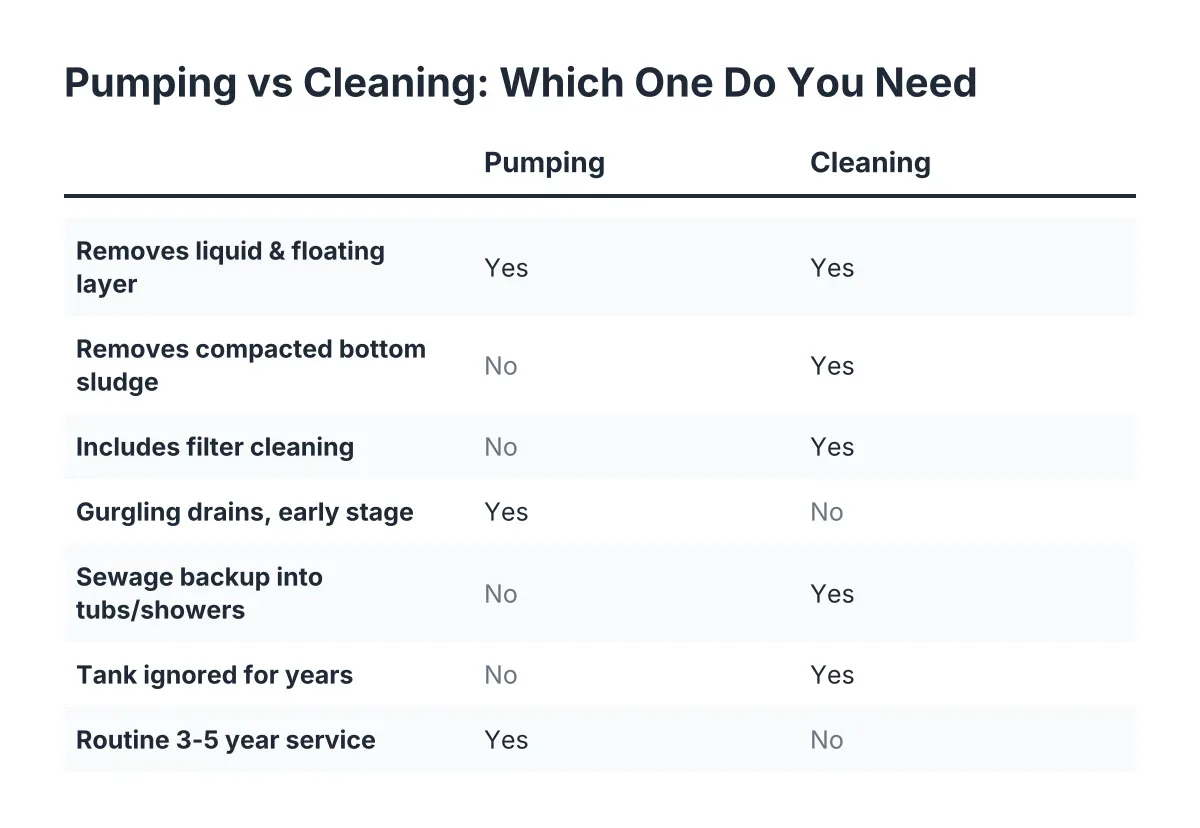
Here is the short version. Pumping removes the liquid and floating layer from your tank. Cleaning goes further: it removes the compacted sludge stuck to the bottom and walls, and it can include a septic tank filter cleaning so the whole system flows again. A pump out is like emptying a trash can. A cleaning is emptying it and scrubbing it out. If your tank has been ignored for years, pumping alone may not fix the problem.
Below are eight signs your septic tank is getting full, failing, or already backing up, plus which service each sign usually points to. This applies whether you own a home in the Miami area or run a restaurant with a grease trap that is quietly filling up in the back.
1. Drains Are Slow in Every Room, Not Just One
One slow drain usually means a local clog, and that is a plumber's job. However, when the kitchen sink, the shower, and the toilet all drain slowly at the same time, the problem sits downstream of all of them. That points to a septic tank that is full or a clogged outlet filter.
This distinction matters because it saves you money. A plumber can snake a single line, but no amount of snaking empties a full tank. If every fixture in the house gurgles and struggles, call a septic tank pumping service first, not second.
For restaurants, the commercial version of this sign is floor drains and prep sinks backing up together. That often means the grease trap needs a clean out before it sends grease into the septic line.
2. Gurgling Sounds From Toilets and Drains
Gurgling is trapped air trying to escape through your plumbing because wastewater has nowhere to go. It is one of the earliest signs your septic tank is getting full, and it usually shows up days or weeks before an actual backup.
Pay attention to when it happens. Gurgling after you flush, or when the washing machine drains, means the tank is struggling to accept new water. At this stage, deciding between pumping vs cleaning septic typically results in choosing routine pumping, which is usually enough. Wait until sewage appears, and you may need a full septic system cleaning plus a mess cleanup on top of it.
3. Sewage Smell Inside the House or Near the Tank
A healthy septic system is a quiet neighbor. You should not smell it. A rotten egg or sewage smell inside the house, near your drains, or hovering over the tank lid in the yard means gases are escaping where they should not.
Indoors, the smell often comes from wastewater sitting too high in the tank and pushing gas back up the lines. Outdoors, it can mean the tank is overfull or leaking. Either way, smell is your system asking for a pump out now, before it starts asking with sewage on your bathroom floor.
Miami restaurant owners know this sign well in another form: an odor complaint near the kitchen or dumpster area often traces back to a grease trap that is overdue for cleaning. Health inspectors notice it too.
4. Standing Water or Lush Green Grass Over the Leach Field
Your leach field should look like the rest of your yard. If one patch of grass grows greener and faster than everything around it, that patch is being fertilized by wastewater that never got treated. Standing water or soggy, spongy ground over the field is the same warning turned up louder.
In South Florida, this sign gets tricky. Our water table sits high, and heavy summer rain can soak a yard for reasons that have nothing to do with your septic tank. Therefore, if the wet spot stays after the rest of the yard dries, or if it smells, treat it as a septic problem, not a weather problem.
A soggy leach field can mean the tank is so full that solids are escaping into the field. Pumping helps, but if solids have already clogged the field, you may be looking at leach field repair. This is the scenario where an inspection before any digging saves you real money.
5. Sewage Backing Up Into Tubs, Showers, or Floor Drains
This is the sign nobody misses. When wastewater comes back up through the lowest drains in the house, usually a tub, a shower, or a floor drain, the system is completely full or blocked. Stop running water immediately. Every flush and every load of laundry makes it worse.
If you are standing in this situation right now, here is how to sort out plumber versus septic company fast:
- Backup in one fixture only: likely a plumbing clog, call a plumber.
- Backup in the lowest drains, with gurgling elsewhere: likely septic, call for a pump out.
- Backup plus soggy ground or odor near the tank: septic, and mention it when you call.
- On city sewer, not septic: plumber or the utility, not a septic company.
A backup at this stage almost always calls for more than a standard pump out. Solids have usually been pushed into the lines or the outlet, so ask about full septic tank cleaning, not just emptying the liquid. Searching for a septic cleaner near me is the right instinct here; a local Miami-area crew can look at the tank and tell you which service you actually need.
6. It Has Been More Than Three to Five Years Since Your Last Service
Sometimes the biggest warning sign is a calendar, not a smell. According to the U.S. Environmental Protection Agency, septic tanks should be pumped every 3 to 5 years, with the full system inspected every 1 to 3 years. University of Florida IFAS gives the same three to five year window and notes that a well-maintained tank can last up to 30 years.
The math strongly favors staying on schedule. The EPA puts routine maintenance at $250 to $500 every three to five years, compared with $5,000 to $15,000 to repair or replace a failed system. Your exact septic tank clean out cost depends on tank size, access, and how much sludge has built up, which is why a neglected tank often needs a cleaning, not just a pump out.
If you cannot remember the last service date, or you bought the home and never got records, that is your sign. In 2026, plenty of Miami-area homes are running on tanks that have not been opened in a decade.
7. Nitrate Warnings or Changes in Well Water
If your property uses a well, your septic system and your drinking water share the same ground. A failing or leaking tank can send bacteria and nitrogen into that ground. University of Florida IFAS notes that a conventional septic tank removes only about 30 percent of the nitrogen that flows into it, so even a healthy system adds some nitrogen to the surrounding soil. A failing one adds far more.
Consequently, a well water test showing rising nitrates or bacteria is one of the quieter signs your septic tank is leaking or overloaded. This sign calls for a professional septic system inspection, not a DIY diagnosis, because the fix depends on whether the tank, the lines, or the leach field is the source.
8. Your Grease Trap Is Overdue and Your Drains Know It
This one is for the restaurant, cafe, and hotel kitchen operators across Miami Beach, Little Havana, and Coral Gables. A grease trap that goes too long between cleanings sends fats and oils straight into your drain lines and, if you are on septic, into the tank itself. Grease is the fastest way to clog a septic system, because it hardens in the tank and the field.
Picture a busy Little Havana kitchen on a Friday night. The floor drain by the dish pit starts backing up mid-service, there is a smell near the fryers, and the county compliance deadline is two weeks out. That is not a coincidence; that is a full trap. A grease trap clean out on a set schedule, monthly or quarterly depending on volume, keeps you off the inspector's list and keeps grease out of the septic tank.
For food service operators, the smartest move is pairing grease trap cleaning with periodic sewer tank service on the same recurring schedule. One calendar, one local contact, no surprise shutdowns during service.
When to Choose Cleaning Over Pumping
Ask for pumping when the system is on schedule and the signs are early: gurgling, mild slowdowns, or a routine 3 to 5 year service. Ask for cleaning when the tank has been neglected, sludge has hardened, a backup already happened, or the outlet filter is clogged. Cleaning includes pumping; pumping does not include cleaning.
When you call around to septic pump out companies, use the words on purpose. Say "I need the tank pumped and cleaned, including the filter" if any of the later signs above apply. A straight answer to that request tells you a lot about who you are dealing with. Vague answers and out-of-state call centers tell you something too.
One honest caveat: no article can diagnose your system from a distance. Soggy ground, backups, and odors can each have more than one cause, and a Miami yard after a summer storm can fake a septic problem convincingly. When two or more of these signs show up together, get eyes on the tank before anyone starts digging or quoting big repairs.
Signs Your Septic Tank Sends Before the Emergency
Most septic disasters announce themselves weeks in advance. Gurgling comes before slow drains, slow drains come before smells, and smells come before sewage on the floor. Learn the sequence, act at the gurgling stage, and a standard pump out handles it. The EPA notes that more than one in five U.S. households rely on septic systems, and the ones that avoid emergencies are simply the ones that answer the early signs.
If you are searching septic cleaning near me right now because sign number five is happening in your bathroom, stop running water, keep people away from the mess, and get a local septic tank cleaning service on the phone. Ask them directly whether you need a pump out or a full cleaning, and expect a plain answer. The right local operator will explain what is happening in your tank before they explain what it costs.
If you need septic tank pumping, Miami Septic Tanks can help.
Prefer to talk it through? Call (786) 756-8032 — a quick call is usually the fastest way to get a straight answer for your situation.