Hiring a Septic Company Terms Explained: A Plain-English Glossary
If you are getting quotes for septic tank pumping or cleaning in the Miami area, the jargon piles up fast. This hiring a septic company glossary explains the terms you will see in quotes, hear on the phone, and read in inspection reports, all in plain English. Use it to understand what each service actually includes, ask sharper questions, and spot the difference between a fair quote and a padded one. No sales talk, just the words and what they mean.
- Septic Tank
- Leach Field
- Scum and Sludge Layers
- Baffles
- Effluent Filter
- Grease Trap
- What Septic Tank Pumping Covers
- Septic Tank Cleaning
- Understanding Septic System Pump Out
- Septic System Inspection
- Sewer Tank Service
- Hydro Jetting
- Accessibility Fee
- Riser
- Locating
- Gallons Pumped
- Disposal Fee
Parts of Your Septic System
Septic Tank
A septic tank is a buried, watertight container that holds all the wastewater from your home so solids can settle out before the liquid moves on. Everything you flush or drain ends up here first. Solids sink to the bottom, grease floats to the top, and the liquid in the middle flows out to the leach field. Knowing where your tank sits on your property saves time and can lower your bill, since crews will not need to hunt for it. If you do not know, a provider can locate it, but ask whether locating costs extra.
Leach Field
A leach field is the network of buried pipes and gravel that spreads treated liquid from your septic tank into the soil. You may also hear it called a drain field or absorption field. It is the part of the system that fails most expensively, so protecting it is the whole point of regular pumping. Soggy grass, bad smells outside, or unusually green patches over the field are warning signs. If a provider mentions leach field repair, expect a bigger job than a standard pump out, and ask for a written explanation of what failed.
Scum and Sludge Layers
Scum and sludge are the two waste layers that build up inside a septic tank: scum is the greasy layer that floats on top, and sludge is the solid layer that settles on the bottom. The clear liquid between them is what safely exits to the leach field. When either layer gets too thick, solids can escape into the field and clog it. A good technician measures these layers during service, and those measurements tell you how soon you will need the next pump out.
Baffles
Baffles are barriers inside a septic tank that keep floating scum from flowing out with the liquid. There is usually one at the inlet and one at the outlet. A broken or missing outlet baffle lets grease and solids reach your leach field, which can ruin it over time. Ask the crew to check the baffles during any septic tank cleaning; a quick look now can prevent a major repair later.
Effluent Filter
An effluent filter is a screen at the tank's outlet that catches solids before they can reach the leach field. Not every tank has one, but if yours does, it needs cleaning on a regular schedule or it will clog and back up your drains. Septic tank filter cleaning is a fast, low-cost service compared to fixing a clogged field. If slow drains started suddenly and your tank was pumped recently, a dirty filter is a common cause.
Grease Trap
A grease trap is a container, common at restaurants and some businesses, that catches fats, oils, and grease before they enter the sewer or septic system. Grease hardens as it cools and clogs pipes, so traps must be emptied on a schedule. If you manage a Miami-area property with a kitchen, grease trap clean out is a separate service from septic tank pumping, so make sure your quote lists it as its own line. Skipping it leads to backups and, for businesses, possible compliance trouble.
Services You Will See on a Quote
What Septic Tank Pumping Covers
Septic tank pumping is the process of using a vacuum truck to remove the liquid and solid waste from your tank. It is the core maintenance service every septic system needs on a regular cycle. Pumping keeps the sludge layer from growing so thick that solids escape into the leach field. When you compare quotes from septic pump out companies, check whether the price covers the full tank or just the liquid on top. If costs are on your mind, this guide on what hiring a septic company costs breaks down what drives the price up or down.
Septic Tank Cleaning
Septic tank cleaning means removing everything from the tank, including the compacted sludge stuck to the bottom and walls, not just the liquid a basic pump out removes. Some companies use pumping and cleaning to mean the same thing, and some do not, so ask exactly what the quote includes. A true cleaning takes more time and effort, which is why it can cost more. If your tank has gone years without service, cleaning is usually the right call.
Understanding Septic System Pump Out
A pump out is the industry's everyday term for emptying a septic tank with a vacuum truck. You will see it written as septic tank pump out or septic system pump out; they mean the same service. It is the term to use when you call a local provider, because it tells them exactly what you need. A routine pump out on a known, accessible tank is the simplest job in the trade, so quotes for it should be clear and short.
Septic System Inspection
A septic system inspection is a check of the tank, baffles, filter, and leach field to confirm everything works and to catch problems early. Home buyers order inspections before closing, and owners order them when something seems off. A basic look during a pump out is not the same as a full inspection, so ask which one you are getting. A written report with layer measurements and photos is worth asking for, especially in a real estate deal.
Sewer Tank Service
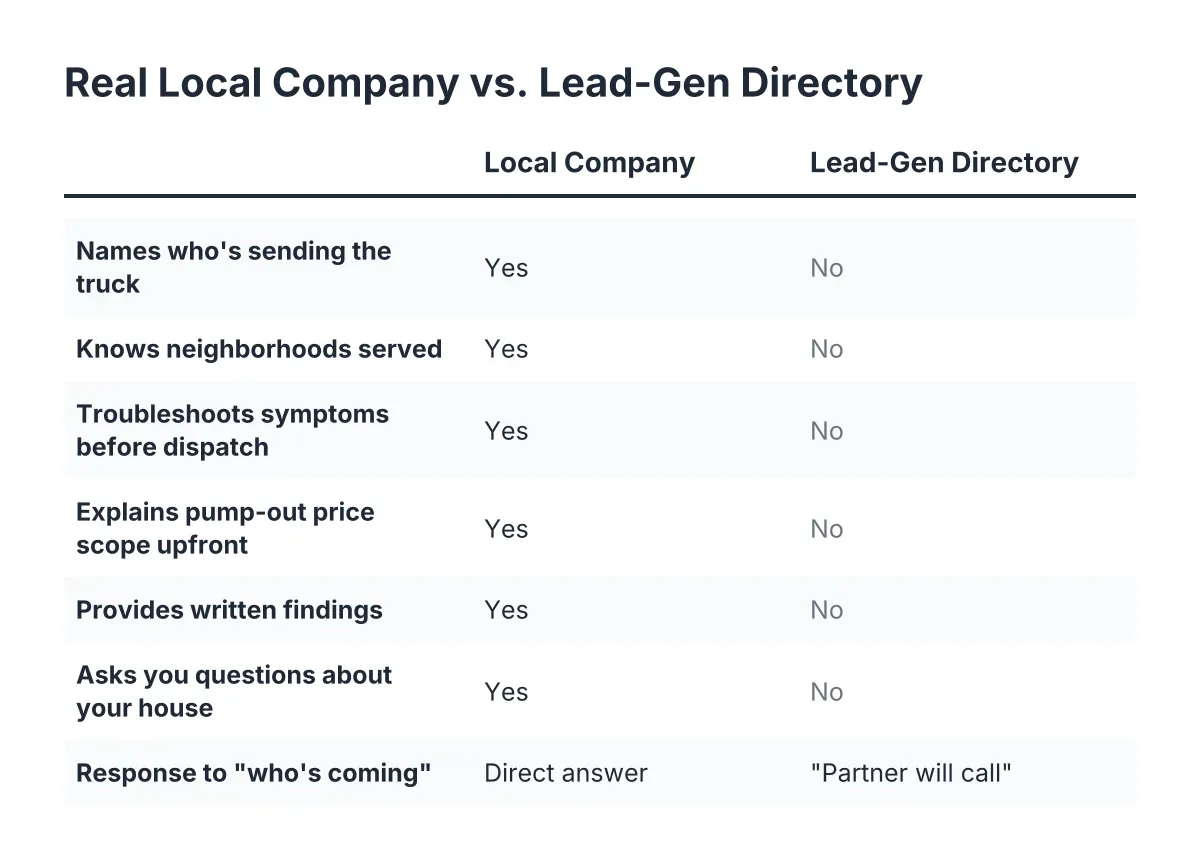
Sewer tank service is a general term for pumping, cleaning, or maintaining any holding tank that collects wastewater, including septic tanks. Some providers use it to cover both residential septic work and commercial holding tanks. If you see it on a website or quote, ask the company to spell out which tank they mean and what the service includes. Plain answers here separate a real local operator from a call center reading a script.
Hydro Jetting
Hydro jetting is cleaning pipes with a high-pressure stream of water to clear grease, roots, and buildup. It is a pipe service, not a tank service, so it appears on quotes when the problem is in the lines rather than the tank itself. It costs more than snaking a line but clears the full pipe instead of punching a hole through the clog. If a provider recommends it, ask them to show you why the line needs it, such as a camera view of the blockage.
Pricing, Paperwork, and Red Flags
Accessibility Fee
An accessibility fee is an extra charge for tanks that are hard to reach, such as those buried deep, covered by a patio, or far from where the truck can park. It is a legitimate charge when the extra work is real, but it should be explained before the job starts, not added after. When you call, describe where your tank is and what covers it. A trustworthy company will tell you up front whether access will add to the price. Getting these details settled early is one of the simplest ways to make hiring a septic company go smoothly.
Riser
A riser is a pipe extension that brings the septic tank lid up to ground level so crews can open it without digging. If your lids are buried, every service call starts with shovel work, and that time often shows up on your bill. Installing risers is a one-time job that makes every future pump out faster and cheaper. If a provider suggests one, they are usually saving you money over the long run, not upselling you.
Locating
Locating means finding a buried septic tank when the owner does not know where it is. Crews may use records, probes, or a small camera flushed through the plumbing. It can add time and cost to a first visit, so mention up front if you have never had the tank serviced. Once found, mark the spot or add a riser so no one has to search again.
Gallons Pumped
Gallons pumped is the volume of waste a company removes from your tank, and it is a common billing unit on septic quotes. Some companies charge a flat rate per tank, while others charge by the gallon. Neither method is wrong, but you should know which one your quote uses before the truck arrives. If a bill lists far more gallons than your tank could hold, ask questions; groundwater leaking into a cracked tank is one possible cause worth checking.
Disposal Fee
A disposal fee covers the cost of legally unloading your tank's waste at an approved treatment facility. Reputable companies cannot dump waste anywhere they like, and the treatment site charges them. Some quotes build this fee into the total, and others list it separately, so compare quotes on the final number. A quote that seems too low to cover legal disposal is a red flag, not a bargain.
Using These Terms
You now know what the lines on a septic quote actually mean, from pump out to disposal fee. Read your next estimate line by line, and ask any local septic cleaner near me result to explain anything they cannot define in plain words. When you are hiring a septic company to maintain your tank, this glossary will make sure you understand what you are paying for before anyone lifts a lid.
If you need septic tank pumping, Miami Septic Tanks can help.
Prefer to talk it through? Call (786) 756-8032 — a quick call is usually the fastest way to get a straight answer for your situation.