Septic Service Costs Terms Explained: A Plain-English Glossary
If you own a home with a septic system, sooner or later you will read a quote full of words nobody explained. This septic service costs glossary breaks down the terms Miami-area homeowners and property managers hit most often, in plain English. Use it to understand what a quote actually covers, ask sharper questions before anyone shows up, and spot problems before they turn into bigger bills. No jargon, no runaround.
- Septic Tank: the underground holding tank itself
- Pump Out: emptying the tank with a vacuum truck
- Septic Tank Cleaning: pumping plus scraping down the tank
- Scum Layer: the floating grease and solids on top
- Sludge: the heavy solids on the tank bottom
- Effluent: the liquid that leaves the tank
- Baffle: the fittings that direct flow in and out
- Effluent Filter: the screen that catches stray solids
- Leach Field: the underground area that absorbs liquid
- Distribution Box: the junction that splits flow to the field
- Riser: the access pipe that reaches the surface
- Grease Trap: the grease catcher for kitchens and businesses
- Septic System Inspection: a checkup on the whole system
- Hydro Jetting: high-pressure water cleaning for lines
- Trip Charge: the fee just for showing up
- Disposal Fee: the cost of dumping what was pumped
The System Itself
Before you can read a quote, it helps to know what is buried in your yard. These are the parts every provider will mention.
Septic Tank Basics and Service Costs
A septic tank is a buried, watertight container that collects all the wastewater from your home and holds it while solids settle out. Most Miami-area homes on septic have one tank, though some properties have two chambers or a second tank. When a quote mentions tank size or number of compartments, that affects how long a pump out takes and what it costs. If you do not know your tank's size or location, say so up front; finding and uncovering it can be part of the job.
Scum Layer
The scum layer is the floating mat of grease, oils, and light solids that sits on top of the liquid inside your septic tank. It builds up over time and is one of the two things a pump out removes. A thick scum layer usually means the tank is overdue for service. If a technician mentions your scum layer is close to the outlet, that is a warning sign, not upselling.
Sludge
Sludge is the heavy layer of settled solids that collects on the bottom of a septic tank. Bacteria break some of it down, but the rest just sits there and grows until someone pumps it out. When sludge gets too deep, solids can escape into your leach field and clog it, which is a far more expensive repair. Sludge depth is the main reason providers recommend pumping on a schedule instead of waiting for a backup.
Effluent
Effluent is the partly treated liquid that flows out of the septic tank and into the leach field. It is the middle layer in the tank, between the scum on top and the sludge on the bottom. Healthy effluent should be mostly free of solids. If a provider says solids are getting into your effluent, they are telling you the tank needs pumping or the filter needs attention.
Baffle
A baffle is a fitting inside the septic tank that directs incoming wastewater downward and keeps floating scum from escaping through the outlet. Tanks have an inlet baffle and an outlet baffle, and both matter. A broken or missing baffle lets solids reach the leach field, so a provider who checks baffles during a pump out is doing you a favor. Baffle repair is a small job compared to what a failed baffle can cause.
Leach Field
A leach field is the network of buried pipes and gravel or chambers that spreads effluent into the soil, where it gets its final treatment. It is also called a drain field. The leach field is the most expensive part of the system to replace, so protecting it is the whole point of regular septic tank pumping. Soggy grass, odors, or slow drains over the field are signs you may need leach field repair, and you should not ignore them.
Distribution Box
A distribution box is a small buried junction that splits the flow from your septic tank evenly across the pipes in the leach field. If it tilts, cracks, or clogs, one part of the field takes all the load and can fail early. Providers sometimes find distribution box problems during an inspection or leach field repair. Fixing the box is usually far cheaper than fixing the field it protects.
Riser
A riser is a vertical pipe with a lid that extends the septic tank's access opening up to ground level. Without one, the crew has to dig down to the tank lid before any pumping can start, and digging adds time to the job. If your quote includes locating or excavating the lid, that is why. Adding a riser during a service visit can make every future pump out simpler.
Service and Cleaning Terms
These are the words you will see on the work order itself. Understanding glossary terms for septic service costs helps you compare quotes line by line.
Pump Out
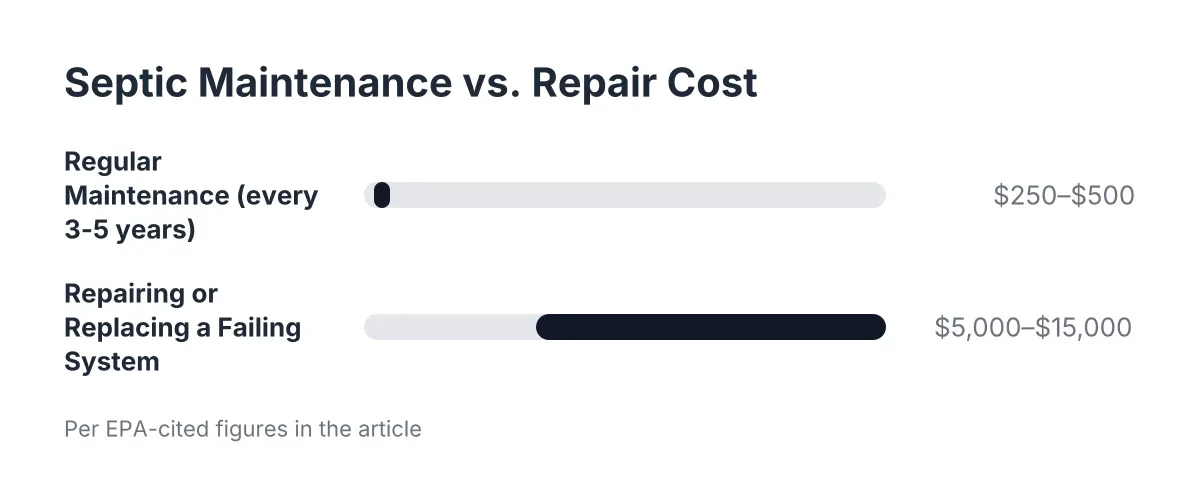
A pump out is the process of emptying a septic tank with a vacuum truck, removing the liquid, scum, and sludge inside. You will also see it written as septic tank pump out or septic system pump out; they mean the same thing. It is the core service most homes need every few years, and it is what most septic pump out companies quote first. What varies between quotes is usually tank size, access, and disposal, not the pumping itself. For a fuller picture of what routine service adds up to over a year, see this breakdown of annual septic maintenance costs.
Septic Tank Cleaning
Septic tank cleaning means pumping the tank and then removing the stuck-on sludge and residue from the walls and floor, often with water and agitation. A basic pump out removes what the vacuum can pull; a cleaning goes further. If your tank has gone many years without service, a provider may recommend cleaning instead of a simple pump out. Ask which one the quote covers, because the two words get used loosely and the scope is not the same.
Effluent Filter
An effluent filter is a screen installed at the tank's outlet that catches solids before they can reach the leach field. Filters need periodic rinsing, which is why septic tank filter cleaning shows up as a line item on many service visits. A clogged filter causes slow drains and backups even when the tank itself is fine. If your system has one, cleaning it during every pump out is cheap insurance for the field.
Grease Trap
A grease trap is a separate tank or box that catches fats, oils, and grease from kitchen drains before they reach the septic system or sewer. Restaurants and other food businesses in the Miami area usually have one, and it needs its own grease trap clean out on a regular schedule. Grease traps fill much faster than septic tanks. If you manage a commercial property, expect the trap and the septic tank to be quoted as separate services.
Septic System Inspection
A septic system inspection is a checkup where a technician evaluates the tank, baffles, filter, and leach field to report on the system's condition. Buyers often order one before closing on a home, and owners use them to catch problems early. An inspection may or may not include pumping, so confirm that before you compare prices. A clear inspection report also gives you a paper trail if you sell the property later.
Hydro Jetting
Hydro jetting is cleaning pipes with a high-pressure stream of water to clear grease, roots, and buildup that a snake cannot remove. It is a line-cleaning service, not a tank service, and it shows up on quotes when the pipe between your house and tank, or the lines in the field, are clogged. If a provider recommends jetting, ask them to show or describe the blockage. It is a legitimate fix for the right problem, but it is not part of a standard pump out.
Pricing and Paperwork
Two small line items cause most of the confusion on septic bills. Knowing them helps you make sense of septic service costs before you sign anything, and this guide to what septic service costs walks through the full picture.
Trip Charge
A trip charge is a flat fee a provider adds just for driving the truck to your property, separate from the work itself. Some local companies fold it into the service price; others list it on its own. Neither approach is wrong, but you need to know which one you are looking at before comparing two quotes. Always ask whether the number you were given includes the trip.
Disposal Fee
A disposal fee is the charge for legally dumping the pumped waste at an approved treatment facility. Haulers pay to dispose of what they pump, and that cost gets passed along, either as a separate line or built into the pump out price. A quote that seems low but excludes disposal can end up matching or beating a higher all-in number. It is a fair fee; just make sure it is not counted twice.
Using These Terms
You now know what the words on a septic quote actually mean, from sludge and baffles to trip charges and disposal fees. That is what this glossary of septic service costs is for: reading an estimate line by line, asking a provider exactly what is included, and catching warning signs early. When a local Miami-area technician mentions your scum layer or your effluent filter, you will know what they are talking about and what to ask next.
If you need septic tank pumping, Miami Septic Tanks can help.
Prefer to talk it through? Call (786) 756-8032 — a quick call is usually the fastest way to get a straight answer for your situation.