Septic Tank Filter Cleaning Cost: How This Small Job Prevents Big Backups
If you own a home or run a restaurant on septic in the Miami area, septic tank filter cleaning is the cheapest line item on your maintenance list and the one most people skip. That is a bad trade. A clogged effluent filter can back sewage up into your drains, and for a restaurant that can mean closing mid-service. This guide walks you through what the septic filter cleaning cost is relative to other septic work, how to get an honest quote, and the exact steps to keep the filter from ever becoming the reason your system fails.
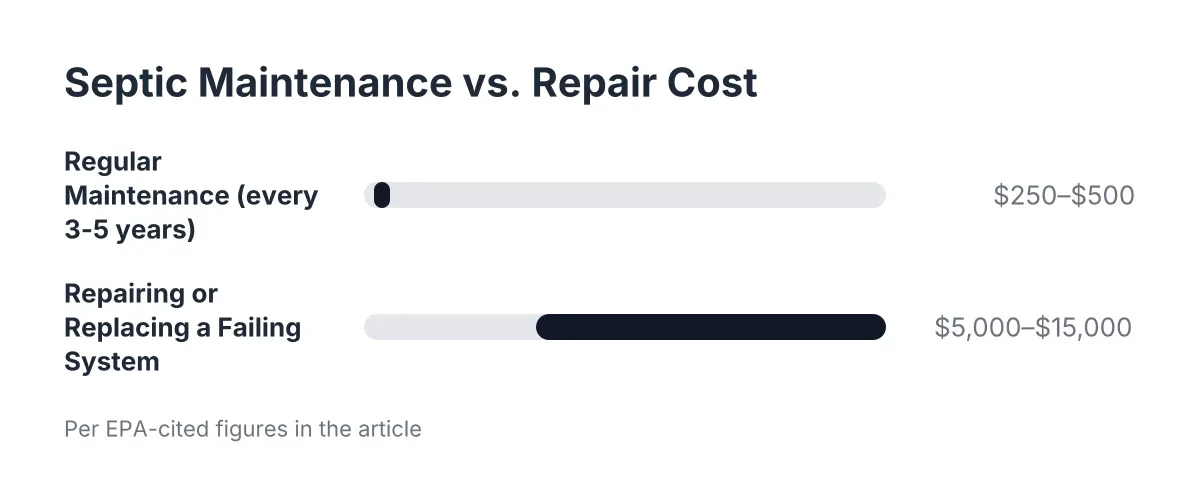
Here is the short version. The filter is a small screen near your tank's outlet. Cleaning it is a fraction of the cost of a full pump out, and a full pump out is a fraction of the cost of repairing a leach field. Regular maintenance of $250 to $500 every three to five years is a bargain compared to repairing or replacing a failing system, which can run $5,000 to $15,000, according to the U.S. Environmental Protection Agency. Filter cleaning is how you stay on the cheap side of that math.
Step 1: Understand What the Filter Does and Why It Clogs
Start by knowing what you are paying to maintain. A typical residential septic system has two main parts: a tank that separates solids from wastewater, and a drain field that disperses the clarified liquid into the soil, according to the US EPA. Many tanks also have an effluent filter, a screen fitted near the outlet that catches solids before they can wash into the leach field.
That screen is doing quiet, important work. Solids that escape the tank clog the leach field, and leach field repair is one of the most expensive jobs in septic service. The filter clogs on purpose; that is its job. However, a filter that never gets cleaned eventually blocks flow entirely, and wastewater has nowhere to go but back up your pipes.
For a restaurant, the same logic applies to the grease trap. Grease is the fastest way to clog a filter and a drain line. If your kitchen drains slow down and smell during the dinner rush, the trap and the filter are the first two things a good tech checks.
Step 2: What Drives Septic Filter Cleaning Cost on the Service Ladder
Before you call anyone, get the price hierarchy straight in your head. This is how you avoid being upsold into work you do not need, and how you spot a vendor who is padding the ticket. Septic service costs generally stack up like this, from cheapest to most expensive:
- Septic tank filter cleaning, often the least expensive service on the truck, and sometimes included with a pump out
- Septic system inspection, a low-cost check the EPA recommends every 1 to 3 years
- Septic tank pumping, the routine pump out most homes need every 3 to 5 years
- Grease trap clean out, priced by trap size and how often your kitchen needs it
- Full septic tank cleaning, which goes beyond pumping to remove built-up sludge from the tank walls and floor
- Leach field repair, the big one, often thousands of dollars
Notice the pattern. Everything at the top of the list exists to keep you off the bottom of the list. Skipping filter cleaning to save money is how homeowners end up paying for the last item.
Step 3: Ask for an Itemized Quote Before the Truck Rolls
Next, protect yourself from the hidden-cost problem. The top complaint people have about septic pump out companies is a quoted price that grows once the crew is on site. You cannot eliminate every surprise, since no one knows the tank's condition until the lid is open. You can, however, force clarity up front.
Ask any local Miami-area septic cleaner near me result these questions before booking:
- Is septic tank filter cleaning included in the pump out price, or billed separately?
- Does the quote include locating and uncovering the tank lid, or is digging extra?
- What does an inspection cost if I add it to the same visit?
- Are disposal fees included in the price, or added after?
- For restaurants: is grease trap cleaning priced per visit or only on a contract?
A straight answer to all five is a good sign. Vague answers, or pressure to buy additives instead of service, are your cue to keep calling. Commercial additives marketed to dissolve sludge lack strong scientific backing, according to Washington State University Extension, so a vendor pushing them over pumping is not saving you money. There is no real way to clean a septic tank without pumping it; anyone selling that idea is selling a shortcut that does not exist.
Step 4: Bundle Filter Cleaning With Your Pump Out
The cheapest septic tank pumping near me is usually not the cheapest over five years. The cheapest total cost comes from bundling. When the tank is already open and the truck is already in your driveway, cleaning the effluent filter adds minutes to the job. Booking it as a separate visit later means paying for a second trip.
Therefore, when you schedule a pump out, ask the crew to pull, hose off, and reseat the filter as part of the visit. Ask them to check the inlet and outlet baffles at the same time. A clogged inlet baffle is a common cause of septic backups and one of the first things to check when a line into the tank blocks, according to the Washington State Department of Health.
For example, suppose a homeowner in Coral Gables on a pre-2000 estate lot books a routine pump out. In that scenario, adding filter cleaning and a baffle check to the same visit might add a modest fee to a job already in the range of a few hundred dollars. Skipping it and getting a backup two years later could mean an urgent call-out, a second pump out, and possibly leach field work. The bundle is the budget move.
Step 5: Set a Cleaning Schedule That Matches Your Usage
How often should a septic filter be cleaned? A good rule is to have the effluent filter cleaned at every pump out, and checked at every inspection in between. The EPA recommends inspecting the full system every 1 to 3 years and pumping every 3 to 5. Heavy use shortens both intervals.
Match the schedule to your situation:
- A couple in a small home: filter cleaning at each pump out, every 3 to 5 years, is usually enough
- An active family of four: pumping every two to three years is generally advisable due to higher solids and water use, according to Penn State Extension, and the filter should be cleaned each time
- A restaurant or food service business: grease trap clean outs on the schedule your local code requires, with filter and system checks far more often than a home would need
Restaurants deserve their own note here. Say a Miami restaurant operator has an inspection coming up and drains that gurgle during service. Waiting until the health inspector flags the trap turns a routine grease trap clean out into a same-week scramble. Understanding the septic filter cleaning cost and putting trap service on a fixed calendar removes the guesswork and the risk of a shutdown.
Step 6: Watch for the Warning Signs Between Visits
In addition to scheduled service, know the signals that the filter is clogging early. Catching them saves you the cost of a backup cleanup on top of the service call.
Call for residential septic services near me pricing if you notice any of these:
- Drains running slower throughout the house or kitchen, not just one fixture
- Gurgling sounds from toilets or floor drains
- Sewage odor near the tank, the drains, or the leach field
- Wet or unusually green patches of grass over the drain field
- Water backing up at the lowest drain in the building
One caution: do not open the tank and pull the filter yourself unless you know exactly what you are doing. Septic tanks produce dangerous gases, and the lids are heavy. Diagnosing whether the problem is the filter, a baffle, or the leach field is a job for a professional, and the diagnosis changes the cost by thousands.
Step 7: Do the Long-Term Math
Finally, judge every quote against the lifespan of the system, not the price of the visit. With proper maintenance, septic tanks can last up to 30 years, according to University of Florida IFAS, which recommends pumping every three to five years to avoid complications. Every filter cleaning and pump out you pay for is buying years of that lifespan.
Neglect runs the math in reverse. A system that never gets its filter cleaned needs pump outs more often, chews through filters and pumps faster, and pushes solids into the leach field sooner. There is also a bigger picture in South Florida: well-maintained septic systems help protect groundwater, which supplies 90% of Florida's drinking water, according to the Florida Department of Environmental Protection.
The takeaway for anyone comparing vendors in 2026 is simple. The right question is not who has the lowest per-visit price. It is who will itemize the work, clean the filter while the tank is open, and keep you on a schedule that makes the expensive repairs unnecessary. That is what filter cleaning buys, and it is the best deal in septic service.
If you need septic tank pumping, Miami Septic Tanks can help.
Prefer to talk it through? Call (786) 756-8032 — a quick call is usually the fastest way to get a straight answer for your situation.