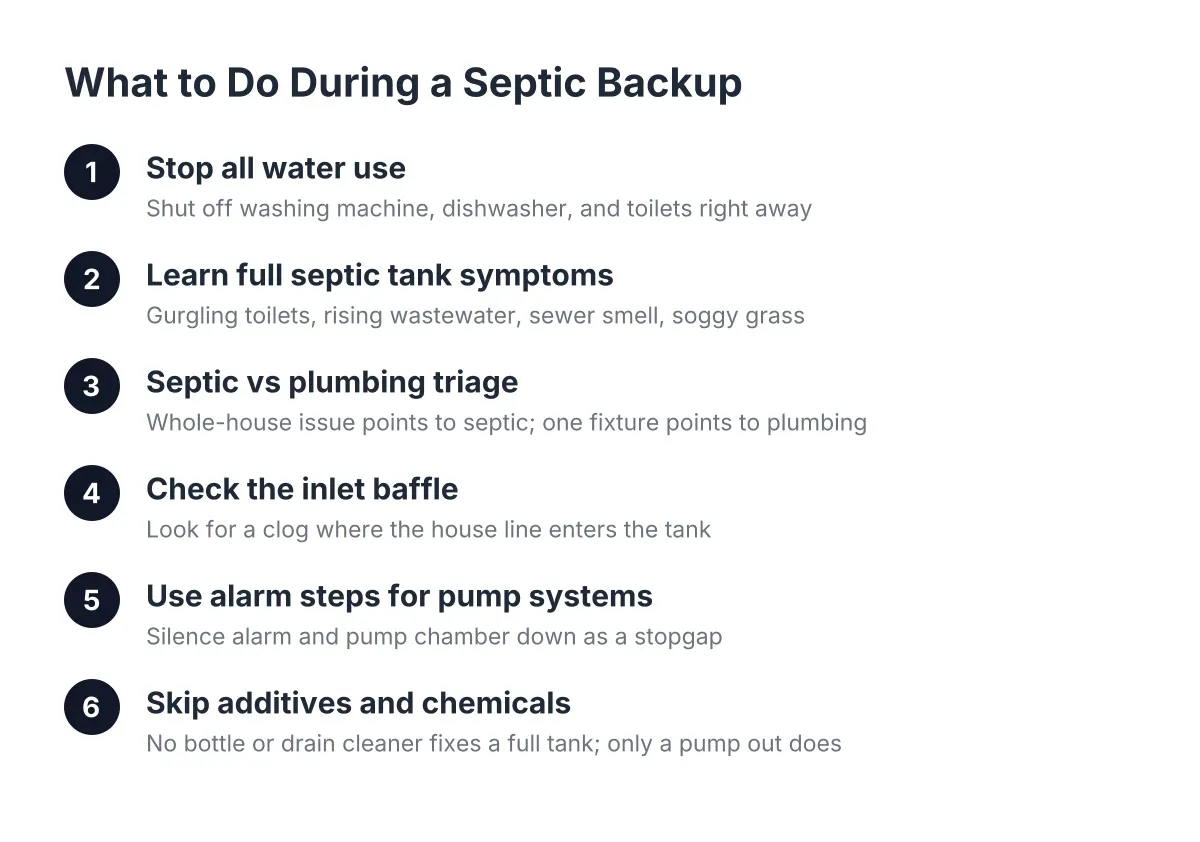
Septic Backup Right Now? 8 Things You Can Do Before the Truck Arrives
Sewage is backing up into your tub, the toilet gurgles every time it flushes, and it is late. First, take a breath. Most backups start with full septic tank symptoms that got missed for a few weeks, which means the fix is usually a pump out, not a dug-up yard. This guide walks you through what you can safely do yourself right now, how to tell whether the problem is your septic system or your house plumbing, and what to leave for a local Miami-area septic crew.
Here are eight steps, in the order a pro would tell you to take them.
1. Stop All Water Use in the House Immediately
The single most important thing you can do during a backup is stop sending water to the tank. Every flush, shower, and load of laundry pushes more wastewater into a system that has nowhere to put it, and that water comes right back into your lowest drains. Shut off the washing machine, skip the dishwasher, and tell everyone in the house that toilets are off limits until you know what is going on.
If your system has a pump and the alarm is sounding, this rule matters twice as much. The alarm means the tank is at capacity, and continued water use keeps overloading it. Silence the alarm if there is a button for it, but treat the red light as a hard stop on water use.
2. Learn the Full Septic Tank Symptoms So You Can Read What Your House Is Telling You
Full septic tank symptoms follow a pattern: gurgling toilets that drain slowly, then wastewater rising in the lowest fixtures in the house, usually a tub or floor drain. You may also notice a sewer smell in the house or near the tank lid outside, and soggy or unusually green grass over the tank or leach field. If several of these show up together, the tank is likely full or the line to it is blocked.
One useful detail: backups tend to arrive suddenly, not gradually. A septic system rarely gives you months of polite warnings; it works until it cannot, then everything backs up at once. That is why the signs of a full septic tank matter even when they seem minor, like a single slow drain or one gurgle after a flush.
Knowing what a full septic tank looks like also helps you talk to the dispatcher. If you can say "every drain in the house is slow and the tub has gray water in it," a septic pumping service near me search turns into a much faster, more accurate service call.
3. Figure Out If It Is a Septic Problem or a Plumbing Problem
A septic problem affects the whole house; a plumbing clog usually affects one fixture. This is the fastest triage test you can run at 2am, and it decides who you call. If only one toilet backs up while the kitchen sink and the other bathroom drain fine, you probably have a clog in that fixture's line, and a plunger or a plumber is the right move.
However, if every drain is slow, the lowest fixture is filling with wastewater, and you hear gurgling in multiple rooms, the problem sits past the house, in the main line, the tank, or the leach field. In that case, call a septic service first. They can diagnose the tank and the lines to it; a plumber only helps once the septic side is ruled out.
Quick checklist for the whole-house test:
- One slow fixture, everything else normal: likely a plumbing clog
- All drains slow, lowest fixture backing up: likely septic
- Sewage or standing water in the yard over the tank: septic
- Gurgling in one bathroom only: try a plunger first
- Alarm sounding on a pump system: septic, stop water use now
4. Check the Inlet Baffle Before You Assume the Tank Is Full
A backup into the house can start at the inlet pipe, not the tank itself. According to Washington State Department of Health, a clogged inlet baffle is a common cause of septic backups and one of the first things to check when the line into the tank is blocked. Grease, wipes, or a wad of solids can jam right where the house line enters the tank, and the tank behind it may be fine.
If you know where your tank lid is and can open it safely, look at the inlet side. Wastewater pouring in and pooling at the opening points to a baffle or line clog. Wastewater sitting at or above the inlet pipe suggests the tank is full or the leach field is not accepting water. Either way, do not climb in or lean over the opening; septic gases are dangerous, and this is a look-only check.
If you cannot find or open the lid, skip this step. A septic crew locates and opens tanks every day, and guessing with a shovel in the dark is not worth it.
5. If You Have a Pump System, Buy Yourself Time With the Alarm Steps
Suppose your system has a pump chamber and the alarm goes off on a Sunday night. The practical move is to stop water use first, then, if you have a backup sump pump, a hose, and an extension cord, pump the chamber down manually to a safe discharge point while you arrange service. This does not fix anything; it buys you a day or two of careful water use.
Treat this strictly as a stopgap. The pump failed or the tank is overloaded for a reason, and that reason needs a diagnosis. Note what the alarm panel shows, because that detail helps whoever services the system.
6. Skip the Additives, the Chemicals, and the Drain Cleaner
When a tank is already full, no bottle of bacteria, enzymes, or drain cleaner will empty it. The only fix for a full tank is a pump out. Additives poured into a backed-up system either sit in the line or wash into the tank, and harsh chemical drain cleaners can kill the bacteria your tank needs and sit in the standing wastewater you are about to be near.
The same goes for snaking the main line yourself during an active septic backup. If the tank is full, a snake just pokes a hole in the clog long enough for more sewage to move toward a tank with no room. Save the money and put it toward the pump out.
7. Protect Your House and Family While You Wait
A sewage backup is a health issue, not just a mess. Keep kids and pets away from affected bathrooms and any wet spots in the yard over the tank or leach field. Open windows in the affected rooms, and wear gloves if you must move anything that touched the wastewater.
Next, do a little damage control. Move rugs, towels, and anything absorbent away from floor drains and tub edges. If water is still rising in a fixture, a plunger pressed into the drain or a rag stuffed into a floor drain can slow it while you get everyone off the water.
8. Call a Local Septic Company, Not a National Call Center
When you search "septic tank pumping near me open now" at 2am, a lot of the results route your call out of state and resell it. For a septic backup emergency, you want someone local who knows Miami-area systems, can find your tank, and can tell you honestly whether you need a pump out, a filter cleaning, or a look at the leach field. Describe the whole-house symptoms from step 3, mention anything you saw at the inlet, and ask what they will check first.
Be aware of one honest limitation: if the leach field itself has failed, a pump out gives you short-term relief but the tank will fill again quickly. A tank getting full quickly after a recent pump out is the classic sign of a drain field problem, and that calls for a proper septic system inspection rather than another emergency visit.
Why Full Septic Tank Symptoms Usually Mean You Skipped a Pump Out
Most emergency backup calls trace back to one thing: the tank went years past its service interval, and sludge and scum built up until wastewater had nowhere to go. The U.S. Environmental Protection Agency recommends inspecting the system every 1 to 3 years and pumping the tank every 3 to 5 years. For an active family of four, pumping every two to three years is generally advisable, according to Penn State Extension.
The math favors the planner. According to the U.S. Environmental Protection Agency, routine maintenance runs about $250 to $500 every three to five years, while repairing or replacing a failed system can cost $5,000 to $15,000. Say a homeowner in Coral Gables bought a pre-2000 house three years ago and has no record of the last pump out; in that scenario, scheduling a pump out and inspection now costs a fraction of the leach field repair that a few more years of neglect could bring.
So once tonight's mess is handled, put the next service on the calendar. Ask the crew to note the sludge level, check the septic tank filter, and tell you a realistic interval for your household size. Then set a reminder and forget about it, which is exactly how septic ownership is supposed to work.
If you need septic tank pumping, Miami Septic Tanks can help.
Prefer to talk it through? Call (786) 756-8032 — a quick call is usually the fastest way to get a straight answer for your situation.